Powerful Space Telescopes
The grandeur and boundlessness of galaxies are two unique features that have fascinated mankind since the beginning of creation, and humans have always sought to understand them better.
According to ISNA,
On Friday, April 28, 2017, corresponding to Ordibehesht 28, 2017, has been declared as World Astronomy Day. On this occasion and the anniversary of the launch of the Hubble Telescope into space, we have examined the performance of the most important space telescopes in the world.
Space observatories refer to instruments such as telescopes that are deployed in outer space and outside the Earth’s atmosphere and are used to observe distant planets, galaxies, and other space objects.
Space telescopes are either in orbit around the Earth or are located at one of the Earth-Moon or Earth-Sun Lagrangian points. The Hubble Telescope is an example of a space telescope.
Space observatories do not have some of the problems that ground-based observatories face in observing, such as light pollution and electromagnetic radiation emissions.
Advantages of Space Telescopes
The following are some of the advantages of space telescopes:
- No dust in the path of vision
- Lack of scattering of sunlight and moonlight by molecules in the planet’s atmosphere
- Lack of light pollution caused by manifestations of human civilization
- Lack of atmospheric pollution or humidity in the air
- Possibility of observing at invisible wavelengths (Earth’s atmosphere blocks X-rays, ultraviolet, infrared, etc.)
Spitzer Space Telescope
The Spitzer Space Telescope is an infrared space telescope. It was the fourth and final phase of NASA’s Large Hadron Collider Project. The telescope’s astronomy team is currently led by Dr. Robert Gutermuth of the Harvard-Smithsonian Center for Astrophysics.
The project cost US$800 million. Spitzer was launched on August 25, 2003, from Cape Canaveral, Florida, aboard a Delta II rocket. The orbit that Spitzer follows is not a typical geocentric orbit, but a heliocentric one, causing the telescope to move away from Earth by 0.1 astronomical units per year.
Its primary mirror is 85 centimeters in diameter, made of beryllium, and cooled to 5.5 Kelvin. But the most famous space telescope is the Hubble Telescope.
27 years ago on this day, the first space telescope, called Hubble, was launched into space by the shuttle Discovery in a joint program between NASA and the European Space Agency.
Named after cosmologist Edwin Hubble, the telescope is one of the largest and most widely used telescopes.
Hubble’s Scientific Instruments
Hubble is the first telescope that can be repaired in space and has been repaired about five times so far.
The last Hubble repair mission was in 2002. This mission greatly increased the performance of the space telescope by replacing parts. During this mission, the space telescope’s solar panels that had been damaged were replaced.
The power supply that powered the telescope was completely replaced, and for the first time, the telescope’s power was cut off in space and its communication with the command and control center on Earth was also cut off. The mission also repaired and restarted the NICMOS infrared camera, which had been out of service due to a cooling system problem.
In addition to all these improvements, NASA engineers installed a new, very powerful camera on the space telescope, called the Advanced Camera for Surveys. The camera’s extraordinary images have long been the subject of discussion in the scientific community around the world.
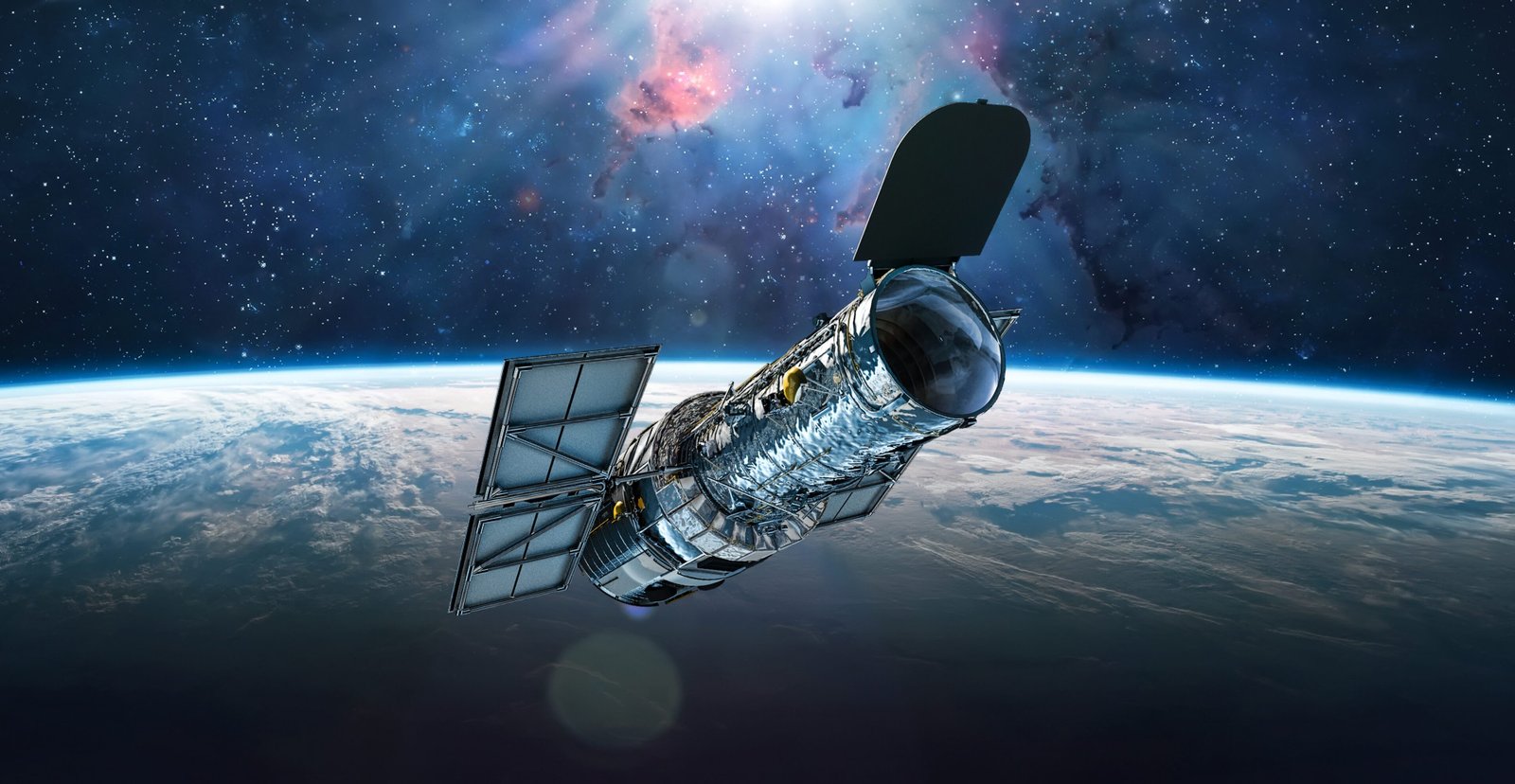
Hubble Space Telescope
Like many other successful space missions, the Hubble Space Telescope has worked longer than expected, and there are whispers of its retirement.
There are differing opinions on when and how Hubble will end its life, but what is clear is that it will not happen until the next space telescope is ready to go into space. On May 16, 2009, the Hubble Space Telescope underwent a major overhaul. This is the first overhaul of a space object, and it includes replacing some of its batteries as well as its main camera. The telescope is expected to operate for another eight years after the overhaul.
All Hubble Space Telescope activities are controlled by ground stations. The focal point for all operations is the Flight Operations Team, located at NASA‘s Goddard Space Flight Center in Maryland.
How Hubble Captures Images of Space
Taking color images with the Hubble Space Telescope is much more complicated than taking them with a regular camera. The first difference is that Hubble never uses color film, but instead uses its own electronic detectors to collect and record light from space.
These detectors do not produce cosmic images in color, and the images are initially black and white. The final images are created by combining several black-and-white images with color added during processing.
The colors in Hubble images, which occur for a variety of reasons, are not always what we would see up close (if we could see those objects up close in a spacecraft). We sometimes use color as a tool because it either helps us see details better or because the human eye cannot perceive those colors.
Hubble’s images are a composite of multiple black-and-white images representing different colors of light. Hubble’s five precision instruments—cameras, spectrographs, and highly accurate guidance sensors—work together in unison and independently to provide us with stunning images of the farthest reaches of the universe. Each instrument is designed to see the universe uniquely.
Here’s a brief look at some of Hubble’s important instruments, past and present, and their work:
Advanced Camera for Surveys: Installed in March 2002, it represents the third generation of precision instruments installed on Hubble. Among other tasks, this camera will observe and study the weather on other planets in the solar system, observe and map the universe, and study the types and distribution of stars.
Hubble’s Wide Field and Planetary Camera: The most labor-intensive tool in producing Hubble’s most famous images. Like Hubble’s main camera, this camera is used to see everything.
Infrared Camera and Spectrograph: Hubble’s thermal detector, which can spectrograph multiple targets simultaneously, is very sensitive to infrared light, making it useful for observing obscure celestial objects such as interstellar gas and dust, as well as for observing the deepest parts of the galaxy.
The Space Telescope Imaging Spectrograph: A rotating instrument that, somewhat like a prism, breaks down the light reaching the telescope from celestial objects into its constituent colors. In 2004, a problem occurred with it that prevented it from continuing to operate. However, the instrument is repairable and could be repaired on future missions.
Hubble’s precision guidance sensors: These are aiming devices that lock onto guide stars and measure their relative positions to the subject being viewed. The adjustment work these devices do keeps Hubble on target. These sensors are also used to make celestial measurements.
Low-Light Camera:
Hubble’s image transmitter. It captured images taken from very small fields of view in great detail. This instrument was replaced by the Advanced Camera for Surveying in 2002.
Hubble helps solve many of the astronomy problems that scientists struggled with before it was put into orbit.
This telescope was able to measure the distances between stars more accurately and estimate the expansion rate of the universe with an error of only 10 percent.
Hubble was also able to measure the age of the universe and its path forward, results that contradicted many previous theories.
Hubble sends astronomers between 10 and 15 gigabytes of images every day. The data volume has already exceeded 10 terabytes.
Hubble has made more than 400,000 separate observations of celestial objects, and thousands of astronomy papers have been written based on Hubble data.
This telescope was the first optical telescope to image a black hole, which has a mass several billion times that of the Sun.
Hubble provided the first clear images of the birth and death of stars.
In 1994, Hubble captured an image of a comet colliding with Jupiter.
The most distant and oldest celestial objects from Earth whose light has ever reached Earth have also been recorded by Hubble.
On January 9, 2013, the most distant supernova known was discovered by the Hubble Space Telescope. The distance to this supernova is about 10 billion light-years.
Which Telescope is the Successor to Hubble?
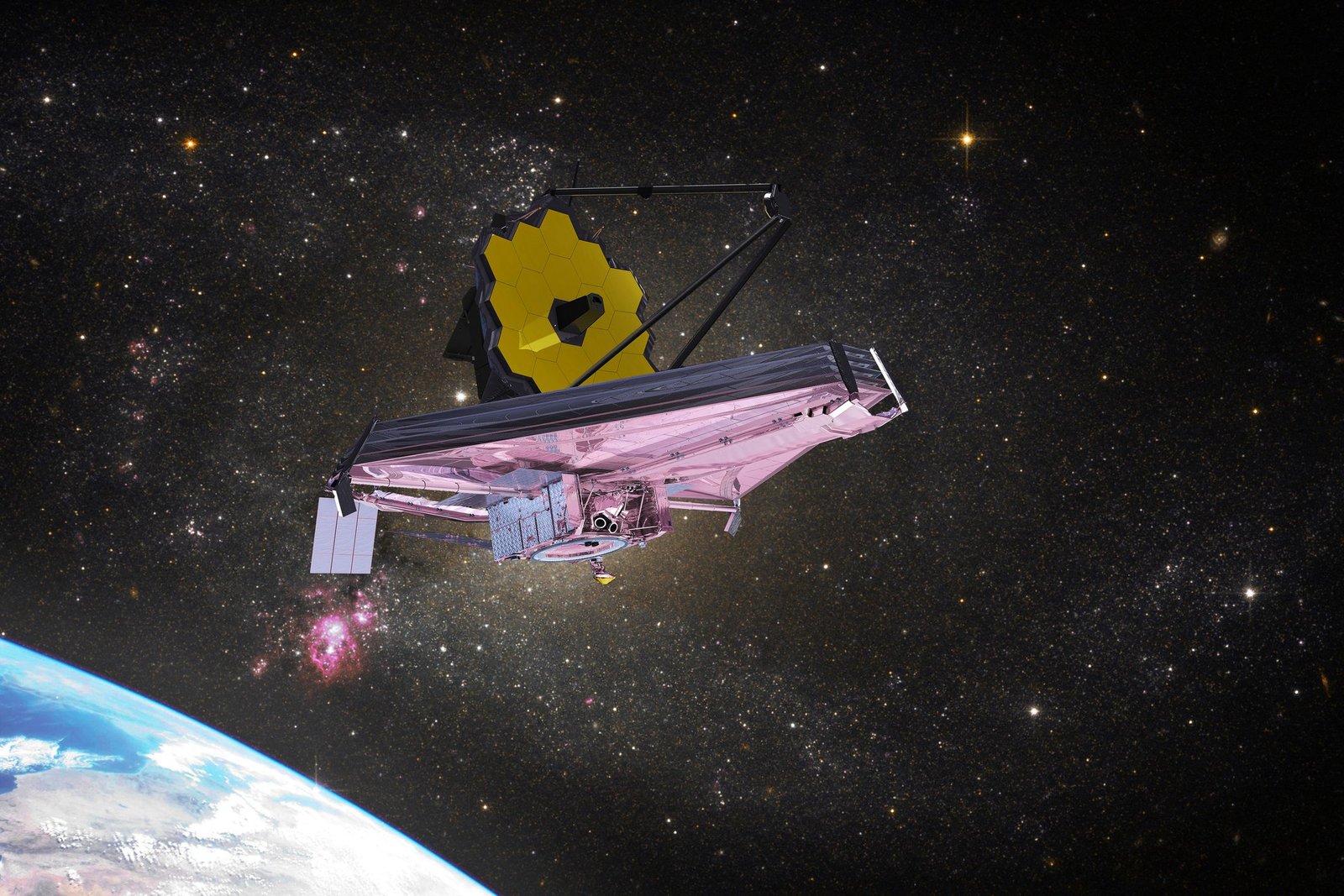
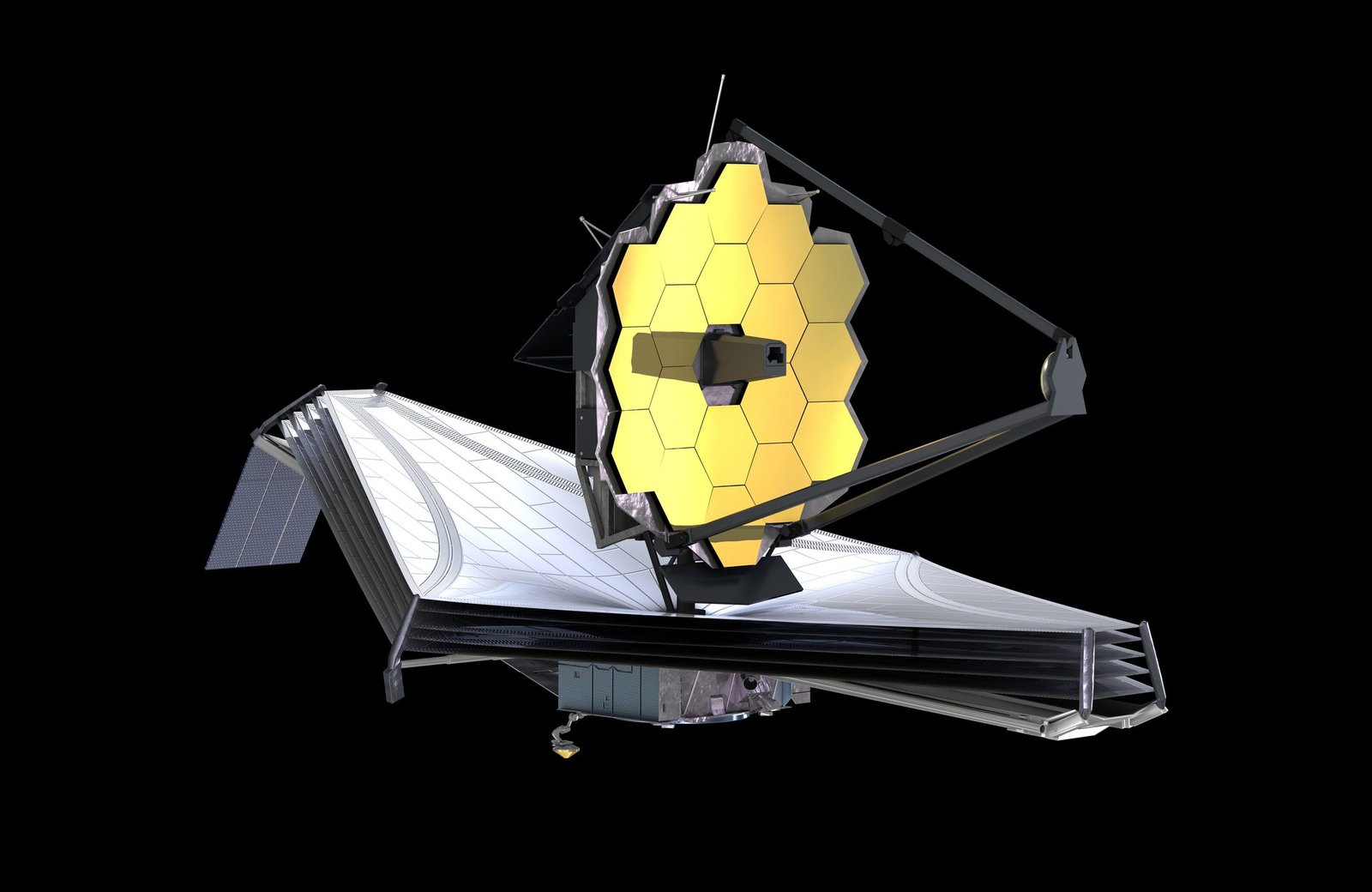
The next space telescope project, called the James Webb Space Telescope (JWST), is being designed with a larger size and higher power, and of course different goals.
The telescope is larger than Hubble, will have a huge mirror that will increase its observational power, and will be located farther from Earth than Hubble. The JWST‘s $8.8 billion budget makes it one of the largest and most expensive projects in NASA’s history.
James Webb Space Telescope: Hubble’s Successor
Four highly advanced scientific instruments are planned for the James Webb Space Telescope; the mid-infrared instrument, designed to produce Hubble-like images of galaxies, comets, and massive celestial objects, was developed by a European consortium and delivered to NASA in 2012. The FGS-TFI, a precision-sensing filter camera for high-resolution images of other celestial objects, was also developed by the Canadian Space Agency and delivered to NASA last year. The Near Infrared Camera and Near Infrared Spectrograph instruments are also due to be ready by 2013.
After this phase, the performance of all four scientific instruments will be tested on the James Webb Space Telescope, which is the size of a tennis court and has a mirror radius of 5.6 meters, and final tests will begin in 2015. NASA hopes to extend the 23-year-old Hubble Space Telescope program until 2018, when the James Webb Space Telescope is launched.
Alberto Conti, another James Webb project scientist, says the mission will go beyond just searching for life, but will also seek evidence of the universe’s first stars and information about galaxy formation and life. He says the telescope will remove one of the main obstacles to studying planet formation: infrared dust.