Below, We Will Introduce These Important Spacecraft and Astronauts
Sputnik 1
On October 4, 1957, the Sputnik 1 spacecraft was launched from the Baikonur Cosmodrome, the world’s oldest and largest active space launch facility in the former Soviet Union, into Earth’s orbit, becoming the first human achievement to enter space. The aluminum-alloy sphere orbited the Earth 1,440 times in 21 days before scientists lost track of its signals, and most importantly, it ushered in the space age. The launch of Sputnik 1 is considered one of the most important events of the 20th century, both scientifically and politically.
Studying the radio waves received from Sputnik on Earth provided scientists with a wealth of information about the movement of radio waves in the ionosphere. By measuring the orbital deceleration of Sputnik 1 due to friction with the upper layers of the Earth’s atmosphere, researchers were able to estimate the density of the upper layers of the Earth’s atmosphere with high accuracy for the first time.
It is worth noting that this satellite remained in space until January 4, 1958, when it finally entered the Earth’s atmosphere and burned up.
Vostok 1
Vostok 1 was also a satellite launched from the Baikonur Cosmodrome in the Soviet Union and was the first human spaceflight mission. The spacecraft carried Yuri Gagarin into space on April 12, 1961, and Gagarin’s flight began the era of human spaceflight. Gagarin orbited the Earth once, taking 108 minutes. Before Gagarin’s launch, the Baikonur Cosmodrome tested Vostok 1 with a dog and a man-sized dummy.
Apollo 11
Apollo 11 was a mission of the Apollo space program that led to the first human landing on the Moon. During the mission, organized by the United States National Aeronautics and Space Administration (NASA), Neil Armstrong and Buzz Aldrin landed on the Moon at 20:18 on July 20, 1969. About 6 hours later, Armstrong set foot on the Moon at 2:56 Universal Time on July 21. The third astronaut of the mission, Michael Collins, remained alone in lunar orbit until he was joined by two other astronauts 15 hours later. After eight days in outer space, all three astronauts returned to Earth on July 24.
Apollo 13
Apollo 13 launched without incident on April 11, 1970, but just 56 hours after launch, the spacecraft suffered a setback, and minutes after a live television broadcast in which astronauts James Lovell, Jack Stewart, and Fred Hayes communicated with people at home, they announced they were returning to Earth. In fact, they were forced to make an emergency landing. They ultimately failed to land on the lunar surface as planned. Due to a malfunction in the spacecraft’s oxygen tanks, both the crew and scientists on the ground struggled to make it to Earth, coping with the lack of power, heat, water, and additional carbon monoxide. However, they were finally successfully launched on April 17 of that year.
STS-51-L
STS-51-L was the 25th mission of NASA’s space shuttle Challenger, launched on January 28, 1986, from Launch Complex 39 at Kennedy Space Center in Florida. For the first time in the history of the space shuttle, the crew included a civilian, Christa McAuliffe, a schoolteacher. The mission ended in disaster when the shuttle Challenger exploded 73 seconds after launch, killing all on board. The Rogers Committee attributed the disaster to a failure of a sealing gasket in one of the solid-propellant rockets. It was the first American manned orbiter mission to result in fatalities. It was also the first American spacecraft mission to fail after launch and before reaching space.
Voyager 1
Voyager 1 is a 722 kg space probe launched by NASA on September 5, 1977, 16 days after its counterpart Voyager 2, as part of the Voyager program. Voyager 1 is still connected to the Deep Space Network. At 142.31 AU (21.289 billion km) from the Sun on September 25, 2018, it is the farthest spacecraft from Earth and the only spacecraft to have entered interstellar space. Like another NASA probe, Voyager 2, the spacecraft’s primary mission was to study the planets Jupiter, Saturn, Uranus, and Neptune, a mission that was completed in 1989.
Mars rover
Mars Reconnaissance Orbiter is an American robotic spacecraft that landed on Mars in 1997 with a rover at the main station. The spacecraft, renamed the Carl Sagan Memorial Station, consisted of a lightweight (10.6 kg) lander and a robotic rover named Sojourner. When Sojourner arrived at Mars, it became the first object to reach another planet, exploring the Ares Valley region of Mars and analyzing its atmosphere, climate, and geology.
There were many concerns about how the lander would land on Mars, but scientists came up with a creative idea in which the rover was surrounded by airbags to protect it from damage during the landing. The mission yielded some very interesting information about Mars, such as discovering that there is flowing water on Mars and that the atmosphere is heated by the planet’s surface. Sojourner flew its final mission in September of that year, and all of its missions were successful.
International Space Station
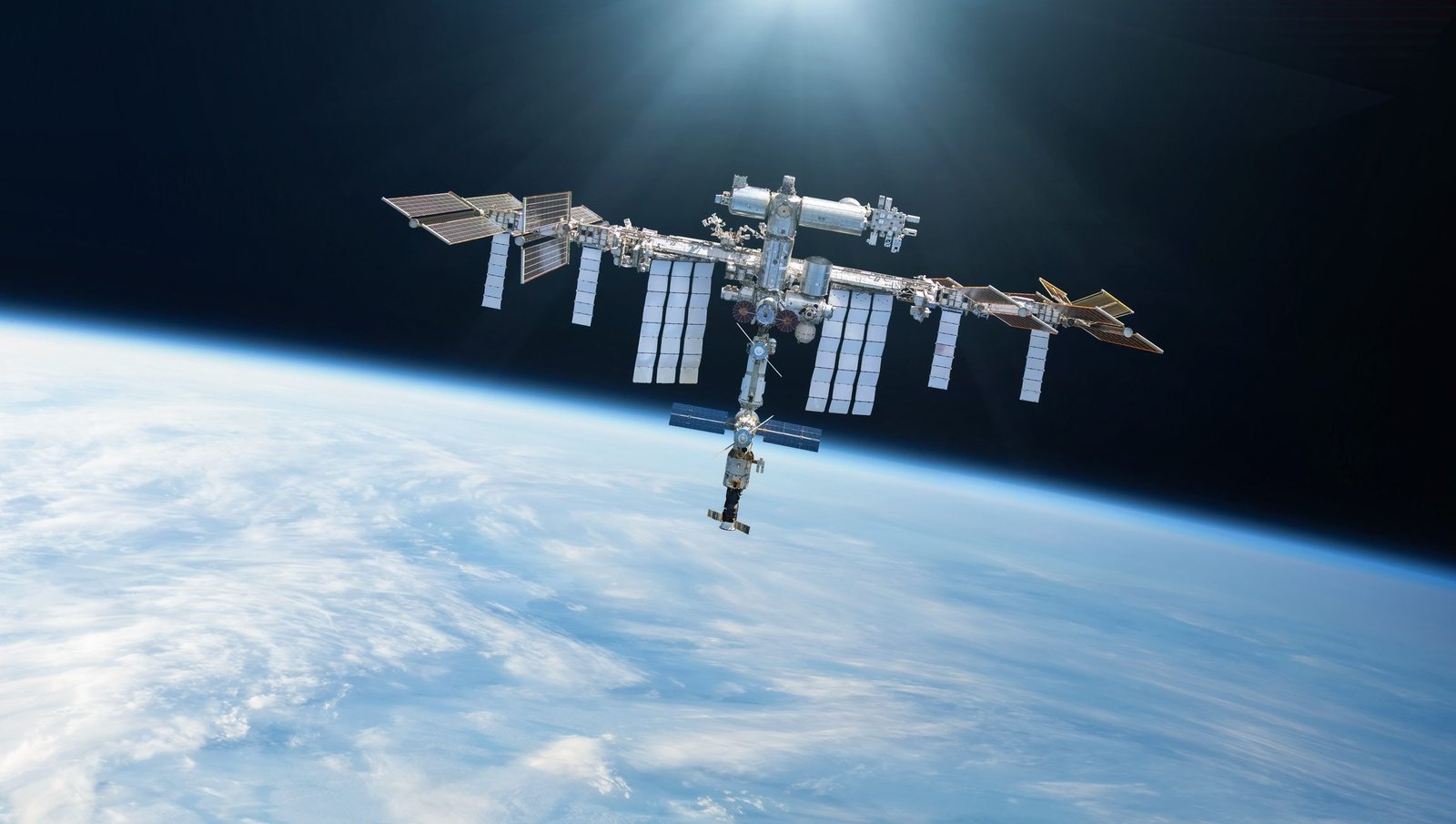
It may be interesting to know that the first pieces of the International Space Station—one piece from Russia and the rest from the United States—were launched into space in the fall of 1998. The two countries connected the pieces in space until the first astronaut stepped aboard on November 2, 2000. Astronauts from around the world continue to work and experiment on the International Space Station, including research into the effects of particulate matter on the human body. Of course, guinea pigs are used in this research.
Over time, the station has undergone numerous repairs and adjustments, both mechanically and diplomatically. However, recently, crew members and politicians celebrated 20 years of orbiting the Earth in their homes. In 2018, a law was passed to extend the station’s operations until 2030.
Kepler mission
The Kepler spacecraft was launched from Cape Canaveral, Florida, USA, on March 7, 2009, and has been operating since then. Kepler is a NASA space telescope designed to detect exoplanets similar to Earth. It studied the brightness of 100,000 stars over a period of 3.5 years, looking for signs of a planetary influence. The meteorite was named after German astronomer Johannes Kepler.
In the latest findings of 2013, astronomers from the Kepler mission say an Earth-like planet exists that could be habitable. Scientists say the planet, called Kepler-69c, orbits a star in a special orbit similar to planets in our solar system. The planet is one of the first known candidates for extraterrestrial life.
Cassini-Huygens
Cassini-Huygens is one of the most important space missions launched jointly by NASA and the European Space Agency to explore the planet Saturn and its moons. The spacecraft consisted of two main parts: the Cassini research orbiter with the Huygens probe, which was sent from Cassini to one of Saturn’s moons, Titan, and sent data from its surface back to Earth.