The Holy Shrine of Jerusalem
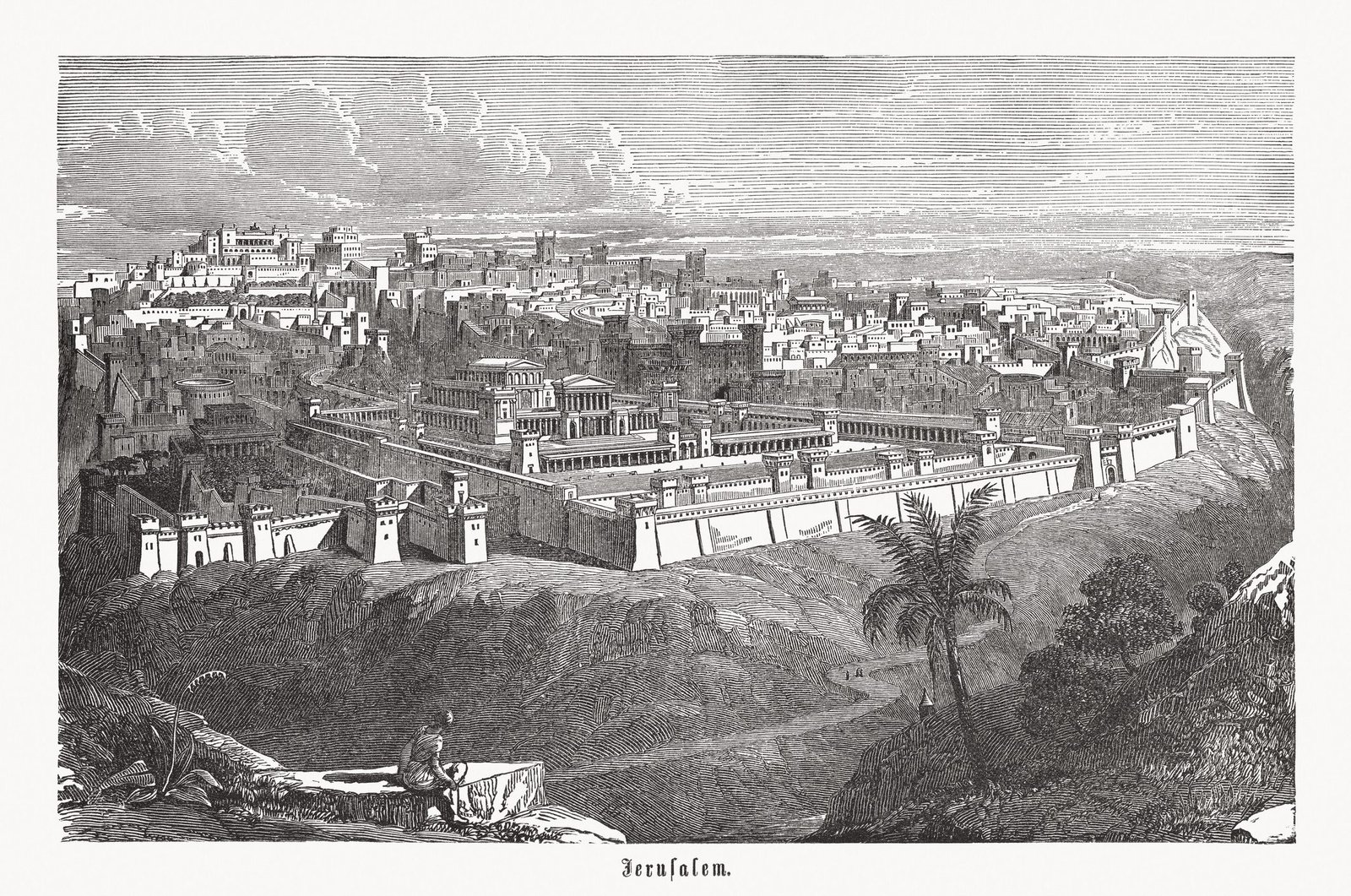
On the top of Mount Moriah in Jerusalem, there is a vast area containing a collection of Jewish, Christian, and Islamic temples, mosques, and holy sites. The Temple of Solomon, Al-Aqsa Mosque, the Dome of the Rock, and others are located in this sanctuary. This sanctuary has seen many ruins and has been occupied by the Romans, Greeks, Persians, and before them, the Assyrians, Chaldeans, Egyptians, Babylonians, Greeks, and other peoples throughout history. The Holy Sanctuary has ten open doors and four closed doors, and there are a number of corridors in it that various kings and governors have built over time. There are eight wells in the Courtyard of the Rock, and seventeen wells in the courtyard of Al-Aqsa Mosque. The Jews have rewritten the history of the Holy Sanctuary in Jerusalem, based on references in the Torah and other Jewish written sources.
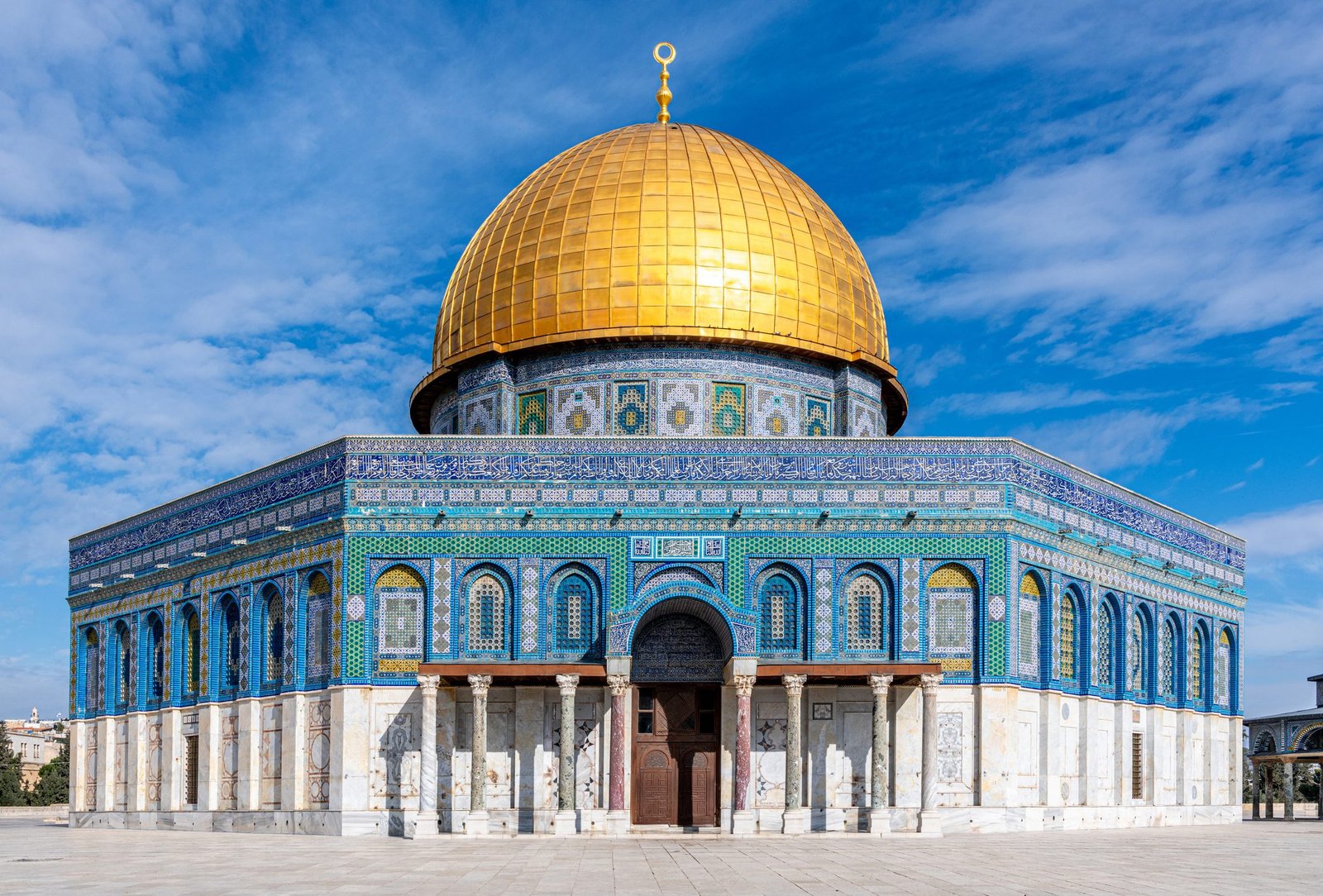
Al-Aqsa Mosque
This mosque is one of the holy Islamic mosques located in the city of Jerusalem, which, according to some narrations, was the place where the Prophet Muhammad (PBUH) ascended to heaven. The name Al-Aqsa Mosque is a new term for the mosque that is known today by this name, and when ancient historians mentioned Al-Aqsa Mosque, they meant all or part of the courtyard on which the walls, towers, and ramparts are based, and in which there are gates that were famous during the Isra’ and Mi’raj. Today, Al-Aqsa Mosque is located in the area of the Holy Mosque to the south of the land of the sanctuary, five hundred meters from the Mosque of the Rock.
Rock Mosque
The Mosque of the Rock, or the Holy Rock, is the name of a mosque in the Holy Sanctuary on Mount Moriah, located in the city of Jerusalem. Under the dome of this mosque is a large, creamy-white rock that appears to be the peak of a mountain and is located under the Dome of the Rock and is revered in Judaism, Islam, and Christianity. The famous Golden Dome, which people think is the dome of Al-Aqsa Mosque, was built on a rock and is the Dome of the Rock.
Omar Mosque
This mosque is located on the Moria hill, facing the Church of the Resurrection, and its door is opened for the five daily prayers. According to some sources, the Mosque of Omar is the same as the Mosque of the Rock; but others believe that the Mosque of Omar is next to it and that this mosque was built by Saladin’s son in 1216 AD in memory of Omar, the second caliph. It is said that Omar prayed in front of the steps of the Synagogue of the Resurrection in Jerusalem, and this mosque was built where Omar is believed to have prayed to show respect for the Church of the Resurrection, where Christians worshipped at the time.
Glossy Wall
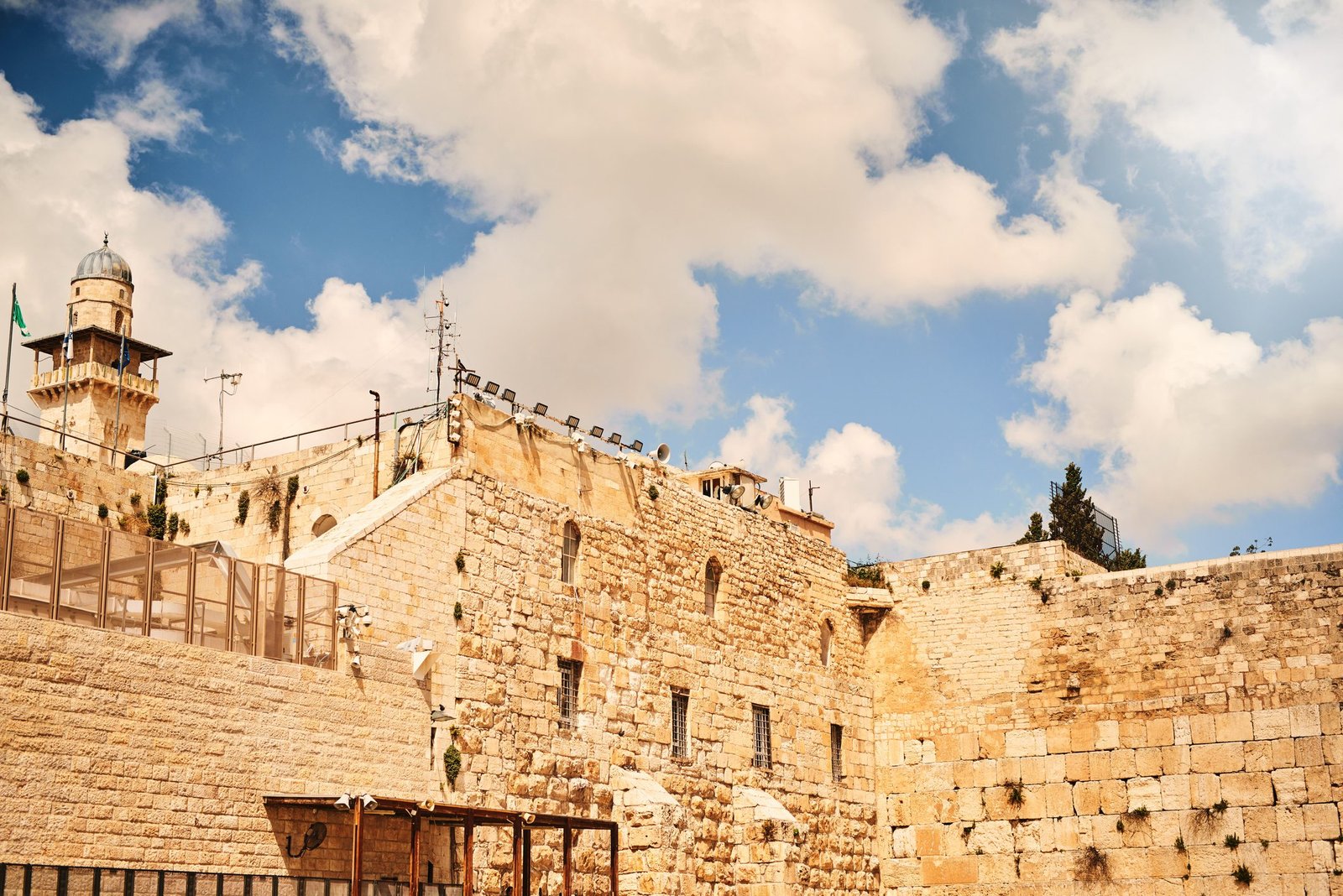
According to some Islamic traditions, the Prophet Muhammad (PBUH) attached his chariot to this wall on the night of the Ascension. This chariot is called “Buraq” in the traditions, and therefore the wall is called the Buraq Wall. Muslims consider the Nadba Wall to be part of the wall of an ancient mosque. After Islam, Saladin (532-589 AH/1138-1193 CE) repaired the walls. The last person to rebuild the wall and add towers, gates, and doors was Suleiman the Magnificent, the tenth and greatest Ottoman sultan (1520-1566 CE/926-974 CE).
The Division of Palestine Into Two States
On November 29, 1947, the United Nations General Assembly passed a resolution to partition Palestine into two states, an Arab state and a Jewish state, united through an economic union. In this resolution, Jerusalem was designated as an international, civilian center administered by the United Nations Trusteeship Council. This was while the terrorist activities of Zionist groups had intensified. For example, in April 1948, the Irgun terrorist organization massacred children and women in the village of Dir-Yassin, near Jerusalem. On May 14, 1948, Ben-Gurion, as Prime Minister, announced the establishment of the Zionist state of Israel.
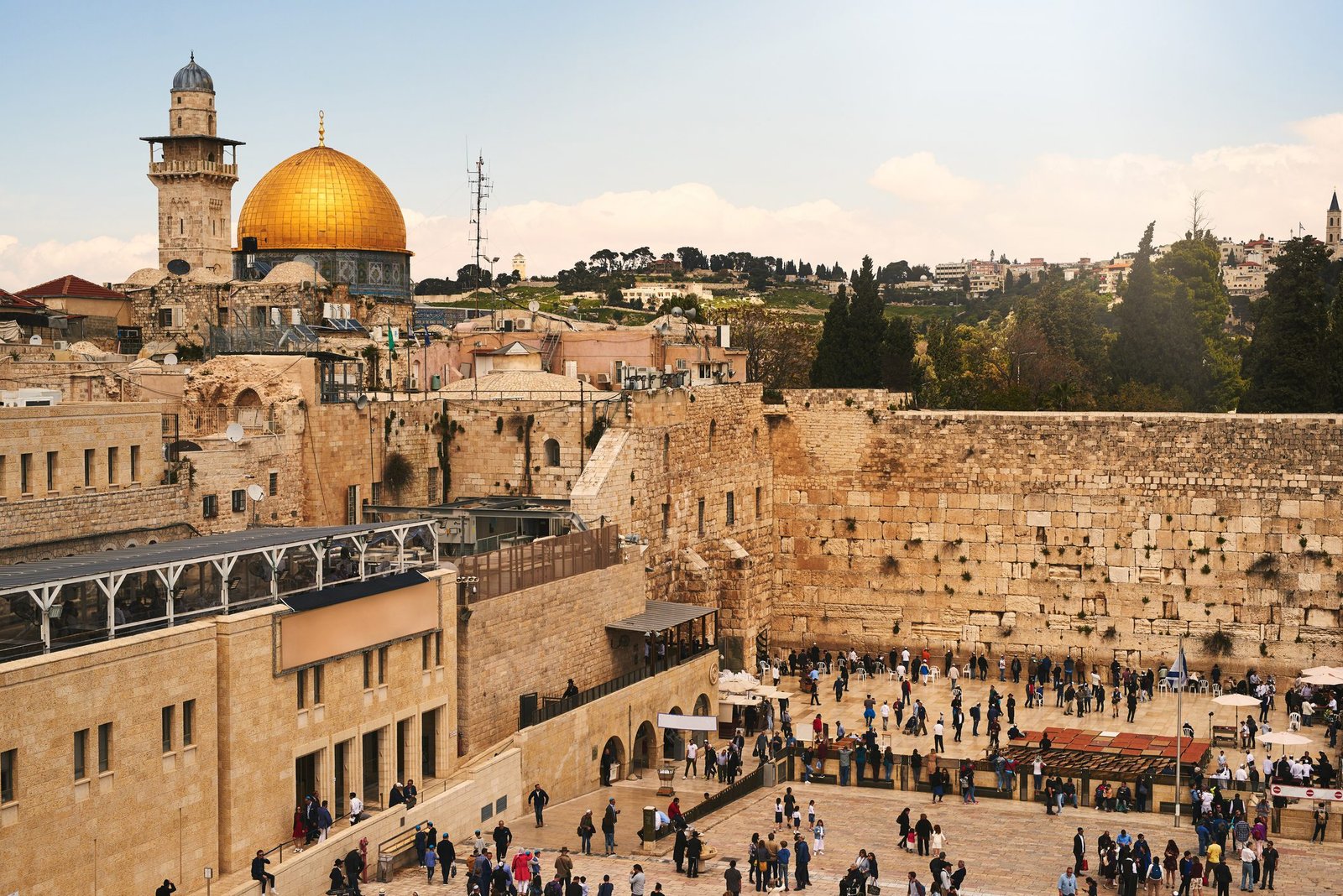
Occupation by the Israelis
With the end of the Mandate (May 15, 1948), the war in Palestine engulfed the city, and Israel occupied the western part of Jerusalem, while Jordan occupied the eastern part of the city, including the old walled city. In January 1950, the Zionist regime moved its capital to West Jerusalem and established government agencies in the western part. Until 1967, Jerusalem was in a de facto unstable situation, but due to political sovereignty, it was considered a subordinate of the Jordanian government.
Following the Six-Day War in June 1967, Israel also occupied the eastern part of the city on June 5. With the complete occupation of the city, a new chapter in its history opened; On July 28 of that year, the Zionist regime, led by Me’arakh, took the first step towards dominating the city and, by issuing a declaration in the same year, which became known as the “Judgment Law”, seized about seventy thousand hectares of land around Jerusalem, and on August 18, the Jerusalem Municipality was entrusted with the operation of accelerating settlement and house construction. The first plan for the settlement of Jerusalem was presented a year after its occupation.
This plan envisaged the policy of linking Jewish residential areas and separating Arab residential units and creating a fence around the city through settlement construction. Subsequent plans also focused on increasing the number of Jews in East Jerusalem. While there were only 47 Jewish neighborhoods with about twelve thousand residents when the Ottoman government left Jerusalem, in 1964 the number of Jewish neighborhoods reached 724.
Jewish settlement
In 1991, two Israeli companies proposed to the Israeli Minister of Finance that the land confiscation policy be used to Judaize Jerusalem. The settlement and settlement of Jews in Jerusalem continued during the peace negotiations. In July 1993, the number of residents of Jewish settlements in East Jerusalem increased to 160,000, living in eight areas. At the same time, the number of Palestinians was 155,000; in other words, for the first time, Jews became the majority in the city. The
settlement policy in Jabal Abu Ghanem, which is strategically important as a connection between the eastern part and other Muslim-populated areas, is also implemented with the aim of cutting off the city’s connection with the Hebron and Bethlehem areas, thus creating further isolation for the Palestinians living in the city. According to a statistical estimate, each year, 2,170 residential buildings are permitted for Jewish immigrants, while only 230 are permitted for Palestinians living in Jerusalem.
These policies have changed the demographic makeup of the city and paved the way for a gradual ethnic cleansing in Jerusalem. In addition to confiscating land, establishing settlements, and encouraging Jewish immigration, such as tax exemptions and municipal fees, Israeli authorities have also taken other measures, such as preventing the repair and restoration of Muslim buildings and homes, imposing heavy taxes, and confiscating identity cards.
After the Israeli parliament officially declared Jerusalem the capital, the UN Security Council condemned Israel’s move in 1980 and called on governments that had moved their diplomatic missions to Jerusalem to return them to Tel Aviv. Meanwhile, some governments, including the United States, opposed this request. In recent years, some Muslim countries have made efforts to reclaim Jerusalem.