Jerusalem
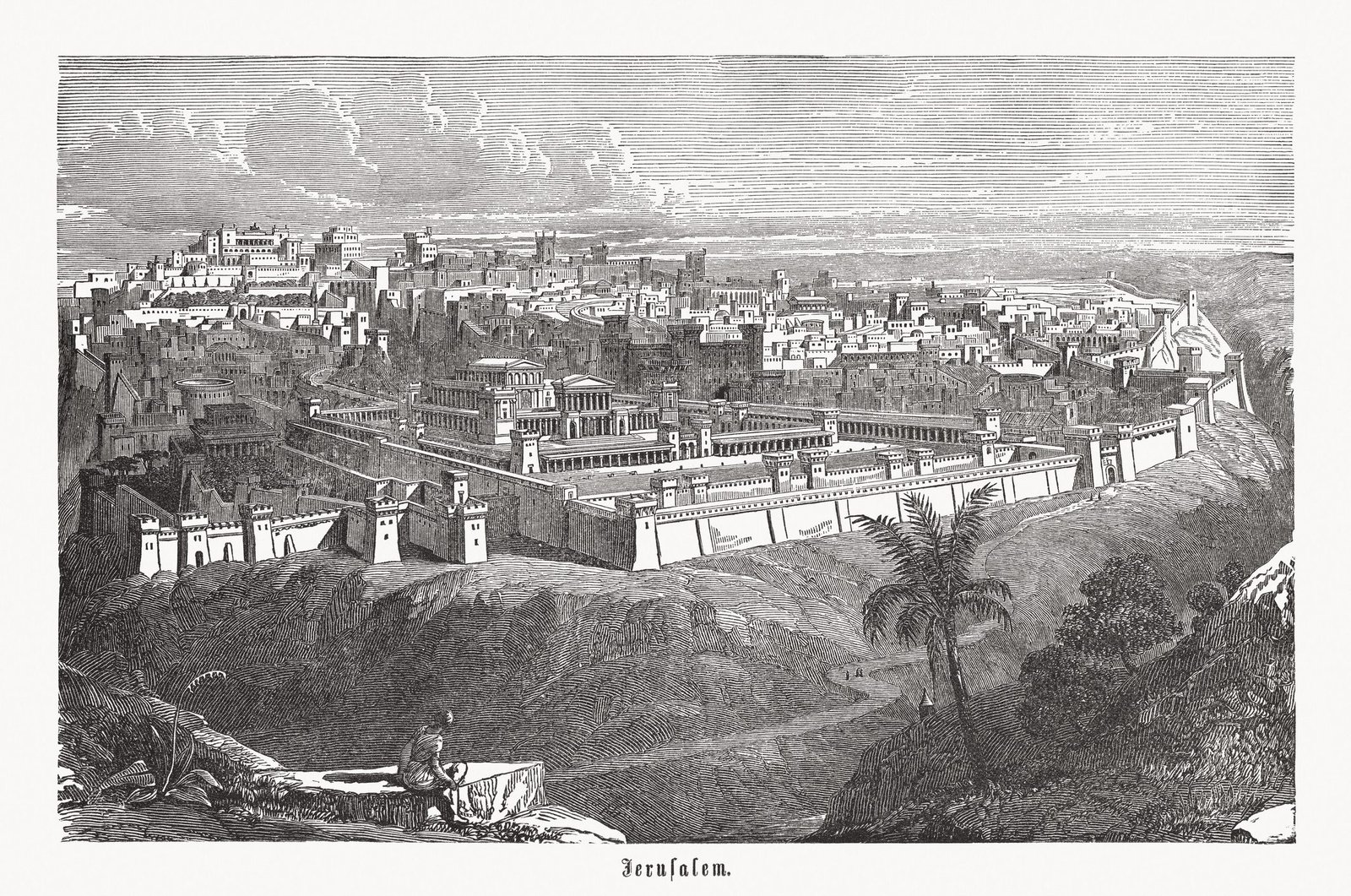
Jerusalem (Arabic: بَيت المَكْدِس) or Jerusalem or Quds is a city in occupied Palestine that is the first Qibla and the third holiest city for Muslims (after Mecca and Medina) and the holiest city in the world for Jews and Christians. This city is one of the pilgrimage centers of the Abrahamic religions, and each of these religions has monuments and buildings in it. Jerusalem is currently under full occupation by Israel, which calls the city its eternal capital; but the United Nations and many countries in the world do not recognize this claim.
According to Shiite traditions, Jerusalem and some of the places in it have many virtues, as in a tradition from Imam Hassan Askari (AS), praying in Al-Aqsa Mosque is considered to be on a par with praying in Al-Masjid Al-Haram, and one prayer there is equal to a thousand prayers in other mosques.
In the past, some Iranian Shiites, especially during the Qajar and Pahlavi periods, combined pilgrimages to religious sites in this city with the Hajj pilgrimage.
Reason for naming
The oldest name given to the city was “Yerushalem”, which meant “God of Peace” to the Canaanites. In the Egyptian inscriptions of Tell el-Amarna (on the banks of the Nile River north of Asyut) dating from the 19th and 18th centuries BC, the city is mentioned as “Roshalimum”. In the Torah, the word Jerusalem, pronounced “Yerushalayim” in Hebrew, appears many times and, etymologically, it is said to be directly derived from its Canaanite name, “Yerushalayim”. In the Torah, the city is mentioned with the following names and meanings: Salem, Shalim, Jebusi, Jebus, the city of Judah, the city of God, the village of the great king, and the holy city.
In works on the history of the first centuries of Islam, the name of this city is given as “Ilia Madina Bayt al-Maqdis.” Ilia is a reference to the name of Hadrian I, the Roman emperor, who built a Roman city on the ruined city of Jerusalem and named it Aelia Capitolina. Al-Quds is the same Aramaic word qodshah that was used in the term qorta d. qodshah, meaning “the city of Jerusalem,” and not “the holy city.” The use of the word Bayt al-Maqdis for this city in the Persian language of Dari has been common since ancient times and has been used in many ancient Persian texts of poetry and prose. For example:
Hud al-Alam, the oldest geographical book in Persian (372 AH): “And inside Bayt al-Maqdis is a place where Muslims from all over the world can go for pilgrimage.”
Tarikh al-Balami (one of the oldest Persian texts available, dating back to 352 AH): “..Since Abraham was from the land of Palestine to Mecca, it was five days, and God Almighty sent a light from the sky – just as He sent it to our Prophet on the night of the Ascension and took him to Bayt al-Maqdis at night – He sent the same light to Abraham…”
Zain al-Akhbar (written in 440 AH): “And when some of them had come out, He sent Bakht al-Nasr to Bayt al-Maqdis to take over that province and angered the Jews and killed many of them.”
Safarnama Nasir Khusraw (fifth century): “We arrived in Bayt al-Maqdis on the fifth of Ramadan, in the year eight, thirty-four and forty-three [438 AH]. It had been a year since I had left home and was constantly traveling, and I had not found a place of complete peace and comfort anywhere. The people of Syria and beyond call Jerusalem “Quds”…”
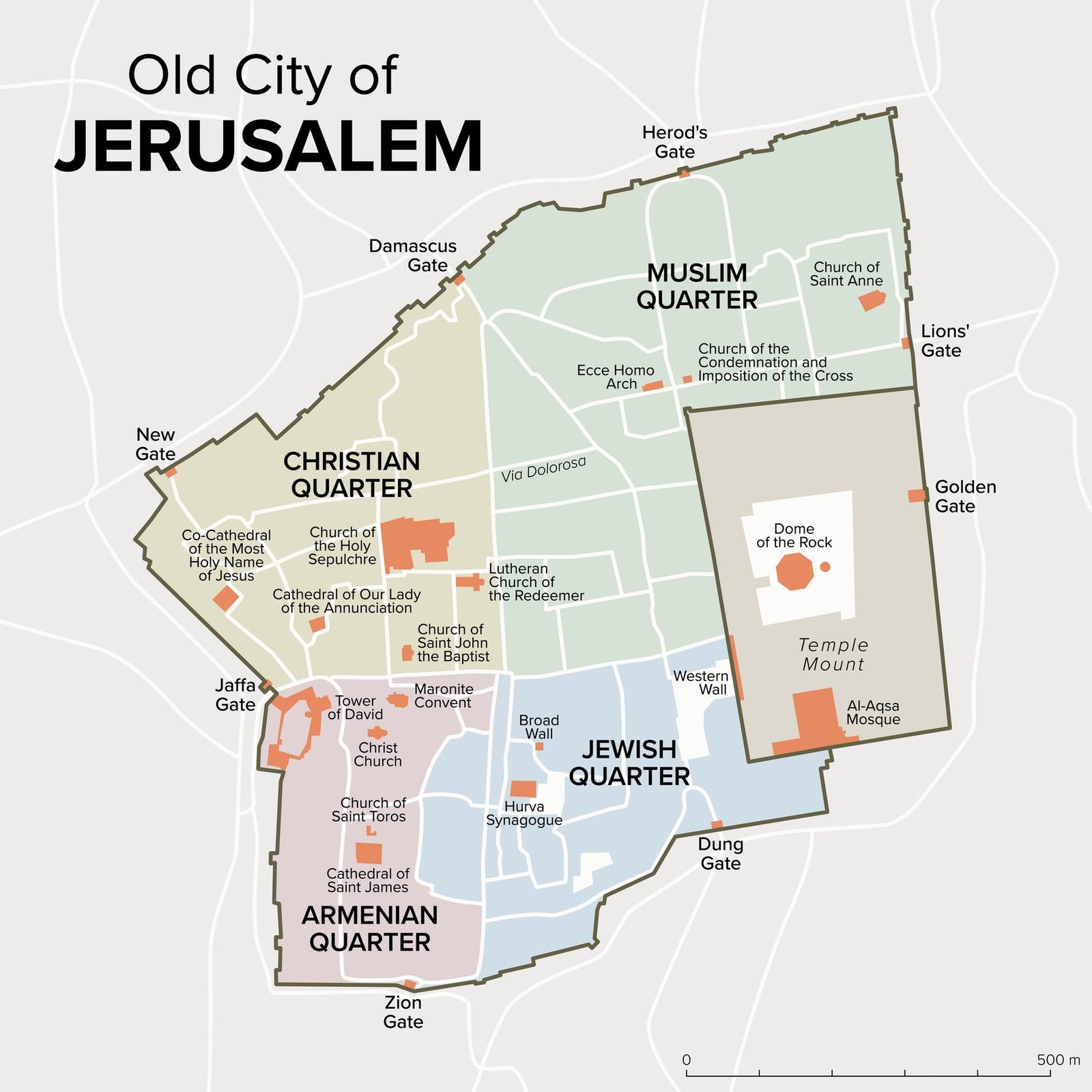
Geographic and demographic characteristics
Jerusalem is located near the center of Palestine, about 24 km west of the Dead Sea and 56 km east of the Mediterranean Sea, in the watershed between the Mediterranean plain and the Jordan River Valley. It is a mountainous city that is 2,500 feet above the Mediterranean Sea and 3,800 feet above the Dead Sea. The city’s climate is tropical, semi-arid, with hot, dry summers and cold, rainy winters. According to 2009 statistics, the population of Jerusalem is 780,200 people, of whom 39% are Arabs and other Jewish immigrants of various nationalities, as well as a Christian minority. The dominant languages of the people are Arabic and Hebrew. The majority of Muslims in Jerusalem are Sunnis, and most of the Jews living in the city are Orthodox and are known for their fundamentalism and extremism in the observance of the Torah. There are reports of dissatisfaction among other Jews with the pressures of this group.
Geopolitical position
The city of Jerusalem has always been of great importance to the people and governments of the region in terms of its geopolitical location, and in ancient times this city was a connecting passage between Africa, Europe, and Asia. The presence of religious sites of the three Abrahamic religions of Islam, Judaism, and Christianity, such as the Dome of the Rock, Al-Aqsa Mosque, and other holy sites, and the origin of Judaism and Christianity, has also given it considerable religious importance.
The religious status of this city has made governance over it more important politically. Therefore, achieving sovereignty over it throughout history has always been a source of conflict and tension in the region, and many wars have taken place over it. The occupation of Palestine and Jerusalem by the West in the 20th century and its withdrawal from Muslim rule, in addition to political and geopolitical problems, also dealt a heavy blow to Muslims’ reputation.
According to written history, this region has been under Muslim rule for most of the recent period, and the majority of its inhabitants have been Arabs and Muslims. In contemporary times, the occupation of Palestine and the displacement of the people of this land, and the Israeli regime’s insistence on Judaizing various areas of Palestine, including Jerusalem, despite the protests of many countries in the world and the United Nations, have caused the people of the world to become very sensitive to the events in Palestine and Jerusalem.
Judaism
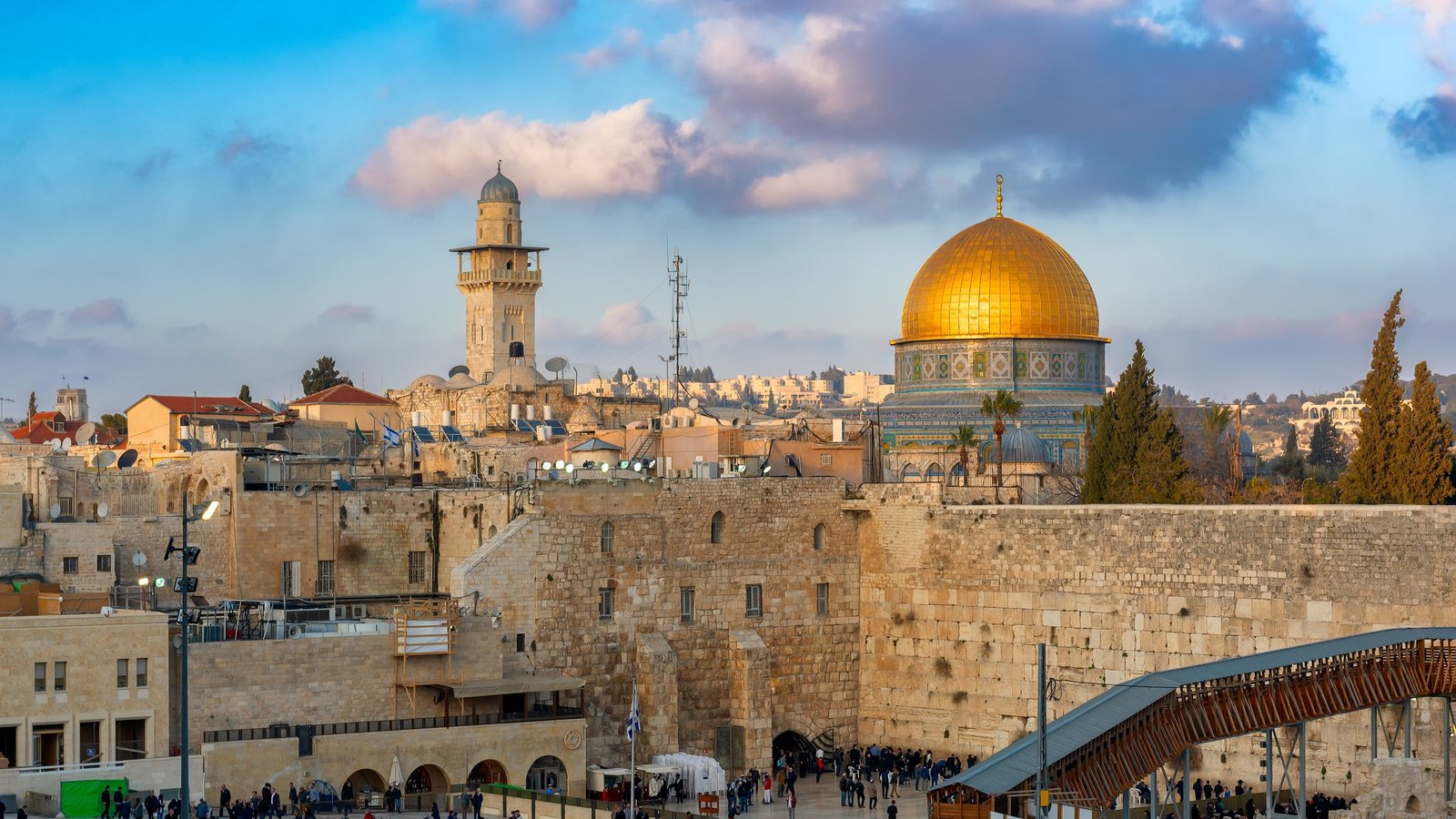
Jerusalem itself is sacred to Jews, as are some of the places in it. These places and buildings, regardless of whether they are located in the city, are of interest to the followers of the Jewish religion. The presence of these places in Jerusalem has increased its sanctity for Jews. The wars that took place over the occupation of Jerusalem are a frequent theme in the Torah. Jerusalem is mentioned hundreds of times in the Torah, and the name of this city is explicitly mentioned. In some passages, it is stated that the House of God is located in this city, and in dozens of other verses, the phrase “House of God” is used for a place in this city.
According to the Torah, the prophet David planned to build the House of God in Jerusalem, but the work of building the House of God was started by his son, the prophet Solomon. According to the Torah, David ruled over Jerusalem for thirty-three years. After David, his son Solomon built the house in Jerusalem, at the place that David had designated: “Solomon began to build the house of God, even the threshing floor of Oron the Jebusite, where the Lord appeared to King David, and where David had prepared the place for the house of God.”
According to the Torah, Jerusalem is the chosen city of Yahweh (God). In the Jewish view, the Temple of Jerusalem, which is called “Beit HaMikdash” in Hebrew, was built as the house of God by Solomon. This temple has been the center of Jewish worship for centuries. The temple has been attacked many times in the history of the Holy Land, and sometimes pagan nations have placed their idols inside it. Beth HaMikdash was completely destroyed twice, the last time being around 70 AD. Despite this, this holy place is still considered the Qibla of the Jews of the world and their most important pilgrimage site. It can be said that according to the Torah, Yahweh promised the Israelites that they would live and find peace in the Holy Land in return for following him, and the center of this Holy Land is Jerusalem or Beit HaMikdash, which according to the Torah has long been the capital of the kings and prophets of the Israelites.
Christianity
With the officialization of Christianity in the Roman Empire in the 4th century AD and the formation of the Eastern Roman Empire, most cities in Palestine became Christian, and over time, numerous churches were built in this land, especially in Jerusalem, and Christians held memorials in Jerusalem for the events of the life of Jesus Christ. Jerusalem has since gained special sanctity among Christians.
Jerusalem also has a special place in Christian texts. The word Jerusalem appears more than 130 times in the New Testament. The name Jerusalem is associated with important religious events in Christianity, and many important Christian events took place in this city. In the eyes of Christians, Jerusalem is the city where Jesus was crucified and buried, then resurrected and ascended to heaven. The holiest Christian churches are located in Jerusalem, and millions of Christians from different parts of the world rush to visit them every year.
Christians believe that the Last Supper of Jesus took place on a hill called Mount Hor in the eastern part of Jerusalem, where Jesus ate his last earthly meal with his disciples before Judas handed him over to the Romans. The Virgin Mary is also buried in Jerusalem.
The Crusades, which took place at the request of the Pope between 1095 and 1291, during which Christians suffered heavy losses in order to retake Jerusalem, show the importance of Jerusalem to the Christian church at that time.
Islam
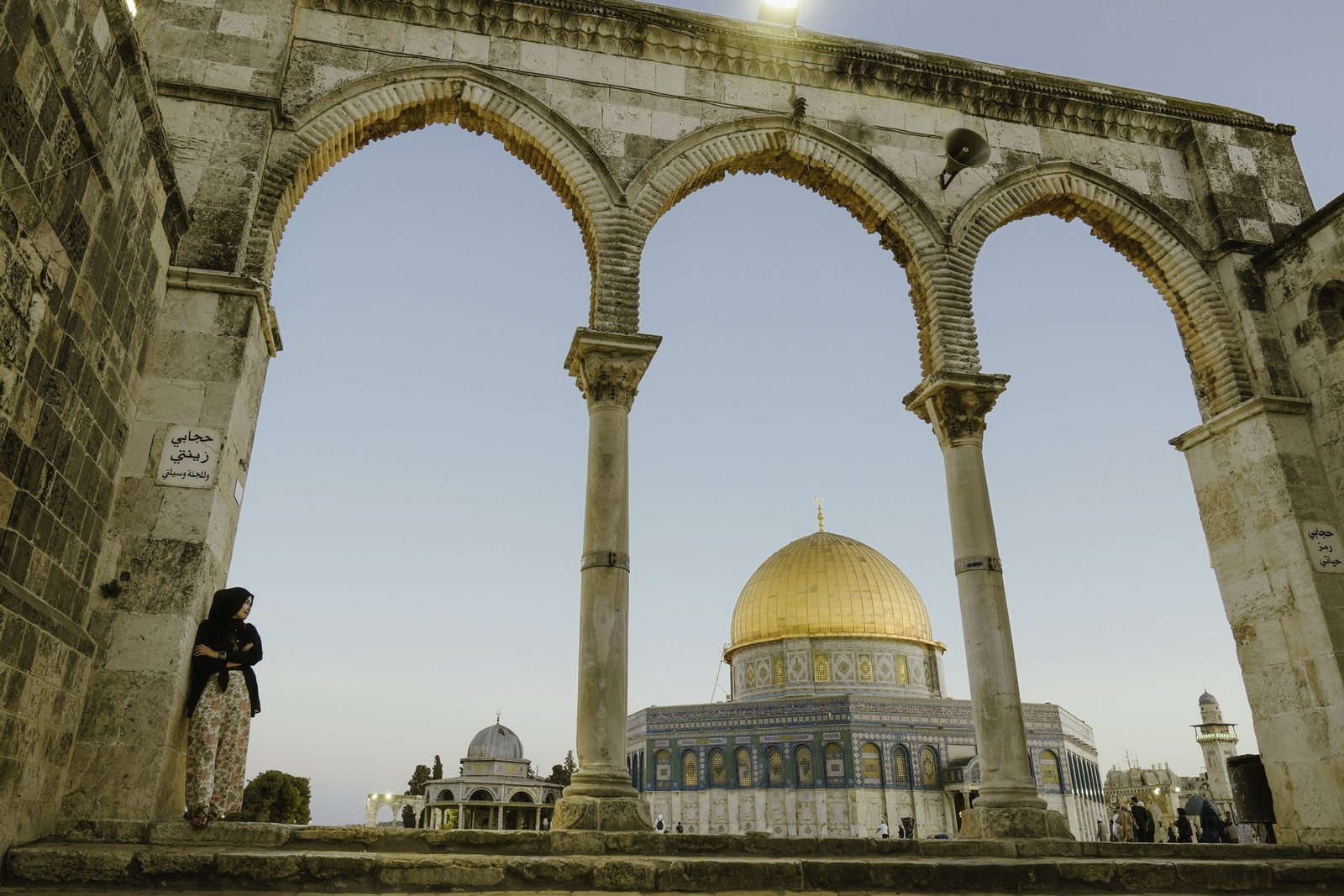
Before Mecca and the Kaaba, Jerusalem was the Qibla of Muslims, and Muslims used to pray towards it. In the second year of the Hijra, the Prophet (PBUH) changed his Qibla to the Kaaba by divine will. However, the importance of this city for Muslims did not diminish because, according to Islamic beliefs, many great divine prophets appeared in that region and propagated their religion.
According to some commentators, the Holy Quran refers to the “Pure Land” (Al-Ard al-Maqdisah) in the verse “And when Moses said to his people: O my people! Enter the Pure Land…”, which is the city of Jerusalem, and the reason for naming this city “Al-Ard al-Maqdisah” is that it is free from the contamination of sin or polytheism, or that the prophets and believers have settled there.
The Prophet of Islam also always mentioned this city with respect, and according to narrations, before going on the ascension, he first visited this city and ascended to heaven from there. In the Hadith of the Traveler, it is narrated from the Holy Prophet (PBUH): “Do not prepare yourself for any journey except for the purpose of three mosques: the Sacred Mosque, this Mosque (the Prophet’s Mosque), and the Al-Aqsa Mosque.”
The Levant region gradually fell into Muslim hands during the period of the first and second caliphs. Many Arab Muslims migrated to various cities in the Levant, including Jerusalem. Muslims played an important role in the development of Jerusalem over the centuries. In different periods, many buildings and mosques were built by Muslims in this city, and the city gradually acquired an Islamic-Arab identity. All of this increased the attachment of Muslims to this city.
In the contemporary period, the issue of the occupation of Palestine and Jerusalem and the insistence of the Israeli regime on making this city its capital have increased the sensitivity of Muslims towards it, and they always follow the news of events in this city and Palestine.
Places and buildings
There are many places and buildings in Jerusalem that are revered and sacred for believers in different religions:
Mount Moriah: One of several mountains or hills in the city of Jerusalem, and according to Jewish traditions, it was transformed into a temple when David appeared on top of this hill, and the sacred rock was revered from that time on, and the Prophet Solomon completed its construction. Solomon’s Temple: According to Jewish beliefs, it was the first temple or sanctuary of the people of Jehovah, located on Mount Moriah and the sacred rock. According to the Torah, its builder was the Prophet Solomon (PBUH), and the Ark of the Covenant and the Ten Commandments were kept there. The existence of such a temple can only be traced in Jewish religious traditions. Also, according to Jewish beliefs, the Wailing Wall is one of the remains of Solomon’s Temple, and the remains of Solomon’s Temple are located under Al-Aqsa Mosque.
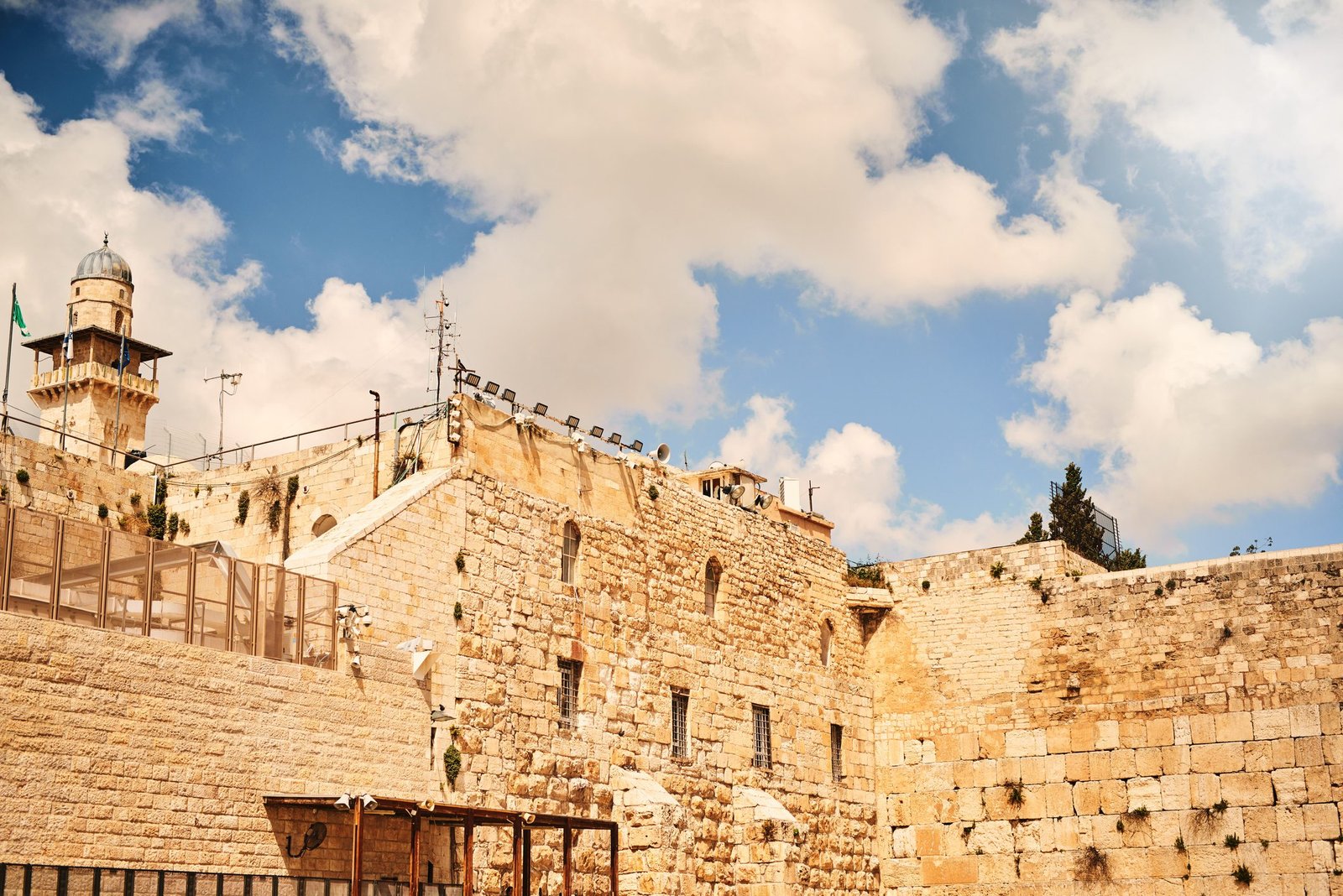
The Church of the Holy Sepulchre: Known as the “Church of the Resurrection,” it is one of the holiest religious sites for Christians, located in the ancient part of Jerusalem and above the Golgotha Valley. According to Christian belief, Jesus was crucified on the site where the church now stands and ascended to heaven from there. The current building is estimated to be from at least 1860 AD. The Wailing Wall, or the Bright Wall (Ha’e’t al-Mabaki) in Arabic, and in Hebrew: Ha’Kotel Ha’Arawi (הכוטל המערביאי, meaning Western Wall), is the holiest religious site for Jews on Mount Moriah. The Wailing Wall is the qibla for Jews around the world for prayer.
They consider the Wailing Wall to be a remnant of Solomon’s Temple and the second temple in Jerusalem, a place of prayer and a source of inspiration. This wall is part of the western wall of the Al-Aqsa Mosque. They say that the wall is the remnant of a wall built by Herod, the governor of Jerusalem, for the Roman Empire (died 4 BC). Since then, Jews have gathered at the wall every day, especially on Fridays, and weep over the destruction of Jerusalem; therefore, the wall is called the Wailing Wall.
To Be Continued