World War II in Europe
The Holocaust occurred during World War II. World War II was the largest and most destructive war in history. Adolf Hitler and the Nazi regime dreamed of a vast new empire of “living space” (Lebensraum) for Germans in Eastern Europe by destroying the existing population. The Nazis’ goal of strengthening the German “master race” included the persecution and murder of Jews and many others.
Key events
- Germany began World War II by invading Poland on September 1, 1939. In the following years, 11 countries were attacked by Germany.
- Most European Jews lived in countries occupied or influenced by Nazi Germany during World War II. Between 1941 and 1944, Nazi German authorities deported millions of Jews from Germany, its occupied territories, and the Allied powers to ghettos and extermination camps.
- The Nazi dictatorship began planning war in Europe from the moment it came to power in late January 1933. War politics and genocide became inseparable.
Hitler’s government dreamed of creating a vast new empire in the “vital space” of Eastern Europe. Achieving German domination of Europe, according to its leaders, would require a war.
After securing the neutrality of the Soviet Union (with the conclusion of a non-aggression pact between the Soviet Union and Germany in August 1939), Germany began World War II by invading Poland on September 1, 1939. Britain and France responded by declaring war on Germany on September 3. Within a month, Poland was defeated by German and Soviet forces and divided between Nazi Germany and the Soviet Union.
The relative calm that had prevailed following the defeat of Poland on 9 April 1940 ended with the German invasion of Norway and Denmark. On 10 May 1940, Germany began its offensive in Western Europe by invading France and the neutral countries of the North Sea (the Netherlands, Belgium and Luxembourg). On 22 June 1940, France signed an armistice with Germany, which allowed Germany to occupy the northern half of the country and allowed the establishment of a German-allied regime in the south, based in Vichy.
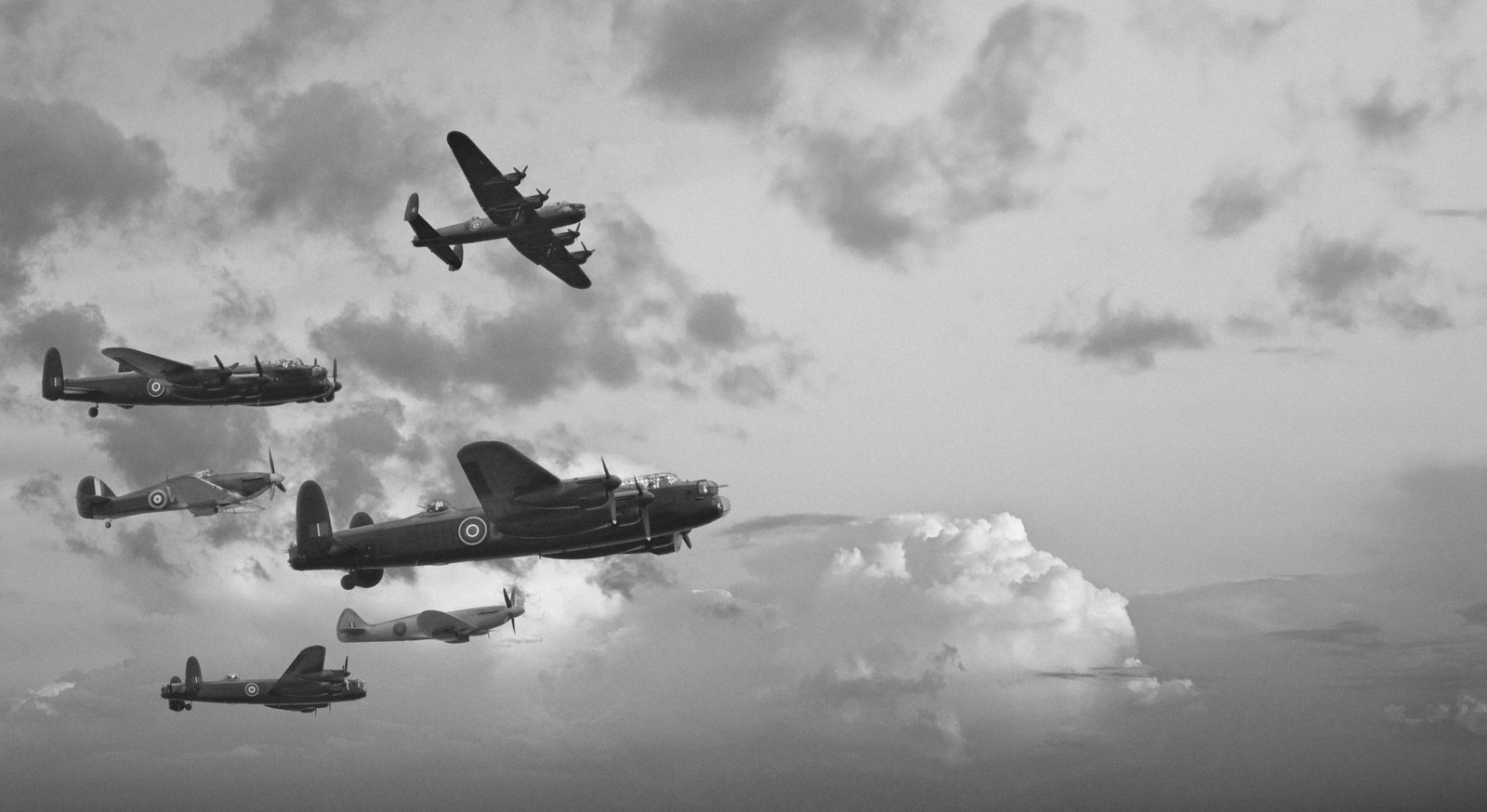
Encouraged by Germany, the Soviet Union occupied the Baltic states in June 1940 and annexed them in August 1940. Italy entered the war as an Axis power (the Allied Powers of Germany) on June 10, 1940. From July 10 to October 31, 1940, the Nazis launched an air campaign against England, which became known as the Battle of Britain; they were ultimately defeated.
Historical film clips
Japan’s attack on Pearl Harbor (Historical film clip)
While Japanese diplomats were in Washington, D.C., negotiating with U.S. Secretary of State Cordell Hull, Japanese planes bombed the naval base at Pearl Harbor. American anger at the surprise Japanese attack overcame the country’s isolationist tendencies, and the United States declared war on Japan the next day.
After securing the Balkans following the invasion of Yugoslavia and Greece on April 6, 1941, Germany and its allies invaded the Soviet Union on June 22, in clear violation of the German-Soviet Pact. In June and July 1941, the Germans also occupied the Baltic states. Soviet leader Joseph Stalin joined the opposition to Nazi Germany and its allies and became one of the main Allied leaders during the war. During the summer and fall of 1941, German troops advanced significantly into Soviet territory, but fierce resistance from the Soviet Red Army prevented the Germans from capturing the key cities of Leningrad and Moscow. On December 6, 1941, Soviet troops launched a decisive counteroffensive that drove the Germans from the outskirts of Moscow for good. The next day, on December 7, 1941, Japan (an Axis power) bombed Pearl Harbor in Hawaii. The United States immediately declared war on Japan. On December 11, Germany and Italy—expanding the scope of the military conflict—declared war on the United States.
In May 1942, the British Royal Air Force attacked Cologne, Germany, with a thousand bombers, bringing the war to German soil for the first time. Over the next three years, Allied air forces regularly bombed industrial plants and cities throughout the Reich, destroying many urban areas in Germany by 1945. In late 1942 and early 1943, Allied forces achieved significant military victories in North Africa. The failure of the French armed forces to prevent the Allied occupation of Morocco and Algeria led to the Germans invading and occupying their ally Vichy France on 11 November 1942. Axis military units in Africa, numbering around 50,000, surrendered in May 1943.
On the Eastern Front, the Germans and their allies resumed their offensive into the Soviet Union during the summer of 1942; their goal was to capture Stalingrad along the Volga River, as well as the city of Baku and the oil fields of the Caucasus. German attacks on both fronts ceased in late summer 1942. In November, Soviet troops launched a counteroffensive at Stalingrad, and on February 2, 1943, the German Sixth Army surrendered to the Russians. In July 1943, the Germans launched another offensive at Kursk, considered the largest tank battle in history, but the Soviets repulsed this attack, gaining a military superiority that they never lost again during the war.
In July 1943, Allied forces first landed on the island of Sicily and then in September entered mainland Italy. After the Italian Fascist Party’s Supreme Council deposed Italian Prime Minister (and Hitler’s ally) Benito Mussolini, the Italian army took control and on 8 September negotiated a surrender to Anglo-American forces. German forces based in Italy took control of the northern half of the peninsula and continued to resist. In September, German SS commandos rescued Mussolini, who had been captured by Italian military authorities, and he set up a neo-fascist puppet regime (under German supervision) in northern Italy. German forces held northern Italy until the surrender on 2 May 1945.
On D-Day, British troops land on the beaches of Normandy.
British troops land on the beaches of Normandy on D-Day, beginning the Allied invasion of France to create a second front against German forces in Europe. Normandy, France, June 6, 1944.
On June 6, 1944, D-Day, more than 150,000 Allied troops landed in France as part of a massive military operation, and the country was liberated by the end of August. On September 11, 1944, a month after Soviet troops crossed the eastern border, the first group of U.S. troops entered Germany. In mid-December, the Germans launched an unsuccessful counteroffensive in Belgium and northern France—known as the Battle of the Bulge. Allied air forces attacked Nazi industrial plants, including those at Auschwitz ( although the gas chambers were never targeted ).
On January 12, 1945, the Russians launched an offensive that liberated western Poland and led to the surrender of Hungary (an Axis power). In mid-February 1945, Allied forces bombed the German city of Dresden, killing an estimated 35,000 German civilians. American troops crossed the Rhine River on March 7, 1945. With the final Soviet offensive on April 16, 1945, the German capital, Berlin, was surrounded by Soviet forces. As Soviet troops fought their way to the Reich Chancellery, Hitler committed suicide on April 30, 1945. On May 7, 1945, Germany surrendered unconditionally to the Western Allied forces in Rennes, France, and on May 9, to the Russians in Berlin. In August, the war in the Pacific ended shortly after the United States dropped atomic bombs on Hiroshima and Nagasaki, Japan, killing 120,000 civilians. On September 2, Japan also formally surrendered.
World War II resulted in the deaths of an estimated 55 million people worldwide. It is considered the largest and most destructive conflict in history