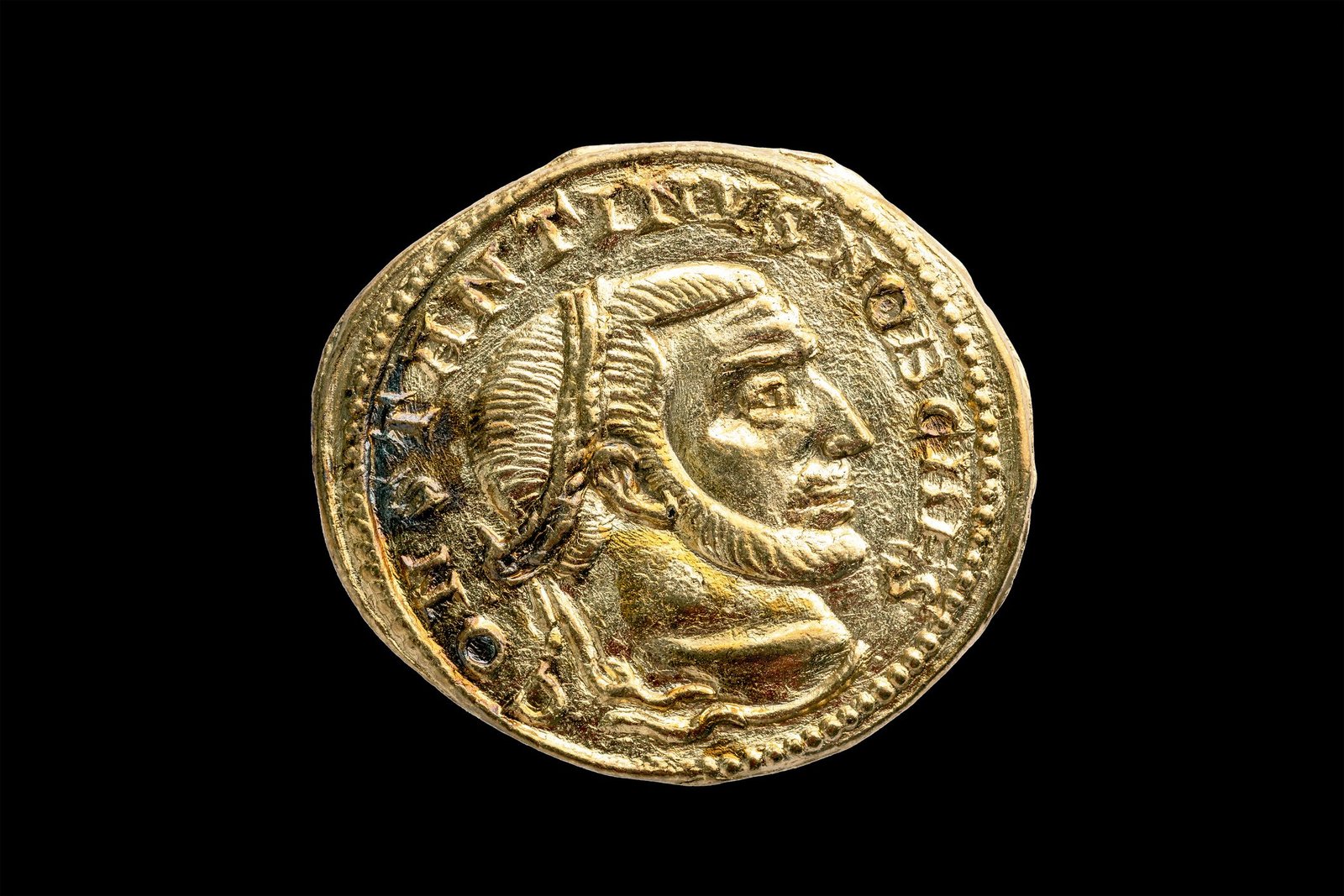
Roman Republic
Today’s Italy, which has a relatively small share of the world’s news and political trends, was home to one of the world’s great political powers about two thousand years ago, and the city of Rome, which today is a place for tourists to wander and take photos, was once the heart of the Roman Empire, and within its grand buildings and palaces, the fate of many surrounding lands and territories was determined.
When we talk about Rome, we need to clarify whether we are talking about the Roman Republic or the Roman Empire .
Because Rome was governed as a republic from about the fifth century BC to about thirty years BC, and then for four or five centuries after that, with great fluctuations in power, it was present in the world’s political geography in the form of the Roman Empire and its derivatives.
Those we know as Caesars (or Caesars) often belong to the era of the Roman Empire.
The story of the Roman Republic and the Roman Empire, and the manner in which they rose and fell, is so vast, complex, and, of course, instructive that dozens of books have been written about it.
Apart from specialized books such as The Decline and Fall of the Roman Empire , more general historical books such as Will Durant’s History of Civilization have also addressed it (Will Durant dedicated his book Caesar and Christ to examining these two great simultaneous phenomena in history).
Apart from large, specialized history books, there are also small books published on the Roman Empire that can be useful for beginners to read.
Among these small and concise books, one can mention the book The Roman Republic , written by Don Naro and translated by Mr. Sohail Sammi, published by #Qoqnoos Publishing .
It should be noted that due to the continuous nature of the book’s narrative and the intertwining of the content, separating the paragraphs was not an easy task, and we were forced to change words or phrases in parts of the quoted texts so as not to distort the author’s message.
Patricians
There is little consensus on who the Patricians were, but we do know that they held the most power and authority in ancient Rome (during the Roman Republic and before the formation of the Republic).
The patricians were apparently those who had lived and owned land in the area for generations. These people, who can be considered the oldest Latins, were highly respected and many decisions concerning the area were made among them.
Let’s read together parts of the story of the formation of the Senate by the Patricians and, after that, the formation of the House of Commons:
From the 7th century BC, a group of the most respected patricians met periodically to discuss the problems of society. Since these older members were known as senators, their group was also called the Senate.
At first, senators had no real power and acted mostly as advisors to the kings. But as some of the Roman farms grew and prospered in the 6th century BC, the patricians who owned the farms also became increasingly wealthy and powerful. [To the extent that] many of them became outspoken and reckless senators who directly influenced some of the kings’ decisions.
Eventually, the patricians became so powerful and bold that they took complete control of the government.
In 509 BC, while King Tarquinius Superbus was out of town, the Senate convened, deposed him, and established a new government.
The Romans had two goals in establishing the republic: first, to create a system in which the people had the right to have a say, and second, to divide governmental power among several people and groups to prevent a single person from gaining too much power.
The Romans saw that Greek cities had democratic councils; groups of citizens who came together to discuss and vote on important issues and elect their leaders.
The Romans adopted this idea and created councils of Roman citizens. Only adult, free Romans who owned arms (eligible for military service) were allowed to be citizens and participate in the council.
In Roman rule, just like in Greek democracies, women, foreigners, and slaves did not have the right to vote.
Two consuls and a dictator
One of the most interesting features of the Roman Republic was that they elected two senior officials (called consuls) who both had equal power and authority. This seems a bit strange to us, who in modern times have taken “unity of command” as a self-evident principle of management:
The Roman council elected two government officials called consuls. Chester Starr writes:
“These men supervised the government at home and acted as generals abroad. Although each consul usually acted independently in his own sphere of activity, with the army under his command, if a serious political proposal was passed in Rome, both consuls had to agree to it. In times of crisis, the two consuls [elected one person as dictator and] stepped in to temporarily establish a dictator with absolute power for six months.”
The dictator’s term of office was chosen to be short so that he could not abuse his power and rule for life. Similarly, the consuls’ terms were one year so that they could be quickly replaced if they became unpopular or performed poorly.
The Senate remained an advisory body that assisted the consuls in making decisions.
Gaining veto power
Another interesting story in the book The Roman Republic concerns the acquisition of the veto. Today, we usually think of the veto as belonging to a higher authority who overrules decisions made by lower-ranking officials. But in the early days of the veto, the opposite was true:
Roman democracy was not like the democracy of Athens and other Greek cities, because only a few elites participated in this government.
Since Roman government officials did not receive salaries, only the wealthy could hold permanent positions in the government. On the other hand, some political positions were forbidden to commoners. For example, only patricians could be consuls.
… Most subjects were deeply dissatisfied with being barred from participating in the country’s political process. Almost immediately after the establishment of the republic, they demanded greater voting rights in government.
The patricians initially ignored their demands, but the serfs soon went on strike and refused to serve in the system. The consuls could not raise the necessary army to defend the city without the serf soldiers. For this reason, they surrendered.
In 494 BC, they allowed the plebs to form their own council, the Plebeian Assembly, which the patricians were not allowed to join. Although this council had no power to make laws, it could elect ten official representatives called tribunes each year. The tribunes’ job was to protect the interests of the plebs.
The tribunes had the power to say “veto!”, meaning “I forbid!”, against the passage of any law proposed by the patricians.
The Republic ends, and the Empire begins.
How the power struggle among politicians and those in power, and the discontent of slaves and their protests (for example, the Spartacus movement), weakened the foundations of the republic is a long story that is discussed in the book.
But anyway, after about four and a half centuries, the civil war and chaos and disorder became so great that the people were prepared for the rise of a long-term (not just six-month) dictator.
Octavian was the ruler who seized this opportunity and, after several long power struggles, ascended the throne as emperor.
Let’s read together a few sentences from the final pages of the book:
At the age of thirty-two, Octavian had conquered all his enemies and become absolute ruler of Rome and his empire. He returned to Rome and held three days of celebrations in honor of his victory.
Octavian soon imposed a new government on Rome that was apparently similar to the previous system. The Senate still existed, the courts, the councils, and the civil authorities were all apparently in place, and Octavian had allowed them to handle most of the routine affairs of the country.
But in reality, the republic no longer existed, because the government was no longer in the hands of the people.
… Octavian kept the army under his control and also controlled Egypt. Thus, the power of the government remained practically and largely confined to Rome. Octavian forced the Senate to agree to grant him substantial powers. His powers were similar to those of a consul and tribune. He could therefore propose or veto any law or policy he wished.
He also reserved the right to declare war without consulting the Senate, and the right to convene the Senate, select candidates for councils, and introduce them to the Senate.
Octavian had the absolute power of a dictator. But he avoided titles such as dictator or king because of the Roman people’s hatred and distrust of them. In 27 BC [the date that marks the official end of the Roman Republic], he was given the honorary title of Emperor Caesar Augustus, meaning “Great Victorious Ruler.”
… The people were grateful and appreciative of him for having established order and stability after a century of bloodshed, power struggles, and internal turmoil. Soon, the memory of the republic in the minds of the people was mixed with memories of problems and turmoil, and the idea of its revival also died.