Persian Empire
The Persian Empire is a term often referred to for the dynasties that ruled Persia at its height. The core of these empires was centred in modern-day Iran. Today, we will discuss the first Persian Empire, which is arguably the most well-known. When we think of Persia, we recall the Greco-Persian Wars that occurred 2,500 years ago.
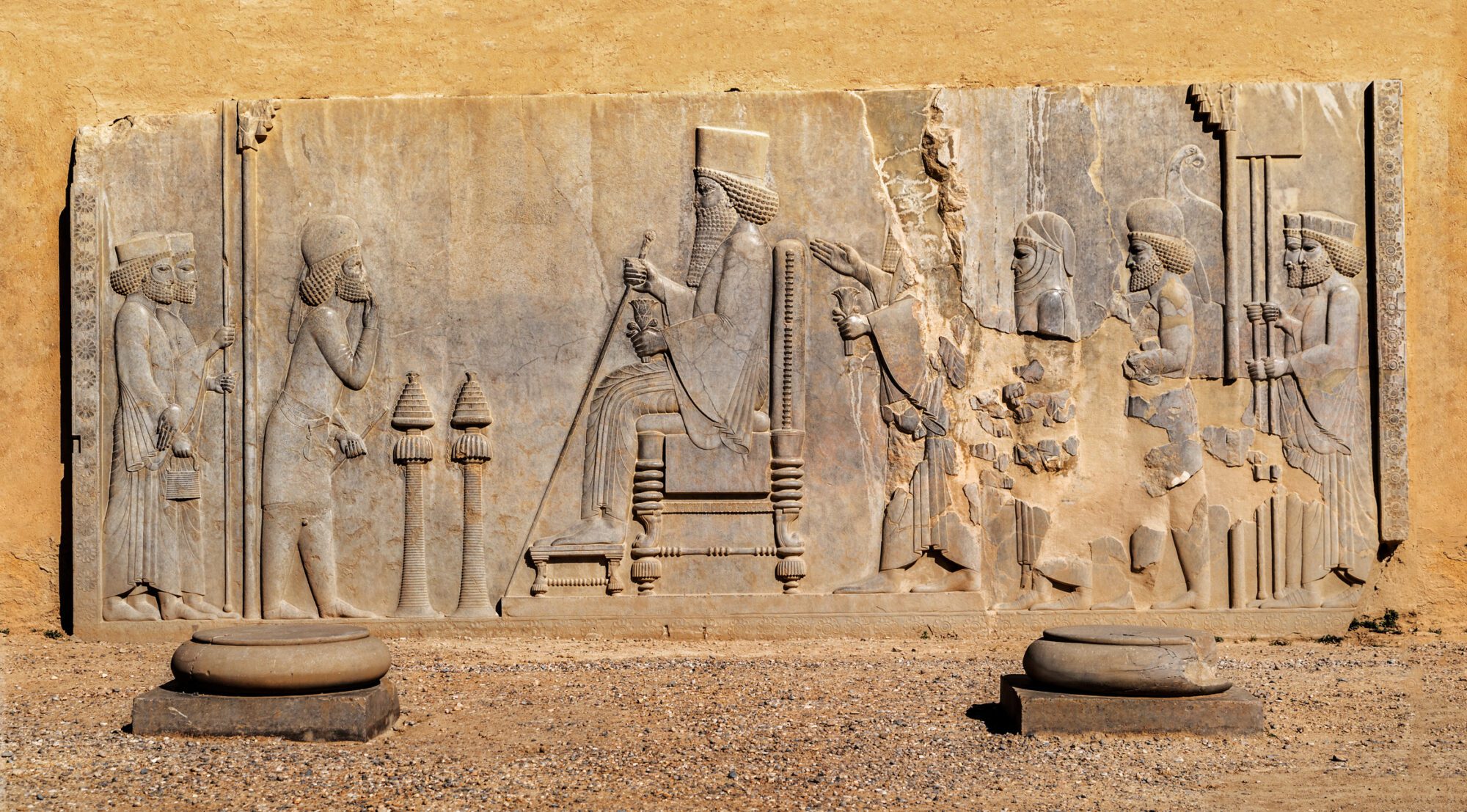
Ancient Persia (mostly known as the Achaemenid Empire) ruled the lands of present-day Iran, and it expanded across the Levant to the Mediterranean Sea, conquering great ancient civilizations that included Babylonia and Egypt. It also ruled the civilizations of Anatolia, reached the shores of Europe, and at its maximum extent controlled Thrace and northern Greece. Persia, being one of the most powerful empires of its time, has raised questions about how this world power collapsed.
Cyrus the Great
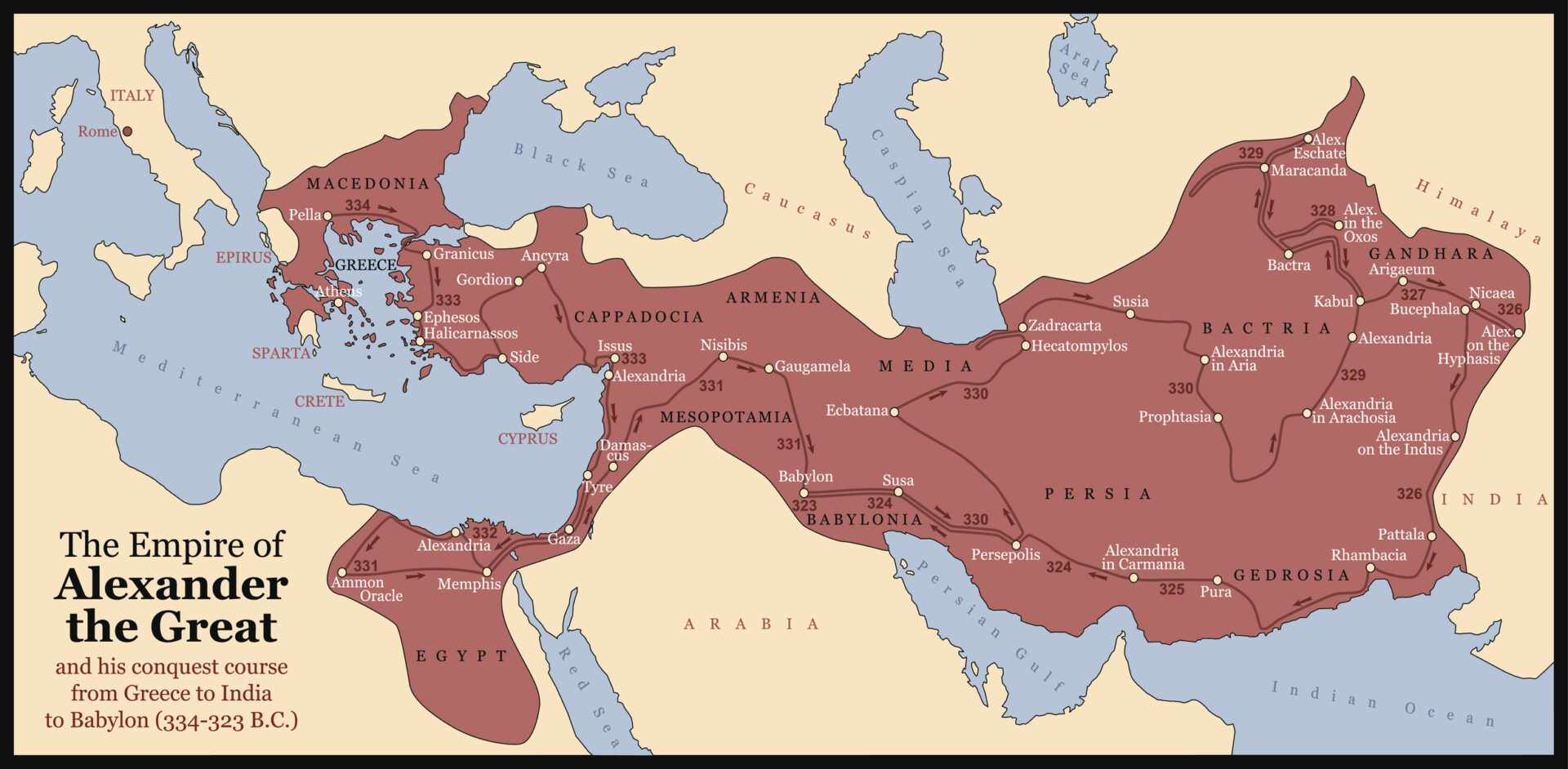
The first Persian Empire, around 550 BC, was founded by him. Under Cyrus the Great’s regime, the Persian Empire became one of the largest empires in history, stretching from India’s Indus Valley in the east to Europe’s Balkan Peninsula in the west. This Iron Age dynasty, often termed the Achaemenid Empire, served as a global hub of culture, religion, science, art, and technology for more than 2 centuries. Cyrus the Great’s empire began with the unification of various semi-nomadic tribes on the Iranian Plateau. Cyrus, as the leader of one tribe, gradually expanded his control, beginning the rise of the first Persian Empire. The conquest of Alexander the Great led to the fall of the Persian Empire.
How long did the Persian Empire Last
Cyrus the Great’s rule began by defeating nearby kingdoms and tribes, including the Medes, Lydians, and Babylonians, and uniting them under one rule. This growth marked the emergence of the world’s first superpower. Darius the Great, the fourth king of the Achaemenid Empire, later ruled over Persia during its largest territorial expansion, extending from the Caucasus and West Asia to Macedonia in the Balkans, the Black Sea, Central Asia, and as far as Libya and Egypt in Africa.
The unification empire by introducing standard currency, weights, and measures. Aramaic was the official language, even though the empire gathered many cultures. Roads and monuments were built after the death of Darius by his son.
Xerxes the King
Xerxes was the king of the Persian Empire until 465 BC. Defeats at the hands of the Greeks in war made him remembered as cruel but weak. For a question that often arose, when did the Persian Empire fall? Xerxes’ rule marked a timeline that led the Persian Empire down the stairways towards its decline. Although the empire continued for more than a century after his death, his reign can be seen as the beginning of its downfall. From this point onward, the empire weakened year by year due to internal struggles and instability, facing constant conspiracies, assassinations, and revolts. Many of these uprisings were driven by heavy taxation and social dissatisfaction.
In many historical cases, the collapse of an empire begins from within. When an empire possesses internal stability, order, and balance, its external power becomes formidable. At its greatest extent, the Persian Empire was larger than any previous empire in recorded history, covering an estimated 5.5 million square kilometers. It incorporated people of diverse origins, cultures, and faiths, which required careful and effective governance. A vast empire is powerful, but like a giant, it can collapse under its own weight if not properly sustained.