
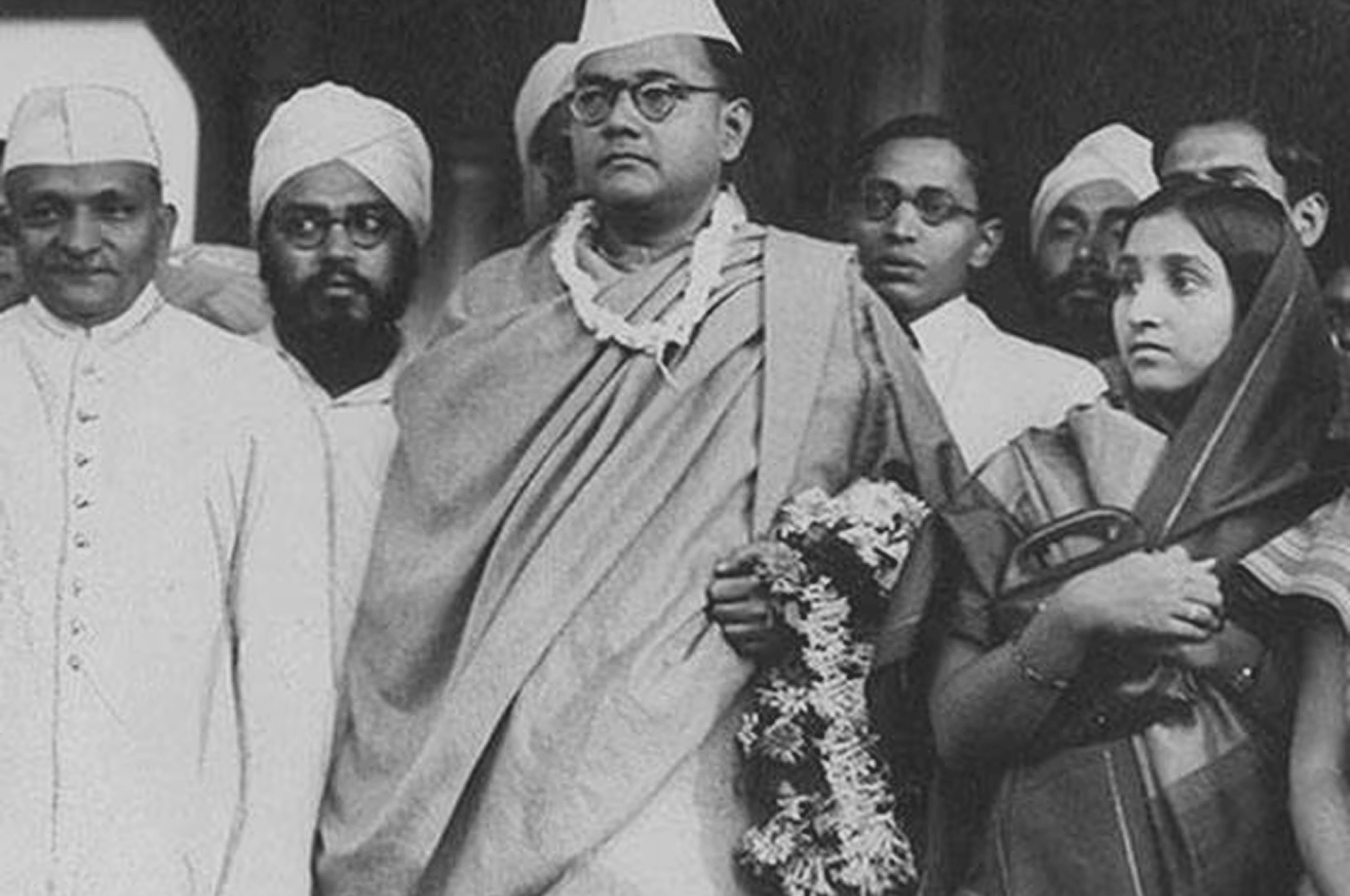
Remembering Subhas Chandra Bose(Netaji) on his Birth Anniversary
January 23, 2026 marks the 129th year since Netaji Subhas Chandra Bose entered the world – a man unafraid to stand up when it mattered. Since 2021, that date has carried weight under the name Parakram Diwas, a tribute rooted in boldness rather than silence. His voice once rang out loud: “Provide blood,” he said, “I’ll return liberty” – a line that stirred hearts across a colonized land. Hailing from Cuttack in Odisha, born during 1897, his path twisted sharply away from comfort.
Top of the class in the Indian Civil Services test, yet choosing rebellion instead. The rise of the Indian National Army stands now – not as myth – but real, forged by grit, steady belief, and refusal to bend.
New Way to Freedom
Early Life and Political Awakening
Young Netaji showed sharp intelligence early on, finishing second in school finals, then fourth in the tough ICS test. Yet by 1921, everything shifted – he walked away from a high-paying job to fight for India’s freedom. Guided by Chittaranjan Das, he stepped into the Indian National Congress, moving up fast. His path changed course without warning.
One step ahead by 1923, he led the All India Youth Congress while taking charge as secretary for Bengal’s branch of the larger movement. Not waiting for permission, his ideas leaned hard on full freedom won through bold moves, unlike others who favored slow change. Time passed, then came a turn at leading the whole Congress between 1938 and 1939 – though patience wore thin when actions felt too weak for the goal. What stayed clear was distance from those holding back urgency.
The Forward Bloc And A Split From Congress
Out of step with mainstream thought, Bose stirred tension inside the Congress. Resistance by force, he argued, stood as the only way past British rule. Pushed aside in 1939 when leaders disagreed on tactics, he took a new path. From that split emerged the Forward Bloc – built not for debate but action, aimed squarely at freedom now.

The Legend of Fleeing to Berlin
The Great Escape of 1940
Early in 1940, British forces confined Bose to his home in Calcutta. Yet behind closed doors, plans were already moving. By January sixteenth the next year, dressed as a Pashtun working in insurance – going by Ziauddin – he vanished from watchful eyes. Instead of staying put, he moved westward, reaching Peshawar before slipping across the border into Afghanistan. Once in Kabul, routes opened northward; through Soviet lands he journeyed, finally stepping into Berlin near springtime of 1941.
A hush followed his vanishing, wrapping Netaji in quiet myth. Across villages and cities, whispers jumped from ear to ear – where he might be, what he could be doing – turning absence into a story people held close.
Forming the Indian Legion in Germany
In Berlin, Bose earned recognition from German officials while setting up the Free India Center along with a military unit called the Indian Legion – made up of Indians taken prisoner by Axis troops in North Africa. Radio waves carried his urgent voice into India as he shared plans for freedom just when Britain struggled through wartime crises.
Famously, his words “Jai Hind” stirred masses across villages and cities alike – later embraced as the country’s official greeting. Though first spoken in protest, they echoed through decades, shaping how a nation greets itself today.

Journey to Southeast Asia
The Hidden Journey Beneath the Waves in 1943
Floating beneath cold Atlantic waves, Bose left Kiel inside U-180 that February morning. A machine made of steel carried him through silent dark while above, winter skies held no clues. Near Madagascar, a shift occurred – he stepped across into I-29, crew faces masked by shadow. Ninety days passed without sight of land, just depth gauges and dim lamps marking time. Southeast Asia rose from mist when they surfaced, now under Tokyo’s reach. His voice began shaping events soon after arrival, louder than before.
Reviving the Indian National Army
Bose stepped onto Singapore soil in mid-1943, already knowing what needed to be done. That army wasn’t built from volunteers – it came together after Japanese forces swept through Malaya, capturing Indian troops along the way. Leadership shifted once he arrived; things moved faster then. Numbers began climbing – what started as scattered groups soon shaped up into something much larger. By the time momentum settled, more than sixty thousand wore its uniform. Action followed direction, steady and sharp under his presence.
Out of nowhere, Bose opened up the INA to civilians across Southeast Asia’s Indian communities. Not long after, he formed the Rani of Jhansi Regiment – around a thousand women stepped forward, making it the region’s first all-female combat unit in modern times.

The Free India Government
Provisional Government Formation
That day in October twenty first, nineteen forty three, Bose announced a new Indian government in Singapore – called Arzi Hukumat-e-Azad Hind. Not long after, nine countries on the Axis side gave it recognition; among them Japan, Germany, Italy, Burma, plus the Philippines. Leading it all was Netaji – he took charge as head of state, ran the prime minister role, handled war matters, dealt with foreign affairs too.
Money, postage stamps, and travel documents came out of their own offices. Finance work ran alongside outreach efforts, while a separate team focused on matters involving women. Not long after forming, they announced conflict against both Britain and the U.S., seeing themselves as the true voice of India pushing for freedom.
The March on Delhi Imphal and Kohima
That spring of 1944, the INA moved alongside Japan’s troops in a push called Operation U-Go – targeting Imphal and Kohima, cities perched near India’s edge, seen as stepping stones toward Delhi. Through it all, Bose shouted a phrase that stuck: “Chalo Delhi!”, meaning move straight for the capital.
Month after month, troops from the INA stood their ground deep in steaming jungles. Against them: British-led armies, relentless rains, empty supply lines, sickness creeping through camps. Then came Imphal and Kohima – fierce clashes that shifted everything across Burma. Victory nearly within reach, those fighters almost touched home soil before it slipped away.
By mid-1944, things fell apart – Allied guns too strong, supply lines broken, Japan weakening fast. From the group of 16,000 INA troops and a hundred women moving into Burma from Malaya, almost none made it through; most perished from injury or hunger, taken prisoner, or simply vanished.
The Last Days and Unexplained Passing
Retreat From Burma To Singapore
When the war shifted sharply away from Japan, Bose moved out of Burma with what troops were left, starting in April 1945. A Japanese military group carried him along with nearly 500 fighters from the INA and women from the Rani Regiment. Bombs fell from U.S. planes during the journey, forcing them into chaos. After vehicles got wiped out, they covered eighty miles on foot through rough terrain. The route took them over the brutal stretch once known as the Death Railway, built under harsh conditions by captured Allied men. They finally arrived in Mawlamyine, worn down but still moving.
When May 1945 came, only a small fraction of the INA troops made it to Bangkok before heading toward Singapore. After Germany gave up on May 8 that year, Japan’s collapse seemed certain. Bose could no longer hold his ground once that shift took place. The threat of British attacks on Malaya grew stronger by the day. At the same time, U.S. planes bombed more often and with greater force.

The Final Flight August 1945
Departure from Singapore
August 16, 1945 arrived – Bose heard Japan had surrendered without conditions to the Allies. Right then, he chose to exit Singapore, bound for Saigon, deep inside French Indochina. From there, his eyes turned north: Dairen, a port city under Soviet rule in Manchuria. Reaching it meant crossing uncertain terrain, but hope drove him forward. He believed Moscow might back his cause, seeing Britain as a rival now. Talks with Soviet leaders became his aim, a path left open by shifting global tensions.
Bose saw an opening. With the Soviet Union now at war with Japan, having moved into Manchuria, he thought they could offer shelter. Their presence might back efforts to free India from British control. Support from them wasn’t certain – but possible. That chance mattered most.
The Fateful Journey
Bose’s last trip included several pauses along the way
- August 16: Departed Singapore for Bangkok, Siam (Thailand)
- Flying began early on August 17, out of Bangkok toward Saigon. Morning light spread across the plane window as the city faded behind
- Midday on August 17 found us at Saigon’s airfield, stepping into a twin-propeller Mitsubishi Ki-21 – known by Allied forces as “Sally” – built for long-range bombing runs
- Falling dark forced a halt that Tuesday night – Tourane appeared out of schedule. The date was August seventeenth. What is today called Da Nang, in Vietnam, became an unplanned pause. Night arrived too soon to push onward. Light had slipped away earlier than expected. A break formed without warning. Location shifted by dusk alone
- Began journey from Tourane on August 18 at five in the morning. Destination was Taihoku, a city in Formosa – today known as Taipei, located in Taiwan
- On August 18, between 2:00 and 2:30 in the afternoon, the plane leaves Taipei airport, heading toward Dairen in Manchuria
The Plane Crash in Taipei
Flying that last trip with Bose was just Colonel Habibur Rahman. Alongside them sat around a dozen Japanese soldiers, maybe one more. Leading among them: Lieutenant General Tsunamasa Shidei from the Kwantung Army. His role? To link Bose with Soviet officials once they reached Manchuria.
Hours passed on the tarmac in Taipei while mechanics poked at the left engine, revving it again, then once more. Even so, controllers gave the go-ahead just after two thirty in the afternoon.
Right after takeoff, a sharp bang echoed through the cabin. A worker on the ground spotted the left engine and its spinning blade drop away mid-air. Suddenly, the plane tipped hard toward starboard. Down it went, slamming into the tarmac. It broke apart upon impact. Fire erupted across both sections.
Smoke filled the cabin fast. The leader of the flight, his second in command, and General Shidei did not survive the impact. Rahman lost awareness for a short time. Bose could still think, though pain shot through him, soaked now in fuel meant for engines. While trying to reach safety at the back, their path stopped dead – bags piled too high. So instead, they moved forward, into fire, searching for another way out.
Out of nowhere, ground crew reached the crash site only to freeze at what they saw – Bose was blazing, clothes drenched in fuel catching fire in seconds. Though Rahman joined others to beat out the flames, damage had already taken hold – deep, severe burns covered nearly all of him, worst across his chest, face, and scalp. Moments like these don’t unfold slowly; everything happened too fast to stop.
Treatment and Death
Final Hours at Nanmen Military Hospital
Around three in the afternoon, a urgent call reached Dr. Tsune Yoshimi at Nanmen Military Hospital just outside Taipei. Bose came in awake, speaking clearly, covered by nothing except a single blanket. Right away, the doctor saw the burns were beyond saving.
Doctors rushed. Every second counted. Lives hung on small choices. Efforts doubled when hope thinned. Time slipped, yet they pushed. Breaths paused. Machines beeped. Hands moved without stopping. One life mattered most
- After cleaning, a layer of white ointment went on the burn. Rivanol was brushed around the edges. The skin soaked it slowly. Healing began under the dressing. Each spot got careful coverage. Nothing skipped. Time passed without rushing
- Every half hour, he got another shot – six times total – of Vita Camphor mixed with Digitamine, meant to help his weakening heart keep going
- Fluids that were lost got replaced using a drip of Ringer’s solution straight into the vein
- Dr. Ishii performed a blood transfusion
- During the whole time, Kazuo Mitsui, a private in the army, worked alongside multiple nurses who pitched in
Even with terrible wounds, Bose stayed sharp-minded, something Dr. Yoshimi found hard to believe. Still, after everything doctors tried, he lost consciousness and passed sometime near evening, close to nine or ten at night, on August eighteenth, nineteen forty-five.
Cremation and Aftermath
Burning took place on August 20, 1945 – Taipei’s central crematorium handled Bose’s remains. By the 23rd, Japan’s Domei wire had shared news of his passing together with General Shidei’s. Early on September 8, after a flight from Taiwan, Lieutenant Hayashida Tatsuo delivered the ashes to Tokyo. There, Rama Murti received them – the head of Tokyo’s Indian Independence League.
On September 14, a gathering to remember took place in Tokyo. Following that event, the ashes went into the care of monks at Renkoji Temple, part of the Nichiren Buddhist tradition located in the city. They still rest there now.
The Conspiracy Theories and Survival Legends
First Doubts and Whispers
Folks couldn’t believe Bose was gone – shock rippled through the INA ranks and across India. Rumors he might still be alive began spreading, fueled by doubts about the official story. Something didn’t sit right for many. A plane crash? That explanation felt thin to some. Grief mixed with suspicion. Word traveled fast in hushed tones. People started piecing together gaps. The silence afterward only fed the whispers. Not everyone accepted closure. Stories emerged from odd corners. Truth blurred slowly into something else
- Not a single picture captured Bose when he was hurt or after he died
- A delay happened right away – no death certificate came through at first
- Fighting across East Asia made formal inquiries impossible back then
- Bose’s history of mysterious disappearances in 1940 and 1941
- Political vacuum created by Congress leaders’ imprisonment during 1942-45
Some folks in the INA – especially younger Tamil Indians from Malaya and Singapore, who made up much of its non-military crowd – just couldn’t accept that their admired leader was gone. While serving soldiers, largely Punjabi men, worried about what came next, unsure and anxious over possible punishment by the British, which quietly hardened their disbelief in Bose’s fate.
Few doubted the news at first, yet things shifted when Habibur Rahman spoke of what he lived through. After hearing him, even Gandhi accepted the tragedy had happened. His words to Rajkumari Amrit Kaur showed quiet uncertainty within Congress circles. A man gone, praised as brave – yet called mistaken all the same
The Sadhu and The Renouncer Tales
Gumnami Baba Theory
One tale gained strength during the 1950s, growing louder by the next decade – Bose turning into a Hindu ascetic. Instead of vanishing, he supposedly led spiritual life at Shaulmari Ashram up north. A group called Subhasbadi Janata pushed this version hard. Their story named him Srimat Saradanandaji, head monk among quiet trees and river bends.
In this timeline, things unfolded like so:
- Bose secretly attended Gandhi’s cremation in Delhi in February 1948
- Between 1956 and 1959, days were spent in quiet stillness at a Shiva temple in Bareilly. Life unfolded under stone carvings that whispered old prayers. Mornings began before light, wrapped in silence. This stretch of years shaped much without saying much. Time there felt less like passing, more like settling
- Founded Shaulmari Ashram in 1959
- Engaged in meditation (tapasya) to liberate the world
Years passed at Shaulmari, yet the quiet man never admitted to being Bose. Until his last breath in 1977, nobody could confirm who he truly was.
A man called Gumnami Baba – also known as Bhagwanji – drew public interest in 1999, said to have resided in Faizabad, Uttar Pradesh. Come October 2002, a judicial officer named by the state reached out to relatives of Bose for DNA specimens, aiming to compare them with the ashes of the mystic figure; yet the results failed to confirm any connection.
Soviet Captivity Claims
Bose survival claims in Soviet or Chinese custody
- Locked away inside Soviet labor camps
- Soviet leaders blackmailing Indian Prime Ministers Nehru and Indira Gandhi
- Photographs show a person among soldiers of China’s Red Army while residing in Beijing
- Member of Mongolian trade delegation
- Seen in third-class compartments of Indian trains
A photo said to show Bose appeared in 1979, released by Congressman Samar Guha. This image turned out to mix features – half from Bose, the rest pulled from his brother Sarat Chandra. What looked real at first glance unraveled under scrutiny. The claim behind it faded when details emerged. Faces merged without clear distinction until someone noticed the mismatch.
Official Investigations And Reports
The Figgess Report 1946
Facing ongoing whispers, Mountbatten – top commander among allies – told Colonel John Figgess, working intel for India, to dig deeper. By July 25, 1946, he handed in a private summary, drawn from talks with those who lived through it, doctors, plus others caught up in events
Key Finding: “S.C. Bose died in the Nanmon Ward of the Taipei Military Hospital between 1700 and 2000 hours local time on August 18, 1945. Cause of death was cardiac failure resulting from multiple burns and shock.”
Figgess spoke with those who lived through the crash – among them Lieutenants Nonogaki and Sakai, along with Dr. Yoshimi – people kept separate until questioning began. Despite being isolated, their stories lined up closely wherever facts could be checked.
The Shah Nawaz Commission 1956
Formation and Investigation
In 1956, wanting to quiet the rumors, India set up a panel of three people
- Leading the group is Shah Nawaz Khan, who served as a parliament member. Once an officer in the INA – holding the rank of lieutenant colonel – he stood in court during the well-known trials tied to that army. His name became widely recognized through those legal proceedings
- A civil servant from India, S.N. Maitra took office under appointment by authorities in West Bengal
- Suresh Chandra Bose: Netaji’s brother
In mid-1956, interviews unfolded over several months as the panel spoke to 67 people scattered through India, Japan, Thailand, and Vietnam. Survivors of the plane crash sat down with investigators, each sharing what they lived through. Dr. Yoshimi offered testimony, calm but precise in recall. Habibur Rahman, now living in Pakistan since the split, arrived with visible burn marks still on his skin, speaking despite the past. Every account added a piece, none overlooked.
Conclusions and Dissent
Flying into history, Khan and Maitra pinned Bose’s end to the Taipei air disaster of August 18, 1945. Yet Suresh Chandra Bose wouldn’t agree – his disagreement took shape in a separate note, challenging their view
- Other commission members deliberately withheld evidence from him
- Falling from the sky, the order came through – Nehru told the panel to treat it as a crash fatality. What happened next stayed under wraps, though questions floated like smoke after flames
- Pressure came from Bengal’s Chief Minister, B.C. Roy, pushing for his signature
Out of step with others, Suresh Bose insisted mismatched accounts meant none could be trusted – so the crash, in his view, hadn’t happened, leaving room for his brother to still exist. Though voices clashed, he saw silence where facts should stand, building belief from absence rather than proof.
The Khosla Commission 1970–1974
Back in 1970, wanting to dodge yet another divided opinion, officials picked just a single person to lead an inquiry – G.D. Khosla, once top judge at the Punjab High Court. Busy with existing duties, he took years before handing in findings, finally doing so in 1974.
Starting from legal basics, Khosla backed what Figgess and Shah Nawaz had uncovered, then turned toward those who spread survival tales. Behind their stories, he saw motives like power plays or a hunger for spotlight, instead of honest conviction.
The Mukherjee Commission 1999–2006
Controversial Findings
A court decision led to the government naming retired Supreme Court judge Manoj Kumar Mukherjee back in 1999. His travels took him to Japan, then Russia, later Taiwan – each stop part of a deeper look. Hundreds of documents passed through his review, piece by piece, over long stretches. On November 8, 2005, the findings were delivered; months afterward, on May 17, 2006, they reached Parliament’s floor.
Out of nowhere, the panel dismissed claims about the aircraft disaster, stating instead:
- A hidden arrangement was made, ensuring Bose could travel safely to the Soviet Union. This route had been quietly organized well ahead of time. Not many knew about it, yet every detail mattered. Movement depended on timing, plus cooperation from unexpected sources. Decisions were already set before events unfolded. Plans stayed silent until needed. Security came through secrecy alone
- Few people were aware, yet Japanese officials had already heard through Rahman. The arrangement wasn’t secret – word reached them before anything unfolded. Habibur shared details quietly, without announcement. Authorities listened, then waited. Nothing rushed. Plans moved on their own time
- The crash was staged
- From deep within Renkoji Temple came ashes tied to Ichiro Okura. This man served as a soldier for Japan until his heart stopped beating. His death followed that sudden stillness known as cardiac arrest
- Gumnami Baba was different from Subhas Bose (based on DNA profiling)
Government Pushback and Disapproval
The rejection came fast from India’s top officials after the panel shared its conclusions. Historian Sugata Bose, related to Netaji by blood, pointed out flaws – specifically how Justice Mukherjee carried a fixed belief about Bose living on in seclusion. One detail stood clear in the document handed down
- Failed to list all interviewees
- Incorrectly cited many source books
- Wrong facts stood out clearly inside it
- Laughed at wild ideas, yet never sorted likely from pure fantasy
- What followed only muddled things more instead of making them clear
Japanese Government Report Declassified 2016
That report from Japan sat locked away for six decades. Finished in early 1956, it reached the Indian Embassy in Tokyo soon after. Only on September 1, 2016, did officials let it out. Called “Investigation into the Cause of Death and Other Matters of the Late Subhas Chandra Bose,” it examined old questions. Time had kept it hidden until then.
Findings:
- Propeller blade broke shortly after takeoff from Taipei
- Engine fell from plane
- Aircraft crashed and burst into flames
- Fires started on Bose’s clothes when he stepped out
- He suffered severe burns
- Finding his way into care wide awake, voice steady. Not passed out cold – words came clear when he spoke
- Hours passed before he stopped breathing. The room fell quiet after that
This report backed up every earlier investigation that was trustworthy.

Legacy and History
How India Gained Independence
Though the INA did not shake Britain’s grip on India’s armed forces, it stirred something deeper. When London moved to punish three hundred officers for disloyalty between 1945 and 1946, the plan collapsed under its own weight. Anger spread fast – streets filled, voices rose, then sailors refused orders. That moment revealed a truth long ignored: empire could no longer hold.
Not every soldier in the British Indian Army agreed on the INA. About 2.5 million served in World War II, yet opinions split sharply. While a few called them betrayers who needed consequences, many saw purpose behind their actions. Because of such splits, the strength holding up British rule began to crack. That gap inside the ranks made control harder to keep.
Durability of the Netaji Legend
Historians Christopher Bailey and Tim Harper noted that the survival legend “helped unite the defeated INA, assured Bengal of paramount importance in liberating their homeland, and maintained morale among those who lamented the return of British power or felt alienated from the political settlement achieved by Gandhi and Nehru.”
Home still pulls at the heart, long after goodbyes fade. Those who remember Netaji feel it deeply – Bengalis, Japanese alike. Not just history, but something quieter lives on. Japan once thought returning ashes would bring peace. They imagined a soul finally settling if sent where roots began. But quiet gestures can explode without warning. When whispers flew about Fujiwara bringing remains, streets burned. Trust frayed fast, even though nothing was proven. What some meant as healing turned sharp. Memory doesn’t always comfort – it can crack open old wounds.
Netaji In Today’s India
Netaji Subhas Chandra Bose holds a distinct place in India’s collective memory
- Parakram Diwas (since 2021) celebrates his valor on January 23
- Festivities marking Republic Day kick off January 23 in his honour
- Built into the landscape near India Gate stands his figure, placed there in quiet prominence across the capital’s open ground
- On three Andaman islands, new names replaced the old ones after he raised India’s flag there
- Born on that day, schools in parts of India – like West Bengal, Odisha, and Tripura – mark it through music, dance, and recitations. Though not a national holiday everywhere, classrooms come alive where traditions honor his life. Some students wear traditional clothes. Others perform skits shaped around stories people remember. In certain towns, teachers invite elders to speak. These gatherings often end with songs passed down for years
- “Jai Hind” remains India’s patriotic salutation
Words he once spoke still stir minds today
- “Give me blood, and I shall give you freedom”
- “Jai Hind”
- “Chalo Delhi!”
- “Freedom is not given, it is taken”
- “One individual may die for an idea, but that idea will, after his death, incarnate itself in a thousand lives”
The Undying Spirit
Bold defiance marked every step of Netaji Subhas Chandra Bose. Though hunted by colonial watchers in Calcutta, he slipped through their grasp. While others waited, he moved – across continents, behind enemy lines. Radio waves carried his voice from Berlin into homes under imperial rule. Leadership found him in distant jungles, guiding an army forged abroad. His march toward India with armed followers showed what belief could fuel. Courage was not a choice for him; it shaped his path. Sacrifice wasn’t spoken – it lived in each decision. Conviction stood firm when doubt would have slowed anyone else.
Though questions linger about how he died, most solid records point to the plane crash near Taipei on August 18, 1945 – his story closing amid wreckage, not triumph. Stories claiming he lived on do not grow from facts; instead, they rise from a deep ache people carried – the hope that such a man might live long enough to witness freedom arrive.
Nowhere is memory more alive than on Parakram Diwas 2026, when India pauses for the 129th year since his birth. Strength without surrender shaped Netaji’s idea of a free and whole country. Because of daring choices instead of cautious ones, countless people still draw purpose from his path. Every new age meets the same quiet challenge from him: how much will you give up so tomorrow belongs to the nation?
Today, honoring Netaji means recalling more than a warrior for independence – it brings to mind Parakram itself: daring greatly when hope seems lost. Pushing forward without pause defines those who chase liberty above all else. Deep inside burns the truth – no force can hold down souls set on freedom.
Jai Hind!

3 thoughts on “Bose’s Idea of a New India in 1943”
Bose reshaped our mindset of war.
Indeed
Bose insights and his ideas indeed shaped modern Indian warfare