Seven Key Moments of the 1979 Iranian Revolution
One winter morning in 1979, streets once quiet under royal rule began humming with voices too long silenced. Instead of stability, confusion took root across cities where loyalty had been enforced for decades. Through crowded bazaars and university halls, anger spread without warning – carried by clerics, students, workers.
While the Shah trusted his military, trust among citizens had already cracked beyond repair. From exile, Khomeini spoke into tape recorders; those cassettes traveled faster than government bulletins. As protests swelled, soldiers hesitated then vanished from key squares. Power did not fall – it leaked away slowly until no one was left to claim it. Afterward, flags changed, laws shifted, alliances flipped overnight. The world watched closely yet misunderstood much.
What unfolded wasn’t sudden chaos, rather years of pressure finally breaking through. Today’s Iran carries that rupture deep within its rhythm. Memory of that year shapes who speaks, what gets built, how power hides. Outside eyes see tension – but inside, life moves around old fractures like stones beneath soil.
What happened in Iran during 1979 makes more sense when you look at the mix of societal tensions, power struggles, and faith-based movements that came together. Instead of just shifting leaders, the uprising rewrote how life and governance worked there – something still felt far beyond its borders now.
Iran Before the Islamic Revolution
The Pahlavi Era and Hopes for a New Iran
Back then, Iran was nothing like the country seen now. Power rested firmly with Shah Mohammad Reza Pahlavi, who held strong ties to Western nations – especially the U.S. Starting in 1963, his push for change came through something called the “White Revolution.” That plan aimed straight at turning Iran into a high-tech, factory-driven state.
Change came fast under the Shah – land redistributed, women granted voting rights, schools built, forests brought under state control. On paper, each step seemed forward-moving. Yet putting them into practice sliced through society like a sharp blade. Old ways mattered deeply to many. Faith leaders spoke out, angered by what they saw as foreign ideas replacing local beliefs. Culture felt under siege. People held tight to traditions now questioned like never before.
Much of Iran’s oil money flowed in through the seventies, yet city-based power circles soaked up most of it. While flashy new fortunes rose, old communities saw little change – this gap bred quiet anger. Harsh crackdowns came fast whenever anyone spoke against the throne, thanks to SAVAK’s iron grip. Fear settled deep because silence was safer than protest.
Religious Resistance Grows
Fueled by anger at Western influence, clerics began pushing back against the Shah’s modern rules. A year after speaking out, Khomeini found himself forced to leave Iran – his words seen as too dangerous. Living abroad did not silence him; instead, his ideas grew sharper. The concept he shaped during those years – a religious leader guiding the state – eventually took root when old power structures collapsed.
Folks running shops in the market – called bazaaris – stood strong against the regime. Not fond of outsiders shaping Iran’s economy, they saw the Shah’s new-style businesses as a direct hit to their way of life. On campuses, young learners began speaking up too. Shaped by radical left views along with renewed religious ideas, these students sharpened the criticism building across the country.

The 1979 Iranian Revolution Major Moments
January 1978 The spark ignites
A spark came in early 1978, set off by a state-backed piece slandering Ayatollah Khomeini. That outrage moved young clerics in Qom to take to the streets. Force met them there, cutting lives short amid chants and rubble.
A single moment set grief into motion, followed by crowds taking to the streets. Forty days after the passing, as customs require, people gathered under Shia practice. With every gathering, defiance found fresh voice through public outcry. The rhythm of remembrance turned into repeated waves of dissent. Size swelled each time. Resistance deepened without warning.
Black Friday September 8 1978
That fall, anger spilled into streets across the country. The Shah responded by imposing strict military rule in Tehran and key urban centers. A crowd filled Jaleh Square under a heavy sky on the eighth day of September. Shots rang out without warning, cutting through people who stood still, hands empty. What followed earned a grim name: Black Friday. Bodies fell in piles; counts differ widely. Nobody agrees how many died that afternoon.
That Friday in November shifted everything during Iran’s uprising of 1978. Bloodshed pushed cautious citizens toward defiance, once they saw change through talks was impossible. Faith in the ruler’s openness to dialogue collapsed overnight. Instead, dissent hardened into a single demand: full overthrow. Work stoppages hit oil fields hard, freezing income and exposing how weak the government really was.
December 1978 Millions March
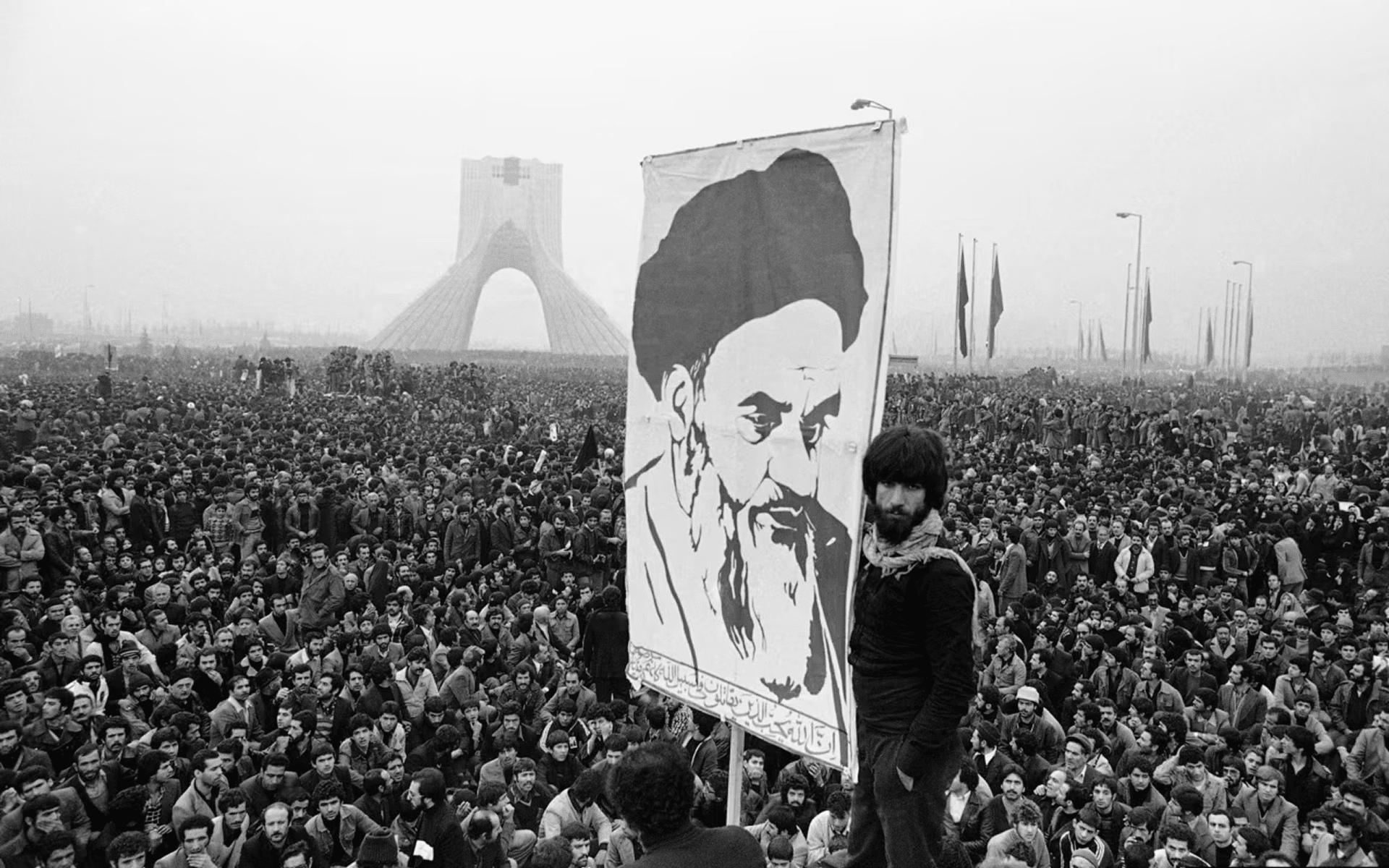
That winter, huge crowds poured into Tehran’s avenues, shouting for the Shah to go. Not long after, troops who had always backed the throne started wavering. Instead of shooting protesters, many simply stood still or walked away. A few even handed rifles to rebels gathering in alleyways and squares.
Out of Paris, where he was living far from home, Khomeini guided the uprising using tapes and written words passed along by mosques. Because he carried such strong personal appeal and refused any deal with the royal family, people who barely agreed on anything found reason to stand together. Even those who thought very differently – one leaning left, one rooted in tradition – joined under his call without needing proof it would work.

January February 1979 The Final Collapse
January 16, 1978 brought the departure of Shah Mohammad Reza Pahlavi from Iran – he said it was for rest. Most saw it for what it was: the last breath of royal rule. By February 1, just days afterward, Ayatollah Khomeini stepped back onto Iranian soil following fifteen years abroad. Crowds in the millions filled Tehran’s airport, their cheers loud, their welcome unwavering.
That winter day in February, power slipped away fast as the old guard gave up. By then, crowds had already taken over ministries, barracks, airports – places that once held their authority tight. A dynasty stretching back centuries fell apart without a long war, just wave after wave of people saying no. The date marked it clearly: eleven days into the second month of 1979.
Iran Islamic Revolution Rapid Changes
Islamic Governance and Political Change
Out of nowhere, the 1979 Islamic revolution started reshaping how Iran governed itself. By spring that year, a public vote had wiped out the royal family, replacing it with what became known as the Islamic Republic. Though debated fiercely, a fresh constitution took effect in December, embedding Khomeini’s idea of religious rule – where a top cleric held more power than any politician ever could.
Mehdi Bazargan – known for his calm beliefs – took office as prime minister only to step down when hostages were taken at the U.S. embassy in late 1978. Once the dust settled, revolutionary tribunals put to death many linked to the old rule: generals, bureaucrats, anyone seen standing against change. As authority shifted into new hands, dissent found little room to breathe under the emerging clerical order.
Social and Cultural Shift
Life in Iran shifted sharply once the Islamic Revolution took hold. By 1981, wearing a head covering became required for every woman out in public, rolling back years of gradual openness. Things like Western songs, movies, drinking, and men and women gathering together were either outlawed or tightly controlled. Though subtle at first, these shifts reshaped daily routines across cities and towns.
Starting fresh, schools were rebuilt on strict religious guidelines. After a long pause, colleges finally reopened following the so-called Cultural Revolution, their staff reduced, lessons rewritten with faith at the core. Not far behind, the Revolutionary Guards took shape – separate from traditional armies, built to guard revolutionary ideals above all else.
Flogging came back for some offenses under old religious rules. Right after the uprising, groups that once worked together – activists, moderates, and hardline believers – began falling apart when church leaders took charge, pushing others aside or forcing them out.
The Hostage Crisis and Global Isolation
That day in early November of seventy-nine, young protesters stormed the American embassy in Tehran. Fifty-two staff members were held inside, kept there more than a year. The move aimed to block U.S. influence, showing fierce resistance during a time of upheaval. Ties between Iran and America snapped sharply, along with connections to several Western countries.
When Iraq invaded Iran in September 1980, the hostage crisis was still unfolding. That conflict dragged on for eight years, tearing through both countries. While fighting raged, Iran found itself more cut off than before – Western nations and Arab neighbors backed Iraq instead. Lives vanished by the hundreds of thousands; what could have been spent on fairness in wealth went up in smoke.
Iran 1979 Aftermath Over Time
Regional Ripple Effects
When Iran changed its government in 1979, it shook up the entire region. Rulers in Saudi Arabia and nearby Gulf countries saw the new Iran as dangerous – not just different, but possibly contagious among their people. Suddenly, faith-based politics gained strength across distant places like Lebanon and Indonesia. Power shifted quietly at first – then loudly – as religion proved able to stir large crowds into motion.
Out of Iran came a push to spread radical beliefs, backing factions such as Hezbollah in Lebanon along with different Shia uprisings across the area. Because of this move, friction took root with countries where Sunnis dominate – Saudi Arabia especially – and those divides helped ignite religious strife still alive now.
Economic Impact and Growth
Fleeing money marked the start of economic trouble after the revolution. Many experts left the country, making things worse. Sanctions from abroad tightened pressure soon after. State control replaced private business when factories and lenders came under government rule. Damage from war with Iraq crushed roads, cities, and growth plans alike.
Even so, local factories and schools took root across Iran, yet outside pressure kept expansion in check. Money from oil still mattered most, however poor decisions and dishonest practices blocked shifts into new sectors. Right now, plenty know their lessons well inside classrooms, still joblessness climbs alongside rising prices while chances stay thin – leaving irritation behind, particularly for younger faces making up nearly everyone under thirty.
Modern Questions and Continuing Discussions
Forty-five years on, eyes turn again to Iran’s revolution. This milestone stirs more than dates; it pulls up old thoughts. Young people now wonder what was truly gained. Raised far from the Shah’s time, they look closely at today’s reality. Did fairness arrive? Is freedom real? Has life improved for most? These are not shouted in streets – just carried quietly in minds.
Anniversaries pass, yet such reflections stick around. What began in fervor now faces patient scrutiny. Not anger, just a steady gaze at outcomes. Hope once ran high. Now, assessment takes its place.
Every few years, people take to the streets. Outbursts in 2009, then again around 2017 into 2018, followed by unrest in 2019 and once more in 2022 show a steady unease. It is not just about politics. Money troubles weigh heavy. Daily life feels tightly managed. One flashpoint stands out: women’s freedoms. Forced hijab rules clash with how many Iranian women wish to live. Limits based on gender feel increasingly out of step.

Iranian Revolution 1979 Insights
The Difficulty of Big Changes
What happened in Iran during 1979 shows plans often go off track when revolutions unfold. Though many wanted democracy after removing the Shah, that wasn’t what emerged. Instead of unity, divisions grew among those once fighting together. Power shifted quietly into religious hands because one group was better prepared than the rest.
Authoritarian Rule and Rising Unrest
When a ruler chooses force instead of fair representation, unrest grows quietly at first. Under the Shah, fear became routine because people could not speak freely. SAVAK’s harsh methods made enemies out of ordinary citizens who just wanted change. Without any real way to protest peacefully, many turned to rebellion as their only option. Different kinds of people found common ground in opposing oppression.
History shows that silencing voices does not bring peace – it builds pressure. Wherever leaders ignore demands for justice, tension simmers beneath the surface. Quiet anger often leads to sudden upheaval when no outlet exists.
Economic Inequality and Political Instability
Oil riches once filled Iran’s coffers, yet most people saw little of it. Prosperity tilted heavily toward the powerful, leaving everyday lives strained. This gap weakened trust in leadership long before 1979. After the shift in rule, hopes rose for fairness in money matters. Promises were made about shared wealth under new ideals. Reality took a different path – corruption seeped into systems again. Inequality returned, wearing a changed face. New slogans did not fix deep-rooted patterns. Power still shapes who gets what, no matter the banner flying above. Change in name rarely alters how resources flow behind closed doors.
United Voices Stronger
What held the Iranian revolution together was not one single force, but many different people joining hands. Religious traditionalists stood beside radical thinkers, shop owners walked with students, laborers moved in step with clerics – all focused on removing a shared opponent. Yet that bond did not last long after victory. Once the old regime fell apart, tensions emerged where solidarity had been. Disagreements broke out between those who once marched side by side.
The collapse of cooperation shows how fragile alliances can be when built only around what they oppose. When the thing holding everyone together vanishes, so too does the alliance.
Why Iran 1979 Still Matters
That year in Iran shifted everything across the region, reshaping how faith and rule connect. A king backed by distant powers gave way to a new system built on religious authority. Power changed hands not through negotiation but upheaval, altering alliances overnight. The event lit sparks far beyond its borders, influencing groups who saw change as possible. What unfolded still echoes in today’s tensions, decisions, beliefs.
Out of Iran came a shift, one rooted in faith and defiance, reshaping how nations view progress when tradition pushes back. When talks stall today over atomic efforts, freedom claims, or who holds sway nearby, old echoes from that upheaval still tilt the balance. Power moved fast then, not just in streets but minds, leaving marks felt far beyond deserts and mountains. Decades on, what unfolded there quietly steers how leaders act, react, or hold their ground.
A shift happens fast when politics, money, and faith pull in the same direction – that is what unfolded in Iran around 1979. Change came not through slow steps but sudden momentum, driven by crowds who refused the old order. Outcomes twisted in ways few predicted, showing how uprisings carry risks alongside hopes. Power shaken loose rarely settles where anyone expects. This moment still echoes in places where authority faces mass unrest.
A shift began in 1979 when Iran transformed – ripples reached far beyond its borders. Global politics felt the impact, while Islamist currents gained momentum across continents because of it. Decades on, echoes still influence how nations interact.
That turning point holds clues about today’s Iran. Beyond one country, it reveals how faith, upheaval, and authority intertwine in current times.