The Final Act: 330 BC and Persia’s Extinction
The Treasures of Babylon and Susa
Following Gaugamela, Alexander marched into the Persian heartland encountering minimal resistance. Babylon opened its gates voluntarily, its population celebrating in the streets. The temples, closed under Persian rule, reopened in Alexander’s honor. Susa similarly surrendered, yielding treasuries that defied comprehension.
The wealth Alexander captured rewrote economic history. Contemporary sources report 120,000 talents of gold and silver from Persepolis alone—enough to fund his campaigns for decades and fundamentally alter the Mediterranean economy. This treasure had accumulated over two centuries of imperial tribute, and now it flowed into Macedonian and Greek hands.

Persepolis Burns
When Alexander reached Persepolis, the ceremonial capital embodying Persian imperial identity, he faced a choice. The city surrendered, but it represented everything his Greek coalition had mobilized against—the symbolic heart of the empire that had burned Athens 150 years earlier.
What happened next remains historically controversial. Ancient sources offer conflicting accounts: some claim Alexander ordered the city’s destruction as calculated revenge; others suggest a drunken party spiraled out of control, with Alexander’s companion Thais urging the burning. Regardless of motive, the result was definitive—Persepolis’s magnificent palaces became charred ruins.
The destruction served notice that the Achaemenid dynasty was finished. Persian nobles watching from the provinces understood that collaboration with Alexander offered better prospects than loyalty to a fleeing king. Defections accelerated.
The Hunt for Darius
Darius fled eastward toward Bactria, hoping to rally support in the empire’s eastern provinces. But his flight had destroyed his authority. Bessus, the satrap of Bactria, recognized that Darius had become a liability. In the summer of 330 BC, Bessus and fellow conspirators murdered Darius, hoping to gain Alexander’s favor by eliminating his rival.
Alexander discovered Darius dying by the roadside. According to legend, he gave the fallen king water and promised to pursue his murderers. Whether this happened exactly as romanticized or represents later propaganda, Alexander did give Darius a royal burial and proclaimed himself the legitimate avenger of regicide.
This brilliant political theater accomplished several objectives simultaneously. By honoring Darius, Alexander positioned himself as the rightful successor rather than a foreign conqueror. By pursuing Bessus as a criminal, he claimed Persian imperial authority. The message to Persian nobility was clear: acknowledge Alexander as the new King of Kings, and your positions remain secure.

Five Reasons the Persian Empire Fell to Alexander
1. Military Innovation Versus Stagnation
The Macedonian phalanx represented evolutionary advancement in warfare that Persian commanders never adapted to counter. While Persian forces relied on traditional cavalry charges and archer formations effective against other Eastern armies, they had no answer to the coordinated infantry-cavalry combinations Alexander deployed.
Persian military culture emphasized individual aristocratic warriors proving their courage. Macedonian culture emphasized unit cohesion and discipline. When these philosophies collided, disciplined formations consistently defeated courageous individuals. The Immortals, Persia’s elite guard, fought bravely but died in formation, unable to break the sarissa wall.
Alexander’s tactical flexibility compounded Persian difficulties. He adapted strategies to terrain and opponent, sometimes leading cavalry charges, sometimes directing from behind the phalanx, sometimes employing complex oblique formations. Persian commanders prepared for conventional battles and found themselves fighting an opponent who rewrote rules constantly.
2. Centralized Versus Fragmented Command
Alexander made every strategic decision personally, ensuring unified execution across his forces. His commanders—Parmenion, Craterus, Ptolemy—were talented generals, but Alexander’s genius lay in coordinating their efforts into seamless combined-arms operations.
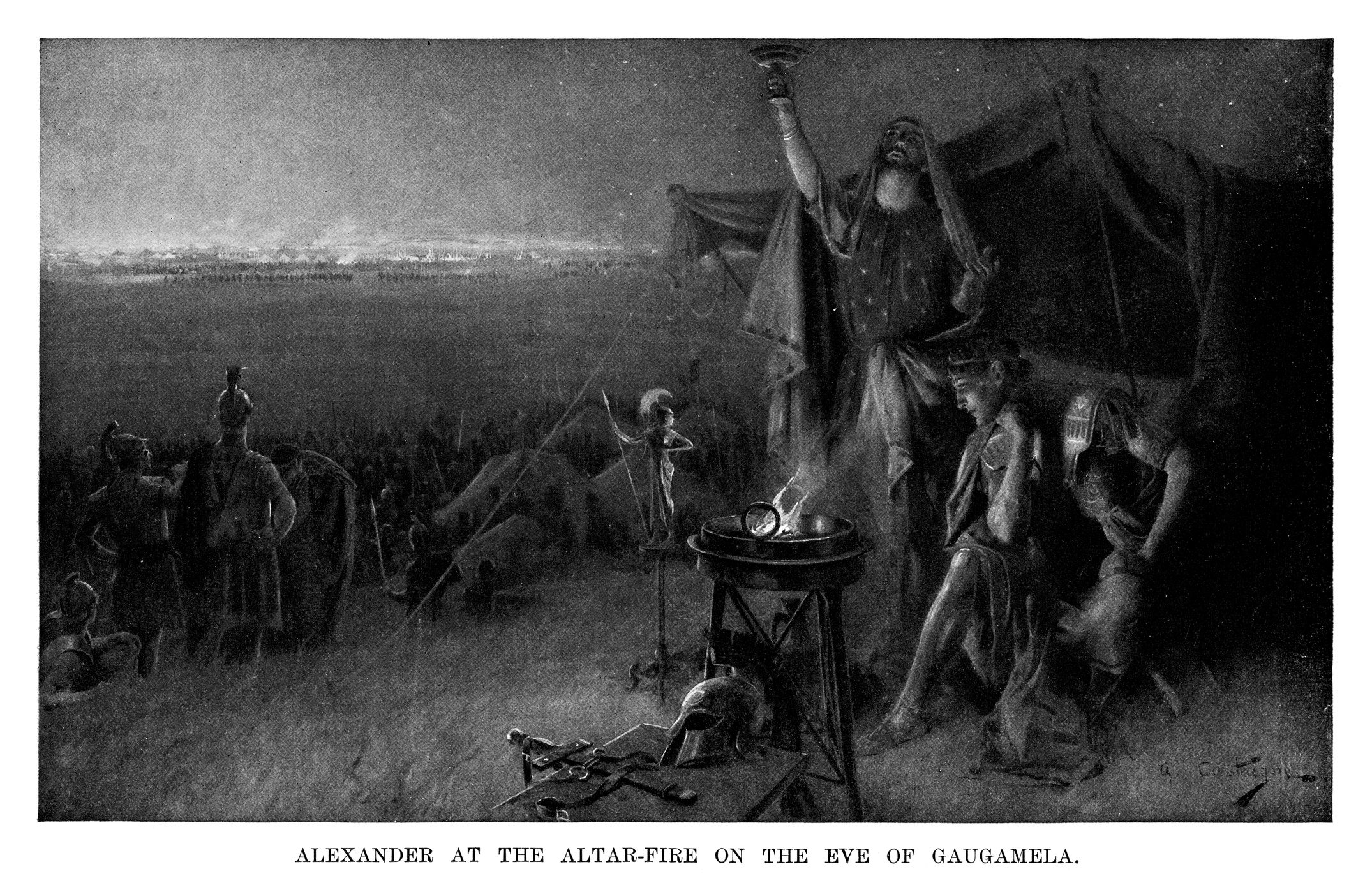
Persian command structures fractured authority. Satraps led their regional contingents with significant autonomy, creating coordination nightmares. At Gaugamela, different sections of the Persian line operated independently, allowing Alexander to exploit gaps that unified command would have closed.
Darius’s personal leadership failures magnified this structural weakness. His flight from Issus and Gaugamela destroyed morale army-wide. Troops who might have continued fighting under local commanders instead broke when the supreme commander fled. Alexander, conversely, led from the front, often the first into danger, inspiring his men through shared risk.
3. Imperial Overextension and Administrative Decay
The Persian Empire’s enormous size created insurmountable governance challenges. Messages took months to travel between capital and distant provinces. Rebellions might be suppressed or rage out of control before central government even learned of them.
Satraps had evolved into semi-independent rulers governing provinces larger than most kingdoms. They collected taxes, maintained armies, and conducted diplomacy with minimal oversight. This system worked when satraps felt invested in imperial stability, but Darius’s weak position encouraged opportunism.
When Alexander offered Persian administrators continued positions under new management, many accepted readily. They’d already been governing quasi-independently; shifting allegiance to a powerful new king who respected their authority seemed pragmatic. Alexander exploited this brilliantly, presenting himself as restoring imperial stability rather than destroying it.
4. Economic Dependence on Mercenaries
Persian military power increasingly relied on Greek mercenaries, creating a fundamental vulnerability. These professionals fought for pay, not ideology. When Alexander offered better terms or clemency, thousands switched sides. Greek mercenaries faced the awkward reality of fighting fellow Greeks in Alexander’s service—a situation that undermined morale.
The Battle of Issus illustrated this perfectly. While Persian cavalry fought courageously, the Greek mercenary phalanx in Darius’s center offered the stiffest resistance Alexander encountered. Yet even they eventually broke when their employer fled. Mercenaries are effective until their paymaster disappears.
Alexander, commanding citizen-soldiers and Macedonian nobility personally invested in his success, never faced comparable loyalty issues. His troops followed him because they believed in his leadership and shared the spoils of victory. This ideological cohesion trumped hired professionalism.
5. Alexander’s Strategic Genius and Personal Charisma
Reducing the fall of Persia to systemic factors ignores the individual whose vision and execution made conquest possible. Alexander wasn’t merely competent—he was a once-in-a-millennium military genius who combined tactical brilliance, strategic vision, physical courage, and political acumen.
His ability to inspire loyalty bordered on supernatural. Soldiers followed him into situations that should have resulted in annihilation—crossing rivers under fire, charging numerically superior forces, enduring brutal sieges—because Alexander shared every hardship and danger. He ate the same rations, slept in the same conditions, and fought in the front ranks.
Alexander understood something fundamental about conquest: military victory meant nothing without political consolidation. He didn’t just defeat Persia; he became Persia’s legitimate ruler by adopting Persian court ceremonies, marrying into Persian nobility, and retaining Persian administrators. This cultural flexibility enabled him to rule an empire that would have collapsed under purely Macedonian administration.

The Lasting Impact of 330 BC
Birth of the Hellenistic World
The fall of the Persian Empire in 330 BC didn’t create a Macedonian empire—it birthed Hellenistic civilization, a fusion of Greek and Eastern cultures that dominated the Mediterranean for centuries. Alexander founded dozens of cities, most named Alexandria, that became centers of Greek learning in Asian contexts.
Greek became the common language of administration and commerce from Egypt to India. This linguistic unity facilitated philosophical, scientific, and cultural exchanges impossible under Persian multilingualism. The Septuagint translation of Hebrew scriptures into Greek, the spread of Stoic philosophy, the development of Hellenistic art—all traced their origins to Alexander’s conquest.
The Hellenistic kingdoms that emerged after Alexander’s death—Ptolemaic Egypt, Seleucid Persia, Antigonid Macedonia—maintained this cultural synthesis. They weren’t Greek states imposed on Eastern populations but hybrid civilizations blending Greek intellectual traditions with Eastern religious and political forms.
Transformation of Military Doctrine
Alexander’s campaigns became the textbook for military education for two millennia. Roman generals studied his tactics. Medieval commanders analyzed his strategies. Modern military academies still examine Gaugamela and Issus as examples of combined-arms warfare and exploitation of enemy weaknesses.
The phalanx dominated Mediterranean warfare until Roman legions developed counters centuries later. The emphasis on cavalry as a decisive striking force, the importance of logistics and supply lines, the use of siege engineering—Alexander’s innovations became standard practice.
Perhaps more significantly, Alexander demonstrated that empires could be conquered through campaign seasons, not generations. The Persian Empire had stood for over two hundred years, yet Alexander destroyed it in under a decade. This lesson wasn’t lost on ambitious commanders throughout history.
Political Lessons in Empire Building
Alexander’s reign demonstrated both the possibilities and limitations of personal conquest. He proved that brilliant leadership could overcome systemic disadvantages, defeat numerically superior forces, and conquer seemingly invincible empires. He also proved that empires built around individual genius don’t survive that individual.
When Alexander died in 323 BC at age thirty-two, his empire immediately fragmented among his generals. Without his unifying presence, the political structure collapsed into competing successor kingdoms. The Hellenistic world endured, but the unified empire died with its creator.
This pattern repeated throughout history—conquerors from Charlemagne to Napoleon built vast empires on personal authority that collapsed within a generation of their death. The Persian administrative system, for all its flaws, had maintained imperial continuity across multiple dynasties precisely because it didn’t depend on individual genius.
Why the Fall of the Achaemenid Empire Still Matters
Understanding what happened to the Persian Empire in 330 BC offers insights far beyond ancient history. It illustrates how systemic vulnerabilities compound over time until a catalyst—in this case, Alexander—exploits them catastrophically. The Persians didn’t lose because they were weak; they lost because they failed to adapt while their opponent innovated relentlessly.
The collapse also demonstrates the limits of military prowess without political consolidation. Alexander conquered Persia militarily, but his attempt to rule it required adopting Persian methods and structures. Pure Macedonian governance couldn’t sustain an empire spanning continents and cultures.
For modern strategists, the Persian Empire’s fall serves as a cautionary tale about organizational sclerosis, over-reliance on legacy systems, and the danger of underestimating revolutionary challengers. For historians, it marks the hinge point between the ancient Near Eastern world and the Hellenistic Mediterranean civilization that followed.
The year 330 BC didn’t just end the Persian Empire—it fundamentally reoriented civilization’s axis from East to West, a shift whose consequences echo into our present day.