Priesthood, Power, and State Control of Religion
Zoroastrianism and the Persian Empires: Religion, Power, and Politics
Priesthood and the Rise of the Magi
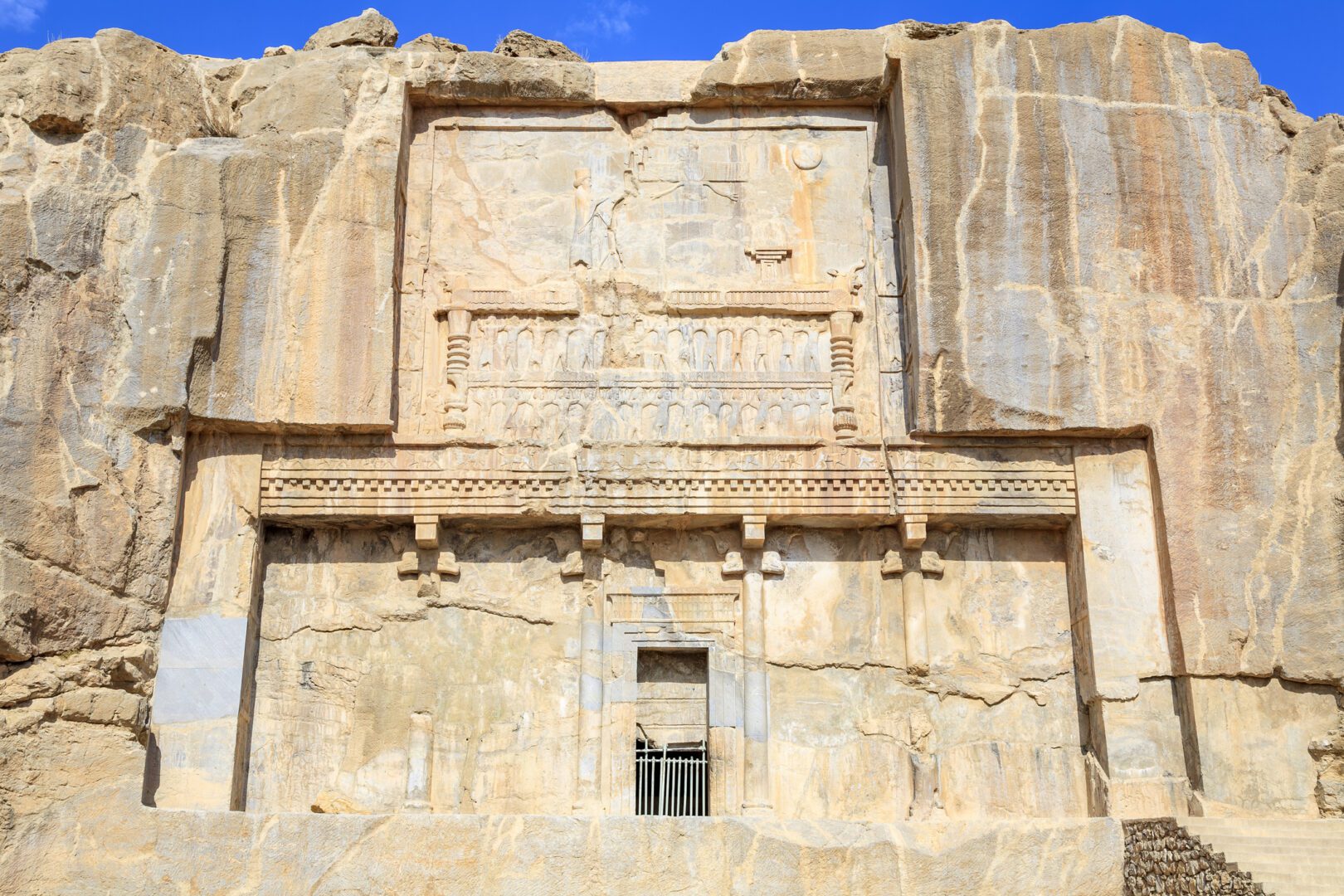
Under the Achaemenid Empire, the first Persian Empire, changes and distortions to the Zoroastrian religion continued, and a class of priests dedicated to the care of fire temples emerged, known as “Mogan,” the singular being “Mog.” This term was used for priests in previous Persian religions among the Median tribes, but the Zoroastrian priests in the Achaemenid era became more powerful and organized.
Hence came the term “Magians,” which the Arabs used to refer to the priests, or “Magians,” and the religion was eventually attributed to them and named Magianism. Europeans also derived the Latin word “magic” from this word, meaning sorcery, due to the ancient magical heritage of Persian priesthood.

Imperial Collapse and the Loss of Sacred Authority
From Alexander to the Sasanians
In 330 BC, the Achaemenid Empire collapsed at the hands of Alexander the Great, and with that, most of the Zoroastrian religious texts were lost. Most of the former empire’s territory fell under the rule of the Ptolemaic Kingdom and the Seleucid Empire until the Iranians regained their unity in the second century BC to establish the Parthian Empire, which lasted only about two decades.
King Ardashir I established the Sasanian Empire on the ruins of the Parthian Empire. It is said that he legitimized his dynasty’s rule based on a Zoroastrian concept called “exwarah,” meaning “divine royal glory,” a divine, mystical blessing bestowed upon a worthy king. Zoroastrianism thus became the spiritual foundation for the continuation of the greatest dynasty to rule Persia.
Doctrinal Transformation Under Political Influence
Zorvanism and Doctrinal Change
In the second century AD, the Zorvanian doctrine had become dominant under the Sasanian state. Influenced by ancient Greek and Babylonian factors – as some historians see it – the Zoroastrian doctrine was reshaped so that infinite time, “Zorvan Akanarak” became the origin, the name of Ahura Mazda was changed to Ahram Mazda, and a new god of evil named “Ahriman” was created instead of Angra Mainyu.
Thus, the new priests (the Magi) claimed that Ahriman and Ahramizd were eternal twins, after the devil Angra Mainyu had been an incidental god, not eternal, and parallel to the god of good, Spinta Mainyu. This belief became the official religion of the Sasanian state, which aspired to expansion, and it was linked to Persian nationalism after it had been a universal religion seeking to guide all of humanity.
Islamic Conquest and the Collapse of State Religion
Decline With the Advent of Islam
With the advent of Islam, the Prophet Muhammad, may God bless him and grant him peace, sent a message to Khosrow II inviting him to Islam. However, the king, who was at the height of his power, did not care to think about abandoning the religious system on which the legitimacy of the rule was based.
The prophecy was soon fulfilled, as Khosrow II was assassinated by his son, and he was indeed the last of the Sassanids. Then his grandson Yazdegerd III tried to unite the ranks to confront the armies of the Islamic Caliphate, but he failed, and the state collapsed during his reign with the victory of the Muslims in the Battle of Qadisiyah in 636 AD, led by the companion Saad bin Abi Waqqas.
With the collapse of the Sasanian state and the expansion of the Islamic conquests, the Zoroastrian Magian religion disappeared, and most of the people of those regions embraced the Islamic religion.
Marginal Survival and Politicized Modern Revival
The Revival of Zoroastrianism in Iraqi Kurdistan: Identity, Politics, and Controversy
Modern Revival in Iraqi Kurdistan
After centuries of its extinction at the hands of the Rashidun Caliphate, the call to embrace the ancient Zoroastrian religion has recently become active in the Kurdistan region of Iraq. Some have found historical links with national dimensions in it, which has sparked controversy about its origins and the motives for its revival, especially since researchers question the accounts of its origin and development to what it has become today.

Survival After the Islamic Conquests
Some of the priests and their followers fled to India, while another group outwardly professed Islam while secretly clinging to their old religion. This group played a role in the political and intellectual turmoil that later preoccupied the Abbasid state.
Some historians believe that the word “Zindiq”—which was applied to hypocrites and heretics—means a follower of the Zend, which is a collection of ancient commentaries on the Avesta.
Population and Global Presence
A 2012 study by the Federation of Zoroastrian Societies of North America estimated the total number of Zoroastrians worldwide at only 112,000 or 122,000, noting that the discrepancy stemmed from varying estimates within Iran. India had the largest number, with approximately 61,000, referred to as “Parsis,” followed by Iran with less than half that figure.
Kurdish Nationalism and Religious Identity
The study did not mention the presence of any Zoroastrians in Iraq, but with the expansion of sectarian and ethnic conflicts in the past few years, a Kurdish group in the Kurdistan Region of Iraq has revived Zoroastrianism, believing it to be the most suitable religion for their national roots.
He added that their increasing numbers prompted them to open their first temple in August 2015 in the city of Sulaymaniyah.
Academic and Historical Criticism
In late 2020, Kurdish academic Farsat Mar’i published a study entitled “The Secular Kurdish Elite and Their Attempt to Revive Zoroastrianism,” in which he indicated that attempts to link Kurdish nationalism with the Zoroastrian religion began at the hands of the Kurdish brothers Jaladat and Kamiran Badirkhan.
The researcher also pointed out that many Kurdish and Arab historians denied the existence of that alleged national bond, noting that Zoroastrianism is a distinctly Persian religion.