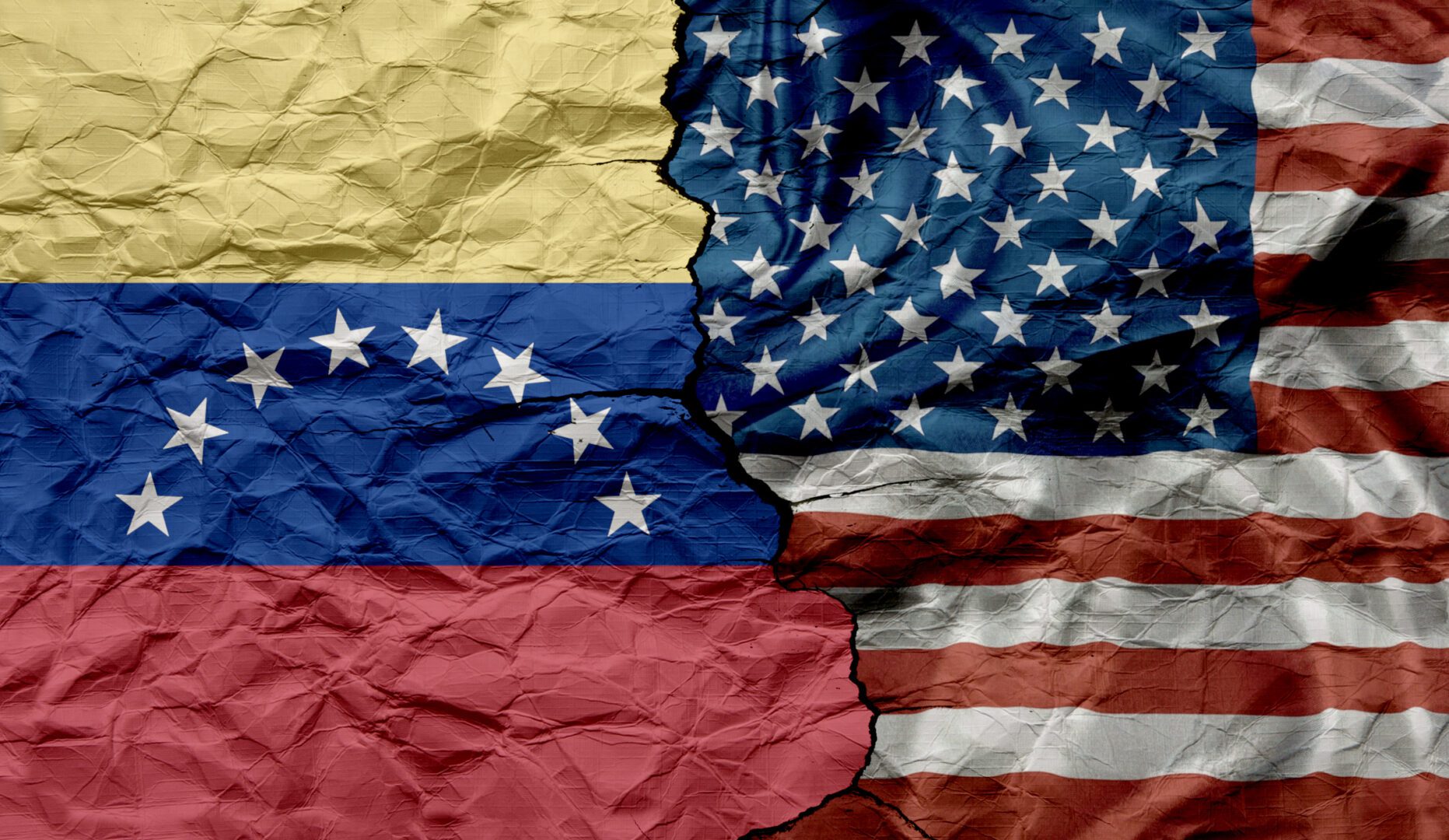
Venezuela Crisis and the Risk of Global Conflict
In this blog, let’s discuss a deep unwinding history of Venezuela, where crisis took shape in the early 2000s and gradually increased in 2013. Their crisis isn’t just a political crisis, but it’s a combination of economic breakdown, institutional downgrade, high inflation, humanitarian emergencies, and migrant crises, which combined to become a multifaceted situation that led to a national crisis.
Let’s Discuss Venezuela’s Past
Venezuela is an oil-rich state whose entire economy lies on oil, and thanks to a great fossil dump, it has a huge oil storage for the coming future too. But a blessing can be disguised as a goon too. In 1999, Hugo Chávez, a military person, a man with ambitions, carried out a military coup to remove the sitting government and established a Bolivarian socialist rule throughout Venezuela.
This led to decentralization of oil, which nationalized its revenue and utilities. Industries and agriculture were also nationalized in the following wave. Though it brought immense wealth to the nation, nonetheless the Venezuelan oil revenue was highly used in welfare works that were almost a loss-making sector, and institutions such as the court, media, and legislature remained unattended.
The decline of poverty was imminent due to the oil economy, but a larger economic structural weakness grew that was eating up Venezuela from beneath. The Hugo Chávez era ended in 2013 with his demise, and it was carried forward by Nicolás Maduro.

Nicolás Maduro
After Chávez’s death, Nicolás Maduro, who was the vice president of Venezuela, was appointed as the president in 2013. He took the chair after a narrow victory, and such victories remain questionable both on and off the court, and so was his. So in the aftermath, an election happened in 2015, which was won by the opposition. The Supreme Court of Venezuela, which is determined to be too close to Nicolás Maduro, strips the parliamentary power and establishes a parallel institution. This election was widely discussed and determined to be false, yet the government ran until 2019.
The Presidential Confusion
In 2019, the leader of the opposition, Juan Guaidó, declared an interim presidency, which helped him regain powers in Venezuela. But Nicolás Maduro had the military, courts, and institutions under his influence, which led to a stalemate, and a dual government was formed in Venezuela in 2019. Though the US, the EU, and many American countries accepted Juan Guaidó as the legal president, still a legitimacy crisis followed.
The economic crisis has kept eating up major stacks since 2014. The main reasons include major oil mismanagement, currency control, price control, corruption, and the sudden collapse of global oil prices in 2014. Hyperinflation caused savings of individuals to become worthless, which caused wages to stay low, and it led to inequality while the economy remained fragile and oil-dependent.
Human Rights and Repression
Some horrific figures came out of Maduro’s administration, whose numbers may scare people. A total of 10,185 executions, 17,400 political arrests, 3,500 disappearances, 1,650 tortures, 2,000 political prisoners, and nearly 332,600 violent deaths since 2013 under his regime. This resulted in food shortages, malnutrition among children, reliance on aid, shortages in medical equipment, the emergence of controlled diseases, and the crumbling of hospital infrastructure. Living conditions become horrible under food shortage, water shortage, and lack of fuel while oil is in abundance.
Sanctions From USA
After surplus human rights allegations and an increase in arbitrary arrests, torture and ill-treatment of prisoners, suppression of protests, and media censorship. Sanctions from the USA targeting Government officials, oil exports, and the financial system are intended to pressure Maduro. Critics argue sanctions worsened civilian suffering. Allies of Maduro, which include Russia, China, Iran, and Cuba, came forward with a helping hand by providing loans, oil trade, and security assistance.
Military Action by the USA Against Maduro
According to multiple international outlets reports, 3 January 2026 marked the day U.S. forces conducted a large-scale military operation in Venezuela, involving special units and airstrikes. U.S. President Donald Trump announced the capture of Nicolás Maduro and his wife, Cilia Flores, and their transfer to the United States to face federal charges after the success of the swift action.
Dispute or Truth: Is the USA hiding Maduro?
“Washington would temporarily oversee Venezuela’s political transition and oil infrastructure” Trump quoted and warned of further action if cooperation is withheld. Vice President Delcy Rodríguez was declared acting president with military backing following Maduro’s removal, while Venezuela denounced the operation as a violation of sovereignty, prompting mixed international reactions ranging from calls for stability to strong regional condemnation.
***Editorial Note: Reports of Maduro’s arrest or U.S. military capture remain unverified and disputed.***