
What Is Vipassana Meditation? Meaning, Benefits, and Practice
Vipassana Meditation is also known as ‘ Insight ‘ meditation. This meditation is simply about observation. Observation of breathing, body sensations, thoughts, emotions, and all bodily activities. Vipassana is the only meditation that can be done while taking part in daily activities.
Vipassana is being practiced since ancient times by different sages and this meditation is said to be the most profound meditation of all because it has awakened many individuals than any other practice or meditation. Vipassana is very easy to practice. Anybody can practice it, even a child.
Vipassana meditation leads you to a very subtle level of mind, which eventually helps you discover and achieve ultimate peace, joy, and happiness.
How to practice Vipassana Meditation?
Find a quiet place – For any meditation practice, it is very necessary to find a quiet place because in a noisy atmosphere you get distracted very easily. This is the reason, it is advised to practice meditation early in the morning. The atmosphere is quite peaceful and steady at this time of day.
Make sure you meditate in the same place every day.
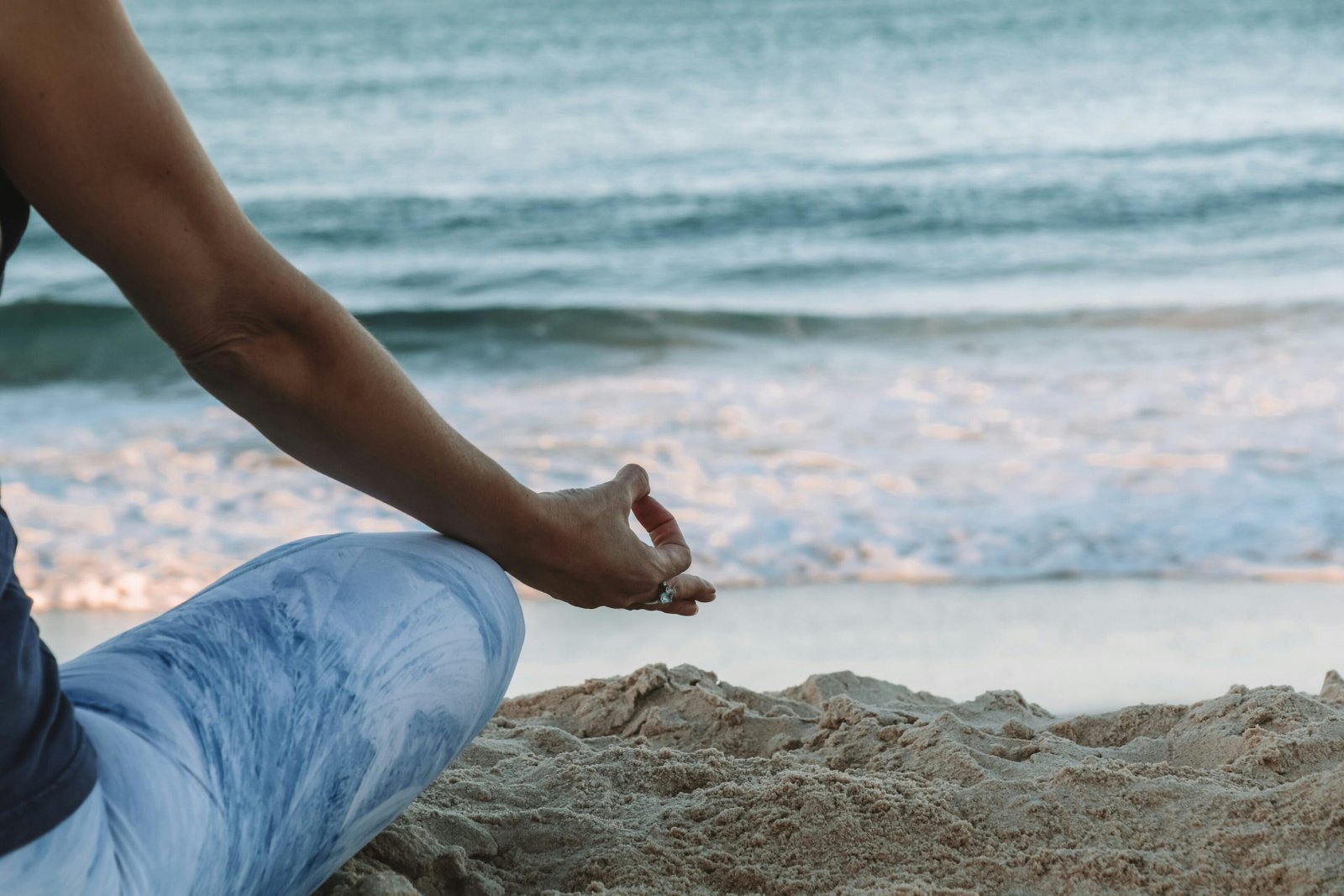
Sit in a comfortable position. For Vipassana, you should sit cross-legged on the floor ( you can take a mat for your comfort ). Your spine should be erect and in alignment with your head. Your back should not be arched. Avoid leaning forward in the practice.
If you cannot sit like this or if you have back issues, then you may take the support of the wall to keep your back straight; however, make sure you do not lean towards the wall.
If you have got issues with sitting on the floor then you can sit on a chair.
Note: While sitting for meditation, make sure you are not feeling uncomfortable. If you are, then you should adjust yourself; otherwise, you would be more concerned about your discomfort than meditation. Certainly, you don’t want that, so make yourself comfortable first.
Close your eyes – After finding a suitable place for meditation and sitting in a comfortable position, start relaxing with your eyes closed. Closing your eyes cuts off all the distractions and allows you to focus on meditation.
Be aware of breathing – After relaxing for a while, bring your awareness to your breathing. Be aware of inhalation and exhalation. You should not try to change the breathing rhythm. Be it short or long, you should not be bothered about it because breathing happens on its own accord. You simply focus on your breathing.
Be aware of one part of breathing – Focus on a specific part of breathing like the diaphragm, lungs, or nostrils. For example, with inhalation, the diaphragm expands, and with an exhalation, it contracts. You can be aware of this continuous contraction and expansion of the diaphragm.
Being aware of one of these parts helps you to be focused and don’t let you distract.
Become aware of the belly – As you continue to focus, you will feel that your breathing is getting deeper and longer. That is a good sign. So now as you feel your breath getting deeper and longer, gently bring your awareness to your belly and feel your belly rising with every inhale and contraction of the belly with every inhale while eyes being closed.
You simply need to be aware of the expansion and contraction of the belly. Don’t try to expand and contract it on your own.
Be aware of your surroundings – It is impossible to find a place where there is no sound. Sound is everywhere, and that is what you need to be aware of. With keeping your eyes closed start observing sound that you can hear from your surrounding but make sure you are not identifying any one of them i.e the urge to know what sound was that.
Let every sound come; you should not be bothered. You should simply be aware of all the sounds that are being produced around you.
Be aware of thoughts and emotions – This is perhaps the most difficult part of vipassana because thoughts and emotions are very subtle. Though if you were continuously being aware of all the points mentioned above, then you have reached a very deep level of mind, and now it is very easy for you to be aware of your thoughts and emotions.
Simply bring your attention to your thoughts. What sort of thoughts are you getting? Don’t be bothered about them. Let them come and go. If you get annoyed or try to change them, they become stronger and get over you. So better to just be aware of every thought with no interest in them at all. You’ll find that thoughts start to crumble.
All the points of awareness mentioned above are to be done while sitting in a meditative posture; however, vipassana can be practiced even while taking part in the day-to-day activities. You simply need to be aware of everything; that’s it.
You simply do everything with utter attention; i.e if you walk, walk with full attention where you take every step with awareness or while eating, be fully aware of the taste of the food or while bathing, be fully aware of bathing that is to feel the sensation of water when being poured.
How long should I practice Vipassana to reap the benefits?
With meditation, you grow every day. If you are meditating every single day, you will find that your awareness level is increasing. You will not be distracted easily, and most importantly, you discover the source of inner happiness, inner joy, and inner peace, which is not material and comes from within. And with this discovery of the inner source of happiness, there’s no place for anxiety or any sort of stress whatsoever.