
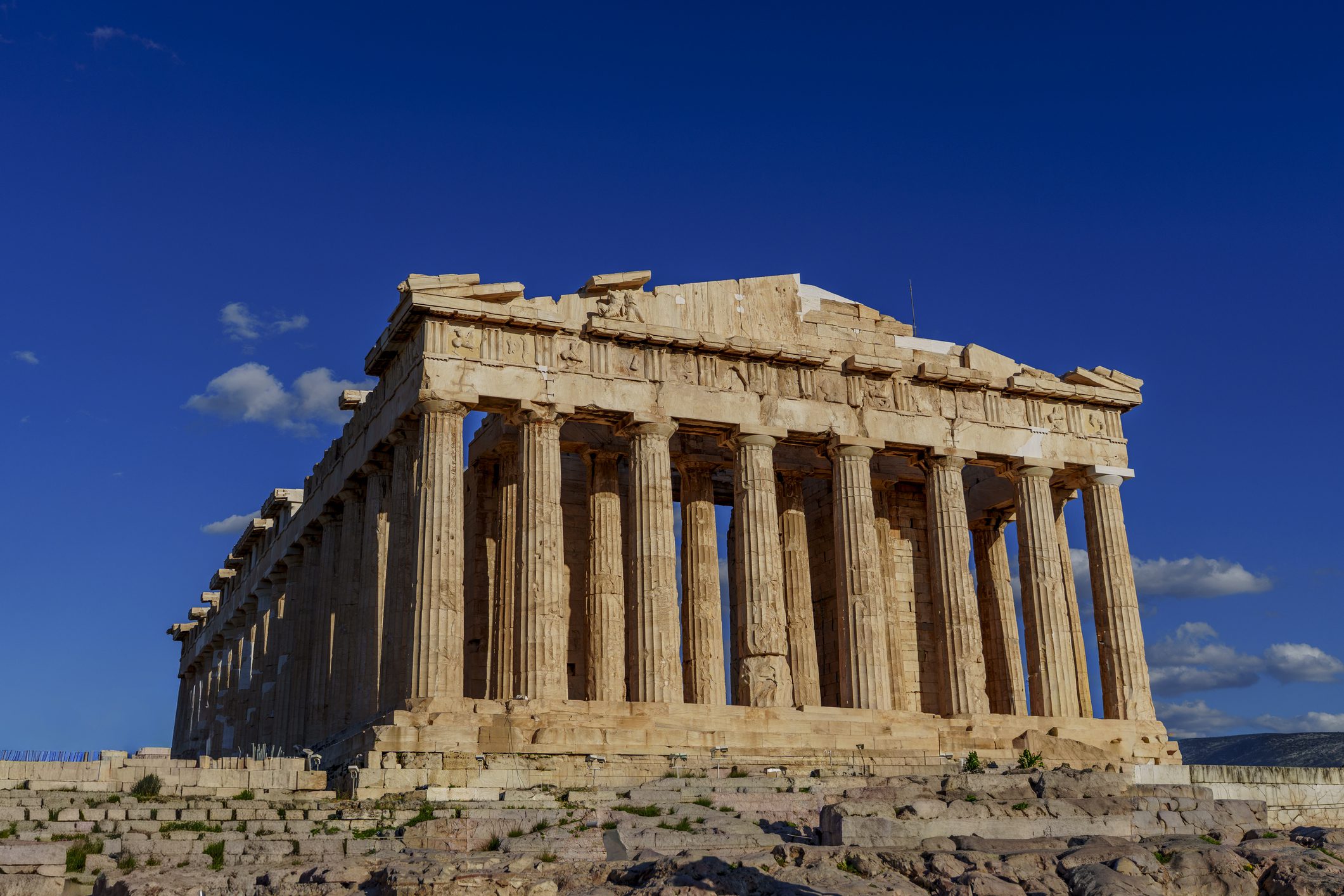
History of the Parthenon: The Eternal Glory of Athens and the Symbol of Classical Greek Civilization
Atop the sacred hill of the Acropolis in Athens stands a magnificent marble temple that has symbolized wisdom, beauty, and power for centuries: the Parthenon. More than a monument, it represents the golden age of Athens, the ideals of democracy, and one of the highest achievements of classical architecture.
Dedicated to Athena, goddess of wisdom and warfare, the Parthenon tells a story of faith, politics, artistic mastery, and destruction—moving from glory to ruin, and from neglect to restoration.
Historical Context: Athens at the Height of Its Power
Athens After the Persian Wars
In the 5th century BC, following victory in the Persian Wars, Athens emerged as the leading power in Greece. These victories secured independence and inspired confidence, pride, and cultural ambition among the citizens.
The Age of Pericles
Under the leadership of Pericles, Athens entered its Golden Age—an era defined by democratic reform, philosophy, drama, and monumental art. Pericles initiated the reconstruction of the Acropolis, which had been destroyed during the Persian invasion of 480 BC.
The Parthenon was conceived as the centrepiece of this vision—a structure that would make Athens the cultural and spiritual centre of the ancient world.
Start of Construction and Architectural Design
Planning and Construction
Construction began in 447 BC and was completed in 432 BC, an extraordinary achievement completed in just fifteen years. The architects Ictinus and Callicrates designed the structure, while the sculptor Phidias oversaw all decorative elements.
Materials and Dimensions
The Parthenon was built using Pentelic marble, quarried near Athens and known for its luminous quality. It measures 69.5 meters long and 30.9 meters wide, surrounded by 46 Doric columns, with 23 interior columns.
Architectural Genius
The true brilliance of the Parthenon lies in its optical refinements:
-
Columns tilt slightly inward
-
The floor curves gently upward
-
Column spacing subtly varies
These adjustments correct visual distortion, creating perfect harmony to the human eye—an extraordinary fusion of mathematics, art, and perception.
Religious and Cultural Functions
Dedication to Athena
The Parthenon was dedicated to Athena, protector of Athens. At its center stood a monumental statue created by Phidias—approximately 12 meters tall, crafted from gold and ivory, depicting Athena armed and victorious. Though the statue no longer exists, ancient descriptions provide detailed accounts of its grandeur.
Festivals and Civic Identity
Every four years, Athenians celebrated the Panathenaic Festival, honoring Athena with sacrifices, processions, and offerings. The Parthenon functioned not only as a religious sanctuary but as a political statement—projecting Athenian power, wealth, and cultural superiority.

Decorations and Sculptural Reliefs
Major Artistic Elements
The Parthenon’s sculptural program consisted of three principal components:
Pediments
Depicted scenes from mythology, including:
-
The birth of Athena
-
Her contest with Poseidon for control of Athens
Metopes
Stone panels illustrating mythical battles between humans and legendary creatures.
Inner Frieze
A continuous 160-meter relief showing a grand religious procession, believed to represent the Panathenaic celebration. These sculptures combined realism, balance, and spiritual symbolism, setting the standard for classical art.
From Glory to Destruction
Transformations Through Time
Despite political decline, the Parthenon remained standing through centuries of change:
-
Roman Era – Continued use as a sacred site
-
5th century AD – Converted into a Christian church
-
Medieval period – Adapted for religious use
-
15th century – Repurposed following Ottoman conquest

The Catastrophe of 1687
The greatest destruction occurred in 1687, during a conflict between Venetian and Ottoman forces. A cannon strike ignited stored ammunition inside the Parthenon, triggering a massive explosion. The blast collapsed the roof, shattered sculptures, and reduced the structure to ruins.
The Elgin Marbles Controversy
Removal of Sculptures
In the early 19th century, Lord Elgin removed numerous Parthenon sculptures and transported them to Britain. These works are now housed in the British Museum.
Ongoing Cultural Dispute
Since the 20th century, Greece has demanded their return. The opening of the Acropolis Museum in 2009 strengthened this claim, yet the dispute remains unresolved—one of the most debated cultural heritage issues in modern history.
Modern Restoration and Conservation
Preservation Efforts
Large-scale restoration began in the 20th century under Greek and international supervision. Damaged sections are repaired using original marble sources and advanced laser technology. The objective is preservation, not reconstruction—maintaining historical integrity while preventing further decay.
Historical Analysis
The Parthenon is more than a temple—it embodies the humanistic values of Greek civilization. Its design unites reason and belief, political power and artistic beauty, human intellect and spiritual aspiration. Despite changing identities across centuries, its core meaning endures: reverence for wisdom, balance, and human potential.
Conclusion
The Parthenon represents humanity’s enduring desire to create something timeless. From the era of Pericles to the present day, it stands as proof of intellectual ambition and artistic mastery. Every stone reflects harmony and proportion; every column carries the voice of history. The Parthenon is not merely a monument to Athena—it is a monument to humanity itself.


1 thought on “The Parthenon: 2,500 Years of Glory”
Pingback: Ancient Cities Lost in Time (Part 2) | Worldy Reads