
Five New Features in NVIDIA RTX 50 Series
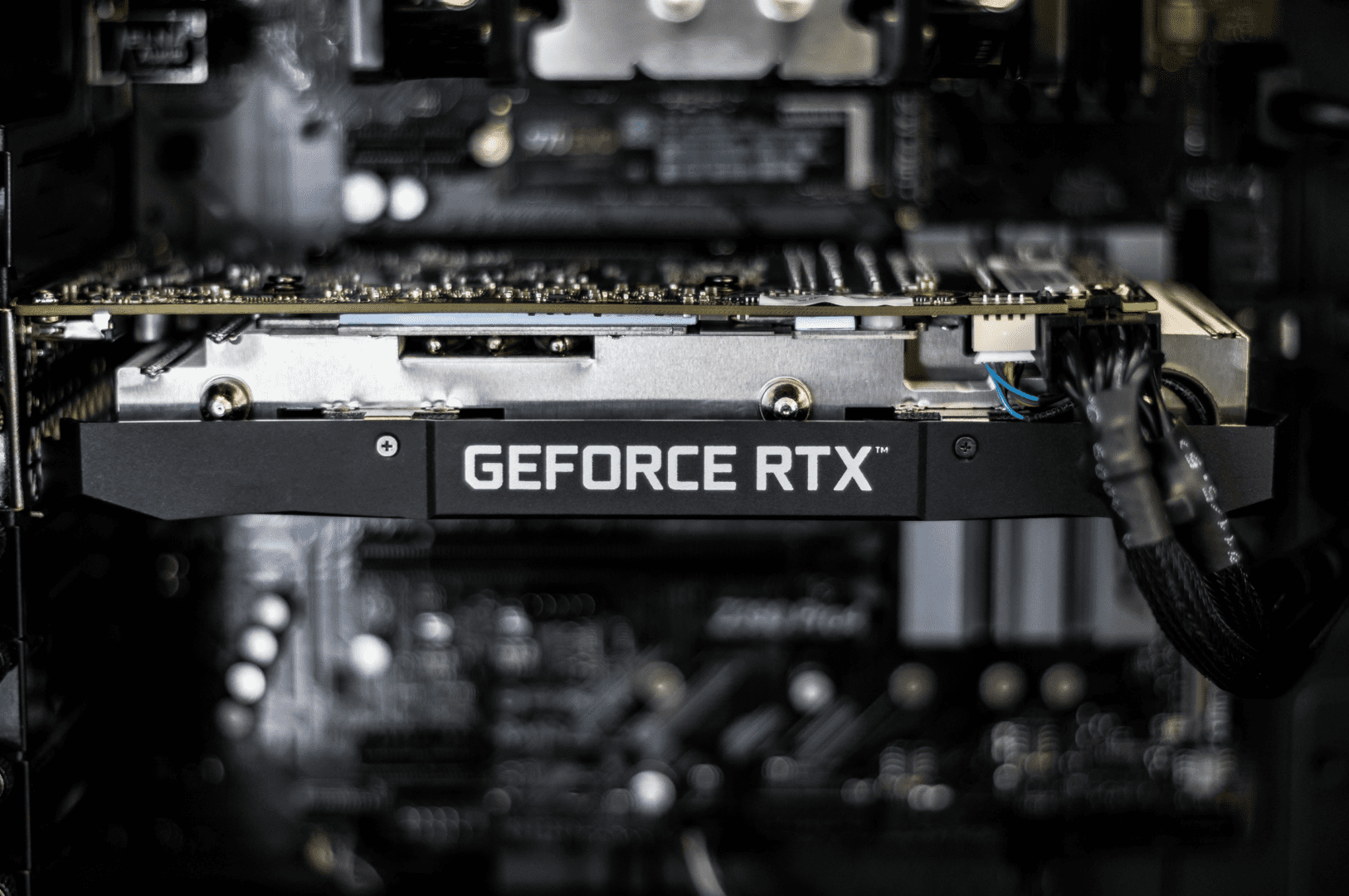
Now comes Nvidia’s new GeForce RTX 50 Series, shaking up how we see graphics cards. These chips run on the fresh Blackwell design – not just faster versions of old models. Instead, they mark a turn toward smart rendering driven by artificial intelligence. Real-time visuals now do things once thought unreachable.
NVIDIA’s Financial Path 2024 to 2025
Record-Breaking Revenue Growth
Astonishing numbers marked NVIDIA’s latest earnings stretch. Each three-month window in its 2025 financial cycle brought fresh highs, leaving old totals far behind. Once known mainly for graphics cards used in video games, it now powers vast artificial intelligence systems. Growth didn’t creep in – it arrived full force, reshaping what the brand stands for.
Thirty billion dollars came through in the second quarter, up 122 percent compared to last year. Then things kept moving – 35.1 billion arrived by the third, growing at 94 percent. After that, the fourth pushed it further still: 39.3 billion landed without pause. When everything was added, the total stood at 130.5 billion for the year. That number? Up 114 percent from before.
What stands out is how the pace held strong. Revenue hit 57 billion dollars in the latest third quarter of fiscal 2026, up 62 percent compared to last year. Driving that surge? Data centers – they’ve become NVIDIA’s core, fueled by global demand for AI systems. While gaming once led, its infrastructure spending is now shaping the company’s direction.
From Games to Artificial Intelligence Leader
Far from just powering video games, Nvidia now shapes how machines learn. Its leader, Jensen Huang, says a new era is unfolding – one where computing centers become hubs for intelligent systems instead of simple number crunching
Eleven point four billion dollars marked the gaming sector’s take in 2025, up a small notch at nine percent. Growth? That came roaring from data centers – over double their size. Turns out, those graphics chips built for games now run artificial intelligence workloads. And because of that loop, features such as DLSS 4 make it back to everyday devices.
The Evolution of Nvidia GPU Architecture
Timeline of Key Product Launches
Right from the start, knowing about the RTX 50 Series means looking back at how NVIDIA builds its chips. For years now, they’ve dropped big updates roughly twice per decade – each one shifting what graphics can actually do.
Off we went with the RTX 20 Series back in September 2018 – Turing showed up, along with real-time ray tracing. Then came the RTX 30 Series powered by Ampere, two years later almost to the day, pushing ray tracing much further. By October 2022, the RTX 40 Series appeared under the Ada Lovelace name, packing DLSS 3 and its frame generation trick.
Early in 2025, the RTX 50 Series powered by Blackwell carries things forward. A small shift away from the usual two-year rhythm happened because data center versions of Blackwell took precedence; those faced issues with chip packaging that demanded extra work before they were ready.
Blackwell Stands Apart
David Blackwell was a key figure in American math, shaping ideas in chance and strategic decision-making. His work echoes through time, still guiding thinkers today. A system built on complex number crunching takes his name, not just as tribute but as direction. Mathematical roots run deep here, hidden beneath layers of code and calculation. What powers this design isn’t flash or trend – it’s logic carved from decades-old insight.
Blackwell sticks with TSMC’s 4N chipmaking method instead of jumping to 3 nanometers. Efficiency stays strong under NVIDIA’s approach, even without the newest node. Engineering effort shifts toward design upgrades rather than chasing smaller transistors. Inside the top-tier RTX 5090 sit 92 billion tiny switches, showing progress isn’t tied only to fabrication leaps.
One thing stands out about Blackwell: how it brings everything together under one idea. Earlier versions kept separate designs for regular users and big computing centers, but not this one – it works for both. Ideas now move freely from everyday devices to high-end systems, then back again. Built from the ground up for smart tasks, better memory use, and less power draw, it hits targets that matter whether you’re playing games or training models.
GeForce RTX 50 Series Explained
Core Technical Specifications
Starting off strong, the RTX 50 Series includes four desktop versions built for varied user needs. Performance levels differ across the board, matching specific uses. One fits casual users, another pushes limits for pros. Specs stand out consistently, showing clear intent. Each model fills a unique spot in the range.
Right on top stands the RTX 5090, packing 21,760 CUDA cores alongside 32 gigabytes of GDDR7 memory. With a 512-bit memory path and speed reaching 1.8 terabytes each second, it handles 3,352 trillion AI tasks every second. Costing 1,999 dollars – 400 above what the RTX 4090 first launched for – it aims squarely at hardcore users. This one is built for those who want nothing less than peak performance.
Starting off strong, the RTX 5080 packs 10,752 CUDA cores alongside 16 gigabytes of GDDR7 memory clocked at 30 gigabits per second. Priced exactly like the last model – 999 dollars – it hits 1,801 AI TOPS. Then there’s the RTX 5070 Ti: it runs on 8,960 CUDA cores, also with 16 gigabytes of GDDR7, achieving 1,406 AI TOPS for 749 dollars. At the lower end, the RTX 5070 begins at 549 dollars, using 6,144 CUDA cores and 12 gigabytes of GDDR7 to reach 988 AI TOPS.
Jumping straight into speed, these GPUs run on fresh GDDR7 chips – new for regular users this round. At speeds between 28 and 30 gigabits each second, the memory pushes nearly twice what early GDDR6 could handle. Because they include PCIe 5.0, connecting to modern motherboards feels seamless. High-end monitors get full attention through DisplayPort 2.1b UHBR20 support. Seeing 8K visuals refresh 165 times every second becomes possible.
Blackwell Architecture Key Features
Under the surface specs sits a redesigned structure built for today’s neural rendering demands. With their second version of RT cores now twice as fast at processing ray hits against triangles compared to Ada Lovelace, complex scenes render with greater ease. Because path tracing relies completely on rays instead of older raster methods, that speed boost makes a real difference. Lighting gets calculated through traced paths alone, so efficiency here shapes everything.
Out of nowhere, the new Tensor cores boost AI power by two and a half times compared to older versions. Instead of relying on separate parts for motion tracking, these updated processors take over that job themselves – showing how smart systems slowly replace rigid old designs.
Twice as fast, NVIDIA’s updated Shader Execution Reordering helps Blackwell chips blend regular shading tasks with AI calculations more smoothly. Every CUDA core handles FP32 and INT32 math the same way now – no split design like older models used to have.
Built right into Blackwell, a new timing feature sharpens how frames line up during rapid sequences. Instead of uneven jumps between images, this approach tightens rhythm – cutting irregularities by half to one-tenth. That stability lets DLSS 4 stretch output further while keeping motion steady.
Neural rendering evolves with DLSS four
Multiple Frames Created at Once
What if a single frame could spawn an entire sequence? That is what happens with DLSS 4, NVIDIA’s biggest leap in neural rendering yet. Instead of just adding one synthetic frame between real ones – like DLSS 3 did – it now creates up to three. So for every image your GPU actually draws, the screen sees four. Multiply that effect with DLSS upscaling already at play, and potential speed gains reach eightfold. Frames appear faster than ever before, not by brute force but by smart prediction. The way games render visuals shifts at its core.
Out of nowhere, frames started appearing faster than before. Not because things got tweaked, but because they were rebuilt from the ground up. Instead of sticking with old-style networks, NVIDIA switched to transformers – yes, those brain-like setups behind chatbots you type into. More numbers inside them now, double the count actually. Running them takes way more power, fourfold at least. Yet somehow motion feels smoother, shadows where they shouldn’t be vanish, and edges stay sharp without fuzzing out.
Years passed before the system reached its current form through constant adjustments. At first, DLSS struggled to produce clean images when doubling frames. Step by step, better models emerged at NVIDIA capable of handling multiple frames smoothly. Precision in timing, now possible thanks to Blackwell’s upgraded circuits, ensures each new frame arrives without delay.
Right off the bat, better image quality in DLSS 4 doesn’t just favor new RTX 50 Series cards. Every RTX GPU can run the upgraded Super Resolution and Ray Reconstruction, so earlier models see less ghosting, smoother output. Still, generating multiple frames at once sticks to Blackwell chips – those extra-smart Tensor cores make it possible.
Reflex 2 Lowers Response Delay
When frames fly fast but controls feel slow, something is off. Fixing that gap, NVIDIA Reflex 2 slashes delays across the board – response times drop by as much as three-quarters during intense gameplay moments.
Now picture this: the first Reflex sharpened how fast actions turned into screen changes. What comes next? Reflex 2 takes that further – smarter timing tricks for when multiple synthetic frames appear. Instead of piling up delays, it spreads tasks wisely over the graphics processor. Even with three guessed-in-the-moment frames slipped between real ones, the feel stays tight, immediate. Smooth does not mean sluggish here.
Out of nowhere, NVIDIA shifted optical flow handling away from special-purpose circuits toward AI models powered by Tensor cores. Instead of rigid logic blocks, smart algorithms now predict motion using trained knowledge. This change cleared physical room on the chip. With that space freed, extra CUDA and Tensor cores fit right in. Better movement tracking comes not from rules, but from recognition built during training.
RTX Neural Technologies
NVIDIA isn’t just boosting frames per second. Their take on neural rendering dives into entirely new ways of building game visuals from the ground up. A handful of bold innovations shift the core process – no longer relying only on traditional rendering tricks. These tools reshape pixels using smart computation instead of brute force.
What emerges is a different kind of image creation, one step ahead of old methods. Speed matters, sure – but it’s the method behind it that flips everything. Each breakthrough peels away layers of outdated tech, revealing smoother, sharper results without extra hardware strain.
Tiny AI brains tucked inside pixel processing. That is what RTX Neural Shaders do. Over two decades, coders built shaders using strict math rules for each image dot. Now, instead of fixed formulas, smart mini-networks step in mid-process. These live models tweak color and light in ways old methods could never handle fast enough. The result? Movie-grade visuals once too heavy for real-time play. Suddenly, impossible detail runs smoothly.
A computer making lifelike human faces without slowing down. Old methods need massive power just to show tiny facial movements convincingly. A fresh approach starts with basic shape data plus position info. Instead of heavy processing, it applies smart algorithms that build realistic expressions on the fly. The result? Smooth, sharp faces updated instantly each frame. What emerges feels natural, not stitched together.
Imagine stacking piles of digital shapes so thick they’d choke old graphics cards. That kind of load now moves like water across newer systems thanks to smarter data handling. Instead of drowning in triangle counts, the hardware trims useless bits on the fly. Half a billion geometric pieces dance without stutter when lights trace every twist. What once seemed impossible runs steadily under this tighter system design. Efficiency jumps not by brute force but clever sorting behind the scenes.
Pricing and Availability in Today’s Market
Official Launch Schedule
Out in the open came the RTX 5090 and 5080 on January 30, 2025, targeting high-end users first. NVIDIA spaced out the rest instead of flooding the market all at once. By February, two more arrived – the RTX 5070 Ti alongside the RTX 5070. This lineup unfolded gradually, one piece after another.
Late winter saw laptops roll out under familiar names – only leaner inside. Priced from two thousand eight hundred ninety nine, the five zero nine zero mobile leads. Two thousand one hundred ninety-nine buys the step-down, called fifty eighty. A fifteen ninety nine tag sits on the modified fifty seventy Ti version. Entry-level settles at twelve ninety nine for the base fifty seventy chip. Performance shifts stand clear when AI scores appear much lower than what desktops deliver.
Only a few people got their hands on NVIDIA’s own version of the RTX 5090, 5080, and 5070 – these reference models were available solely at Best Buy across the U.S. Not one Founders Edition was made for the RTX 5070 Ti. By design, that model skipped the lineup entirely.
The Availability Crisis
What looked fine on NVIDIA’s price sheet didn’t match what people found online. Right from day one, the RTX 50 Series was nearly impossible to buy. Shelves stayed empty, despite heavy demand. Many tech writers ended up calling it a messy rollout. Prices climbed fast, often far beyond what was promised.
Across the globe, stores had a hard time keeping stock on shelves. For just a moment, the Founders Edition showed up – then vanished fast. When models from companies such as ASUS, MSI, or Gigabyte did pop up, buyers paid extra, often 200 to 400 dollars more than usual – if they got one at all.
At launch, the RTX 5070 showed up online marked at 549 dollars. Yet stores sold it between 700 and 750 more often than not. That sum came dangerously close to what Nvidia asked for the faster 5070 Ti – 749 on paper. Things got worse higher up the lineup. The 5080 didn’t escape markup either. As for the top-end 5090? Sellers outside official channels listed it past 2,000 without hesitation.
What played a role here was far from simple. Data centers pulled NVIDIA’s attention first, thanks to strong orders and better returns on investment. The factory floor at TSMC simply could not stretch its output enough to cover both enterprise and personal graphics chips. On another front, makers of memory modules struggled to speed up GDDR7 output at the scale needed.
Folks grew annoyed; tech writers called it out loud. Some wondered, did NVIDIA hold back chips deliberately to keep prices up? Or was production truly stuck, tangled in supply messes?
Glitches behind the wheel made a tough start even worse. Right away, faulty drivers brought crashes, messed-up visuals, wrong colors, plus trouble in certain games – hitting everyone on RTX 30, 40, and 50 cards. Fixes rolled out over time thanks to NVIDIA’s patching effort. Still, shaky early support fed frustration across the board.
A Promising Future With Current Challenges
A giant step ahead in graphics comes with the GeForce RTX 50 Series. Neural rendering sits at the core of Blackwell’s design, while DLSS 4 brings transformer models into play, generating whole frames across multiple steps. That shift isn’t just theory; NVIDIA’s earnings show it clearly. Rising income, fueled by appetite for AI tech, proves the path they’ve chosen is moving fast.
Not long ago, things like neural shaders or mega geometry felt unreachable – now they’re here. Moving up to GDDR7 memory opens space for heavier workloads without slowing down. Ray tracing gets sharper faster thanks to redesigned cores built for precision. Tensor performance jumps high enough to handle next-level AI tasks smoothly. People making films, running simulations, or training models find real power in the RTX 50 Series. What once sounded like science fiction runs quietly inside these cards today.
Still, those standout numbers bump up against tough truths out there. Months past release, getting one feels nearly impossible – most either shell out way more than the sticker price or sit waiting with no clear timeline. Priced high right off the bat, the RTX 5090 sits tangled in shortages, making you wonder who it’s really built for.
Questions linger around NVIDIA saying their 549-dollar RTX 5070 runs like the RTX 4090. Much of that claim leans on DLSS 4’s ability to create frames using AI, not traditional rendering power. Gamers still aren’t sure how smooth things feel when so many frames come from artificial generation instead of standard methods.
Wait before buying an RTX 50 Series card. Those who rush in will spend more money but get top speed on games using DLSS 4. Over time, stock improves, costs go down, and studios add support for AI-powered graphics across more titles. Owning a 40 Series GPU still delivers strong results. Another path opens if RDNA 4 chips from AMD meet what you need.
One thing stands out about the RTX 50 Series – it shows where NVIDIA shines and where it stumbles. Strong innovation drives their path forward, yet choices tilt toward profit over accessibility. Mainstream gamers might feel left behind, even with top-tier performance under development. How people judge this line later will hinge not just on specs but on whether cards actually show up at fair prices. Success isn’t built into the hardware; it depends on decisions made after launch.
That’s all for this blog. For more latest blog, please click here.