

Is The Odyssey Homer’s Most Influential Work?
The Odyssey stands as Homer’s most influential work and has long shaped literary debate. While Homer is traditionally credited with two monumental epics – The Iliad and The Odyssey – it is the latter that continues to resonate across cultures, genres, and centuries. To understand its influence, one must examine Homer’s historical timeline, the nature of his works, and the narrative depth of the story itself.
Who Was Homer?
Homer is believed to have lived between the 8th and 7th centuries BCE. His exact birthplace remains debated, with Ionia, Smyrna, and Chios often cited in ancient resources, as there are no verified biological records existing. He is often described as a blind poet, though this may be symbolic rather than factual.
Homer’s works emerged from a strong oral storytelling tradition, when epics were likely performed aloud in front of audiences before being written down, which consisted of repetition, formulaic phrases, and rhythmic structure to support oral memorization. This tradition allowed stories to evolve while preserving core narratives.
Homer is traditionally credited with:
- The Iliad
- The Odyssey
Some scholars argue these epics may have been compiled from multiple poets, but regardless of such debates, both works are foundational to Western literature.
A Brief on Homer’s Major Works
The Iliad: War, Honor, and Fate
The Iliad focuses on a short period during the Trojan War, which revolves around Achilles’s rage. It explores heroism, mortality, divine intervention, and honor, while the primary motive of the Iliad was battle and conflicts while talking about glory, tragedy, and honor.
The Odyssey: Journey, Identity, and Survival
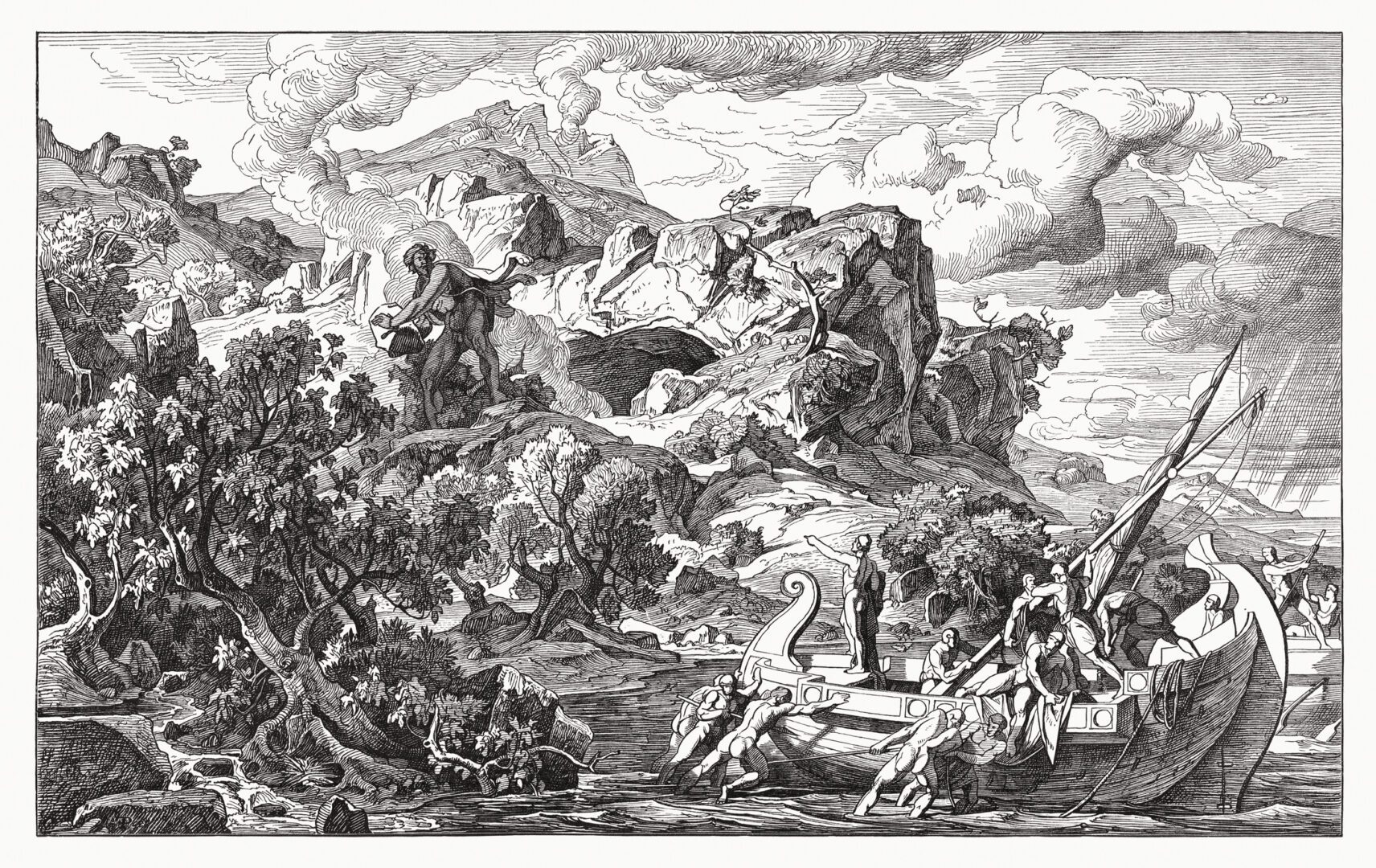
It takes place after the Trojan War. It follows Odysseus’ ten-year journey home to Ithaca, which combines adventure, myth, moral testing, and human resilience and also has a broad range of emotional and thematic range while comparing it to The Iliad.
The Odyssey: Narrative and Context
It is a combination of 24 books that begin in medias res, i.e., in the middle of events. The story usually unfolds through that era’s present-time action and flashbacks narrated by Odysseus himself to Homer. Odysseus, being the central figure known as the king with intelligence and a cunning human being, was the king of Ithaca. Unlike Achilles, he survived on wit rather than brute strength.
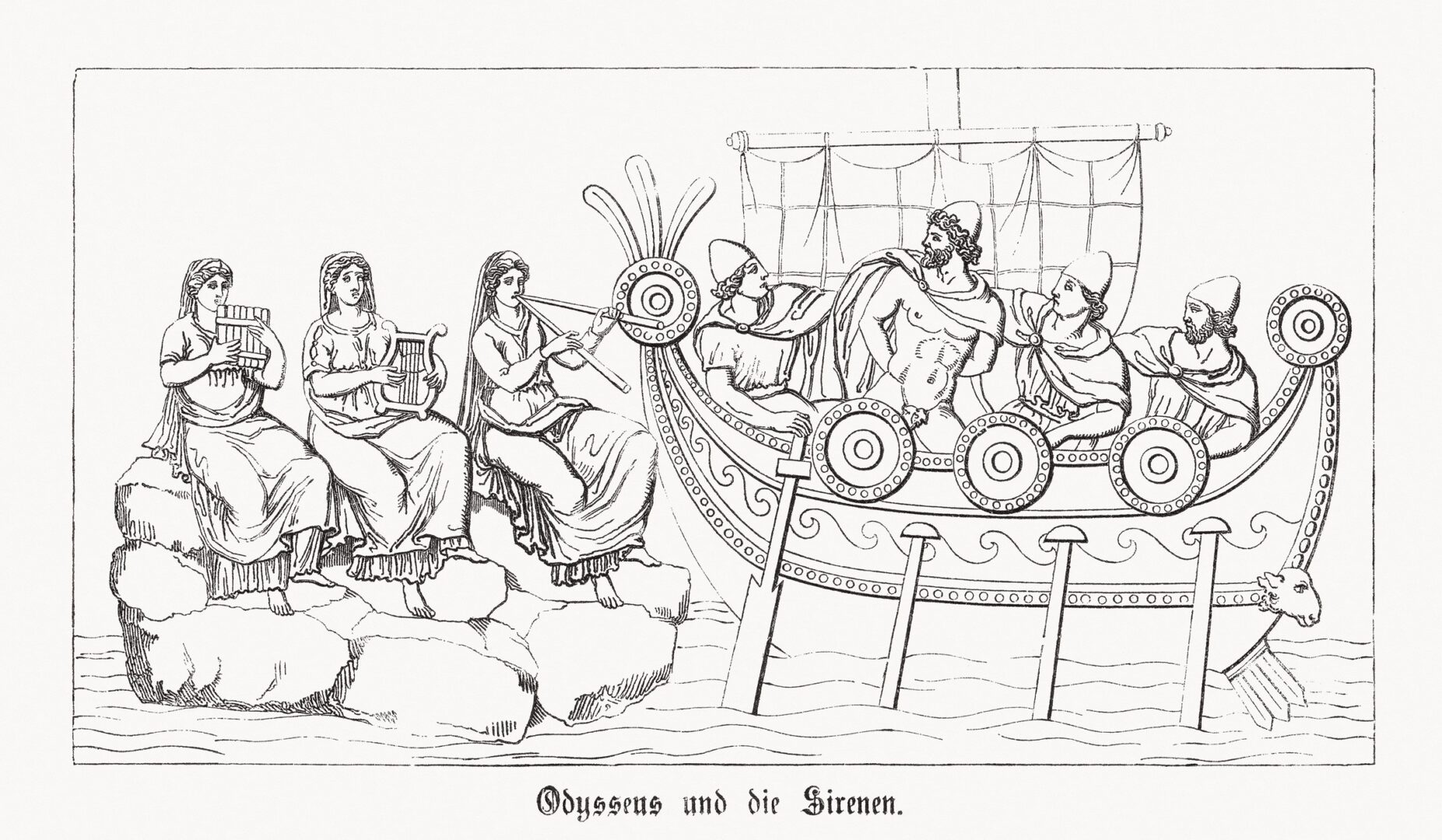
His defining traits include strategic thinking, emotional endurance, and adaptability. His escape from the Cyclops Polyphemus, encounter with Circe (who turns men into animals), descent into the underworld, temptation by the sirens, imprisonment by Calypso, and constant interference by gods, especially Athena and Poseidon, remain some key episodes through his lifetime.
The Role of Homecoming (Nostos) in The Odyssey
Ithaca represents order, identity, and moral responsibility, and the journey home is more internal than physical since it embodies loyalty and intelligence. Penelope (Odyssey Wife) and Telemachus (Odyssey Son) struggled to handle the empire in Odysseus’s absence.
Why The Odyssey Is Considered More Influential Than The Iliad
Odyssey consists of ideas that fit broader human ideas and addresses universal themes such as identity, temptation, perseverance, and loyalty, which are more relevant to any warrior beyond all warrior cultures combined.
Its influence across genres and eras of work inspired by it, such as Roman literature, medieval romance, and modern novels and films. Odysseus became a prototype for the “hero on a journey.”
It can be reinterpreted in psychological terms, political environment, and philosophical inquiry, which made it highly adaptive in nature.
Is The Odyssey Homer’s Most Influential Work?
If measuring the Iliad on a comparative impact scale, it may have shaped concepts of heroism and tragedy. It also shaped storytelling, and the structure influenced quest narratives, fiction, and character-driven plots. Though the modern era of heroism remained flawed, Odyssey reflects real human struggles while the theme it carries transcends time, culture, and geography.
Homer’s timeline may be uncertain, but his impact is undeniable, so it can be concluded that the Odyssey stands for narrative complexity, emotional depth, and universal relevance. While both can be stated as foundational, The Odyssey arguably holds greater influence on global audiences and storytelling.