
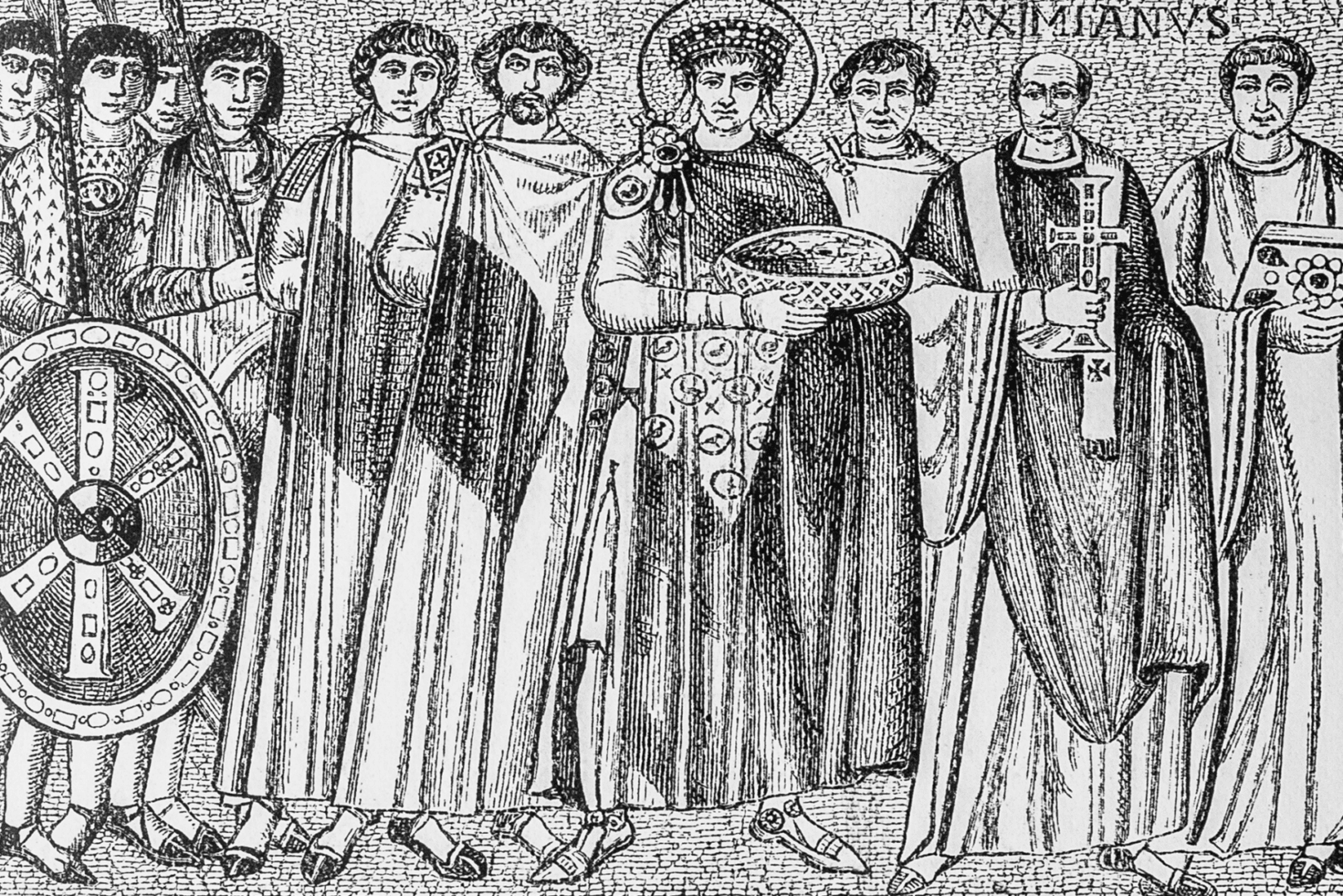
The Empire That Wouldn’t Fall
Picture fallen empires, and Rome comes to mind first. Yet when the Western Roman Empire collapsed in 476 AD, the eastern half did not follow. The Byzantine Empire defied expectations and endured for more than a thousand additional years. This survival was not accidental. Time and again, the Byzantine world stood at the edge of extinction, watching provinces fall away, armies shattered in battle, and internal conflicts tear at its foundations—pressures that would have destroyed most political systems.
Each time disaster arrived, the Byzantine Empire adapted rather than surrendered. Something fundamental set the Byzantine system apart. When catastrophes erased rivals such as Sassanid Persia, the Byzantine state absorbed the shock and continued. Survival was not luck; it was the product of adaptation, institutional discipline, and calculated decision-making. Even when collapse seemed unavoidable, Byzantine persistence carried the empire forward. That continuity still carries meaning today.
The Seventh Century: Looking Into Nothing
Heraclius Takes Over a Failing Empire
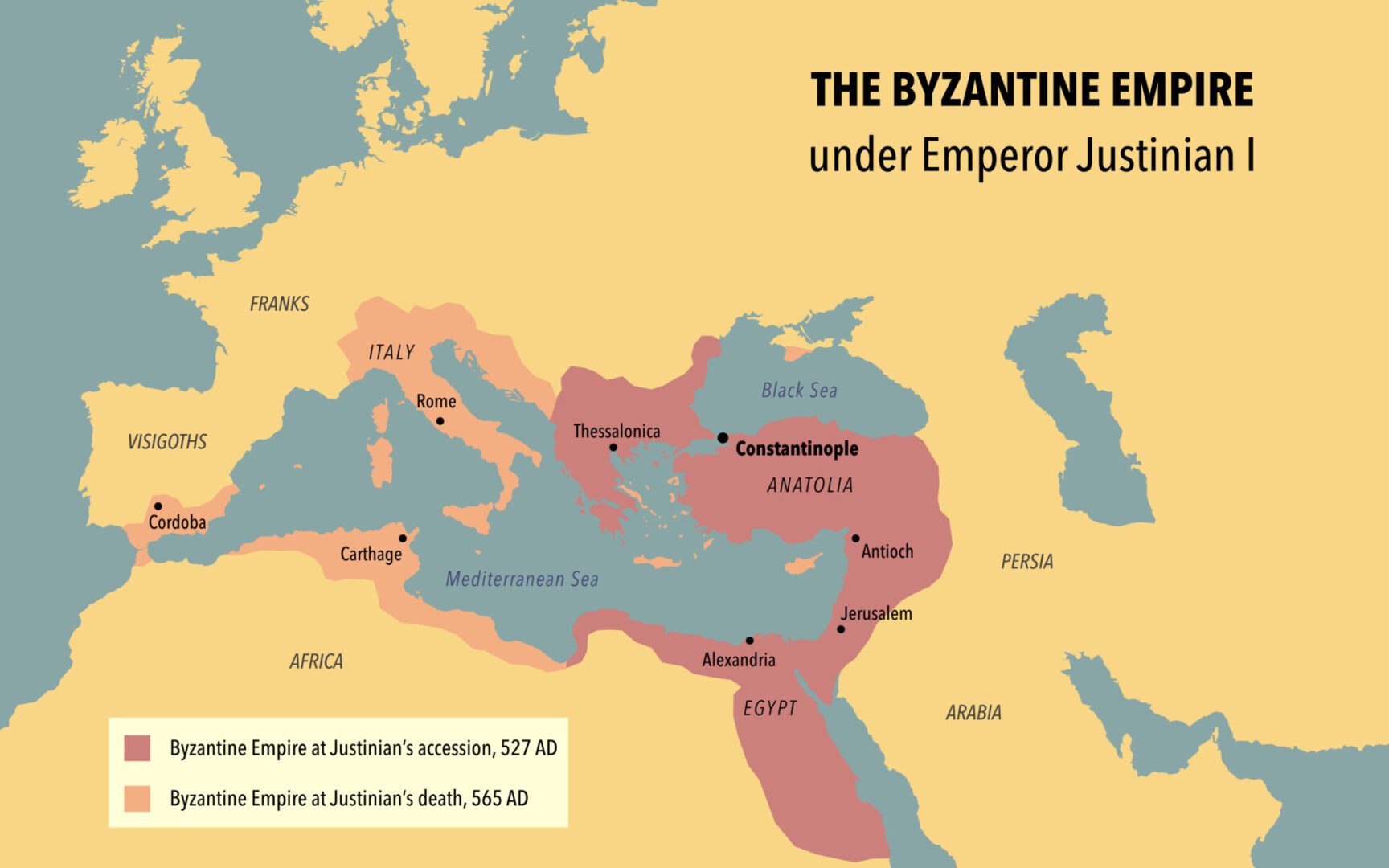
When Heraclius seized the throne in 610 AD, he inherited a state close to ruin. Persian armies had already seized Syria and Palestine and were advancing deep into Asia Minor. Egypt—the empire’s primary grain supply—fell soon after. In the Balkans, Avars and Slavs raided almost unchecked, while Constantinople itself faced the possibility of encirclement.
Few rulers would have rejected peace under such conditions. Heraclius did. Refusing submission, he crossed the Black Sea toward Armenia, evading Persian forces through deliberate planning. From this eastern base, the counteroffensive took shape. A series of unexpected campaigns reversed the momentum of the war. By 628, Persian power collapsed, their capital was threatened, and the relic taken from Jerusalem was returned to Byzantine hands.
Victory came at a terrible cost. The treasury was exhausted, soldiers were spent, and the population was drained. Yet the Byzantine Empire had survived once more—though the price of survival would soon become clear.
The Storm From Arabia
Any brief respite vanished quickly. Following the death of the Prophet Muhammad in 632, unified Arab forces surged outward from Arabia with unprecedented speed and cohesion.
In 636, the army suffered a devastating defeat at Yarmouk. Tens of thousands of soldiers faced Arab forces in the Syrian heat. As the battle peaked, sudden winds drove sand into the ranks, breaking formations. Arab cavalry exploited the confusion instantly. The defeat was total.
Within a decade, the empire lost Syria, Palestine, and Egypt—regions that had provided nearly two-thirds of state revenue. Across the former frontier, Sassanid Persia resisted briefly, but within twenty years its entire political structure collapsed. The Byzantine Empire, despite comparable losses, endured.
Between 674 and 678, Arab fleets besieged Constantinople itself. The capital survived not only because of its massive walls, but because of a mysterious weapon known as Greek Fire. This incendiary substance burned even on water, destroying enemy ships and ending the siege. Its formula, guarded by the Byzantine authorities, remains unknown to this day.
Reinventing Survival: The Theme System
From Professional Army to Citizen Soldiers
As territory and revenue disappeared, the state could no longer afford a large, salaried professional army. In response, a quiet but revolutionary change emerged. Land was granted to soldiers who would defend the regions in which they lived.
Anatolia was reorganized into military-administrative districts known as themes. In these zones, soldiers farmed their own land and reported for duty when required. Payment came not in coin, but in produce and property. This reduced costs while creating defenders personally invested in local security.
What began as a desperate compromise became a strength. The system produced resilient, locally rooted forces capable of resisting repeated invasions. Necessity forced the reform; discipline allowed it to succeed.
The Power of Patience
The approach to war was shaped by restraint. Prolonged conflict drained resources, even in victory. Avoiding unnecessary wars became a strategic principle.
Rather than defeating every enemy directly, rulers learned to redirect threats. Why fight the Pechenegs when the Cumans could be paid to neutralize them? Why risk armies when marriages, subsidies, or treaties could achieve the same outcome?
This calculated patience defined Byzantine diplomacy. A complex web of alliances, payments, intelligence networks, and negotiated settlements preserved the state while stronger but less flexible powers collapsed.
The Eleventh-Century Nightmare
Manzikert
In 1071, Emperor Romanos IV confronted the Seljuk Turks near Manzikert in eastern Anatolia. The battle ended in catastrophe. Romanos was captured, and the army disintegrated.
The consequences were worse than the defeat itself. Turkish settlers gradually occupied Anatolia—the empire’s manpower and economic core. Civil war followed. Over two decades, Constantinople witnessed seven violent changes of power. Norman forces advanced from southern Italy, Pecheneg raids struck from the north, and the currency collapsed.
By 1081, the Byzantine Empire retained only fragments of its former territory. Its army was broken, and its finances depleted.
Alexios I and Recovery
Alexios Komnenos seized the throne in 1081 at just twenty-four years old. Almost immediately, Norman armies under Robert Guiscard invaded the Balkans. At Dyrrhachium, Alexios fought personally and was wounded as his forces collapsed.
Rather than seek immediate revenge, Alexios focused on survival. Diplomatic pressure tied Norman forces down elsewhere. When Robert Guiscard died in 1085, the Norman threat collapsed with him.
In 1087, massive Pecheneg forces advanced toward Constantinople. Lacking sufficient troops, Alexios negotiated an alliance with the Cumans. At Levounion in 1091, the Pechenegs were destroyed through coordination rather than brute force.
Alexios then appealed westward for aid against the Seljuks. His request produced the First Crusade. Through careful management, authority was reasserted over key cities, including Nicaea, Ephesus, Smyrna, and much of western Asia Minor by 1099.
Restoration and Stability
Alexios reinforced recovery through reform. In 1092, he introduced a stable gold currency, restoring trust in markets. Fiscal discipline replenished the treasury. Trade agreements revitalized commerce.
Military power was sustained through land-for-service arrangements that kept forces available without exhausting state finances. By the time Alexios died in 1118, the Byzantine Empire was stable again. A century of relative strength followed.
Why the Empire Endured
Institutional continuity allowed the administration to function even during coups. Taxes were collected, diplomacy continued, and the army remained organized.
Adaptable leadership emerged during moments of crisis. Flexibility mattered more than tradition. Geography favored defense, while pragmatism allowed alliances across cultural and religious lines.
Europe’s Forgotten Shield
For centuries, the Byzantine Empire blocked expansion into Europe from the east. Without that resistance, European development may have followed a very different path.
Scholars preserved classical texts that later shaped intellectual renewal beyond the empire’s borders.
Even after the sack of Constantinople in 1204, successor states reclaimed the city by 1261. The Byzantine tradition endured until 1453.
The Legacy of Saying No
The Byzantine Empire did not survive by constant victory. It survived by adaptation. Three times it lost more than half its territory—and rebuilt each time. The Byzantine lesson is not dominance, but endurance: systems matter more than individuals, flexibility more than force, patience more than speed.
Collapse rarely comes from a single blow. It begins when adaptation stops.
For over a thousand years, whenever extinction approached Constantinople, the Byzantine response remained unchanged.

1 thought on “Byzantine’s:1000-Year Survival Against Odds”
Finds something unique here